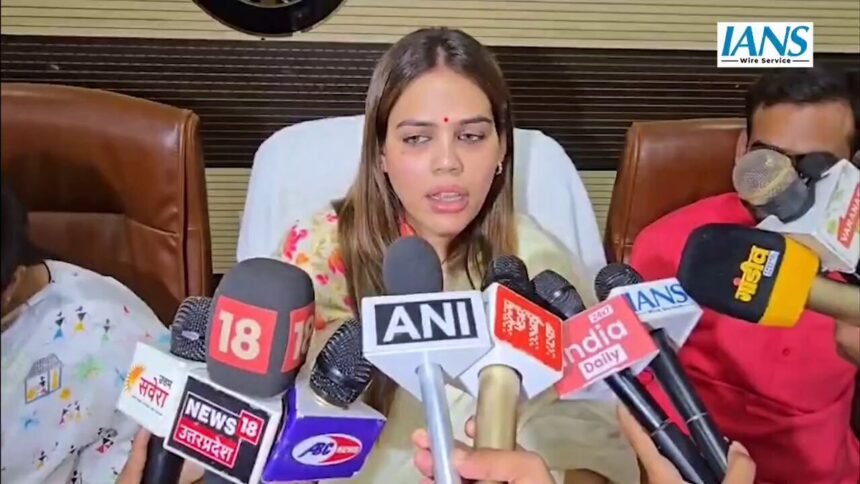

Recent comments by BJP leader Nazia Elahi Khan have sparked a wave of outrage, as she called for Hindus to boycott Muslims from both government and private sectors for a period of two to three years. This divisive rhetoric has garnered attention for its inflammatory nature, prompting prominent political commentator Mohammed Zubair to urge the Supreme Court of India to take suo moto action against such hate speech.
Context of the Statement
Nazia Elahi Khan, a member of the Bharatiya Janata Party (BJP), made her controversial statements during a public address. By urging Hindus to remain “vigilant” and implement a boycott of Muslims, Khan’s comments echo a troubling trend of communal polarization that has surfaced increasingly in Indian politics. The context surrounding her remarks reflects broader societal tensions, often exacerbated by political platforms that prioritize majoritarian narratives.
Background on Hate Speech in India
Hate speech, particularly involving communal identities, has become a contentious issue in India. Legal frameworks exist to penalize such expressions, but enforcement can be inconsistent. The Constitution of India guarantees freedom of speech, yet this freedom is not absolute; it is subject to limitations in cases where speech incites violence or creates societal discord. Recent instances of hate speech have raised questions about accountability and the role of political leaders in maintaining communal harmony.
Response from the Political Community
The backlash to Khan’s comments has been significant, with many voices from civil society and political circles condemning the call for a boycott. Mohammed Zubair’s criticism highlights a growing frustration with politicians who engage in hate speech without facing repercussions. Zubair’s appeal to the Supreme Court indicates that there may be a legal avenue to challenge such incendiary rhetoric. The central question remains whether the judiciary will act decisively to uphold constitutional norms in the face of rising communal tensions.
Why This Matters
The political implications of Khan’s remarks extend beyond mere rhetoric. In a country as diverse as India, calls to boycott entire communities can lead to real-world consequences, including increased violence and discrimination. The incident serves as a microcosm of the larger struggle between pluralism and sectarianism in Indian society. With general elections approaching, the handling of such divisive speech may influence public perception and voter behavior, significantly impacting the political landscape.
Frequently Asked Questions
What are the legal implications of hate speech in India?
In India, hate speech can be prosecuted under various laws, including Sections 153A and 295A of the Indian Penal Code, which deal with promoting enmity between different groups and deliberate acts intended to outrage religious feelings, respectively.
How has the public responded to Khan’s remarks?
The public reaction has been largely negative, with many civil society organizations and political commentators calling out the inflammatory nature of her statements and urging accountability for promoting hate.
What role does the Supreme Court play in cases of hate speech?
The Supreme Court of India has the jurisdiction to take up cases of hate speech that threaten public order or incite violence. It can act on its own initiative (suo moto) to address these issues, as highlighted by Zubair in his tweet.
Why is communal harmony important in India?
India’s strength lies in its diversity, with multiple religions, languages, and cultures coexisting. Promoting communal harmony is essential for social stability, national integrity, and the overall well-being of its citizens.