
The recent statements from West Bengal’s municipal affairs and urban development minister Agnimitra Paul reflect a significant shift in the BJP government’s political strategy. By inviting Muslim youth to participate in the state’s development, this approach aims to challenge historical patterns of political marginalization while emphasizing the need for inclusivity across communities.
Calls for Inclusion in Development
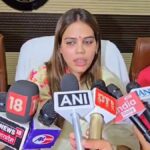
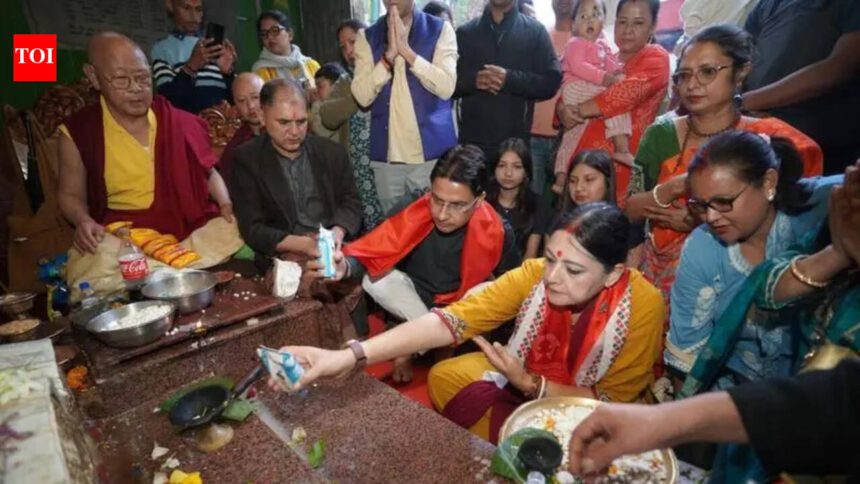
During a visit to North Bengal, Minister Agnimitra Paul emphasized the importance of involving Muslim boys and girls in the state’s development initiatives. In her remarks, Paul stated, “We want the boys and girls of the minority community to be part of the development journey we are undertaking. Let us take Bengal ahead together.” This call for inclusion marks a deliberate departure from tactics historically used by various political parties to exploit community identities for electoral gains, particularly in a state with a substantial Muslim population.
Critique of Madrasa Education
Paul’s statements also highlighted concerns around the education system specifically catering to Muslim students, particularly madrasas. Questioning the nearly Rs 5,713 crore allocated to madrasa education, she posed critical inquiries about the efficacy of such institutions in preparing students for competitive fields. “How many girls and boys studying there are going on to become IAS, IPS, IRS, IFS officers, engineers, doctors or scientists?” Paul highlighted the necessity for a modern educational framework that prioritizes substantive student outcomes, which could reshape the trajectory of Muslim youth in the state.
Responses from the Community
The reaction from the Muslim community has been cautiously optimistic. Faisal Rahman, a member of the community in Kolkata, remarked, “It is encouraging to hear a senior minister speak about inclusion rather than division.” However, he stressed that community members would assess the government based on the implementation of these inclusive statements, rather than verbal commitments alone. This sentiment embodies a broader narrative surrounding Muslim political engagement in India, where previous administrations have faced accusations of treating Muslim communities as mere electoral assets.
Why It Matters
The implications of the BJP government’s shift in messaging are noteworthy in the context of Indian politics, particularly for minority communities. By inviting Muslim youth into the state’s development narrative, the government is attempting to redefine its identity from one of exclusion to one of inclusion, which could have profound impacts on electoral dynamics in West Bengal. Given how polarized political discourse has become, this change could pave the way for more equitable policies, fostering areas of collaboration rather than division. Furthermore, it may influence social cohesion and economic integration within the broader Indian landscape as all communities seek mutual progress.
Frequently Asked Questions
What prompted Agnimitra Paul’s call for Muslim youth participation?
Agnimitra Paul’s invitation for Muslim youth to participate in development efforts is a strategic move by the BJP government to foster inclusivity and counteract historical exclusion in politics.
How has the Muslim community responded to these initiatives?
The Muslim community has reacted positively but cautiously, expressing a desire for concrete policy implementation rather than mere rhetoric.
What are the main concerns regarding madrasa education expressed by Paul?
Paul raised concerns about the effectiveness of madrasa education in preparing students for modern competitive careers, questioning the outcomes despite substantial government funding.
What significance does this shift in messaging have for Indian politics?
This shift signifies a potential reorientation in BJP’s approach to minority communities, possibly leading to a more inclusive political environment and affecting future electoral dynamics in the state.