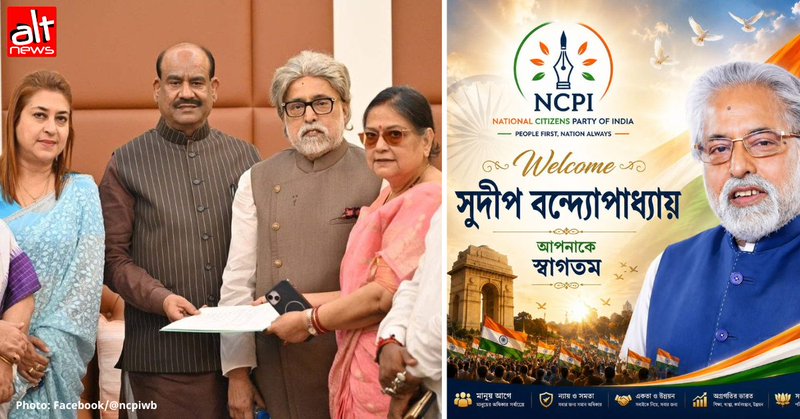

Recent findings by Anindya Hazra shed light on the Nationalist Citizens Party of India (NCPI), notably its secretive structure and unexpected emergence as a significant political force in West Bengal. The investigation reveals the party’s ties to the Rashtriya Swayamsevak Sangh (RSS), internal discord regarding alliances with the BJP, and unresolved questions about its leadership and communication strategies.
Understanding NCPI’s Emergence
The NCPI has seen a meteoric rise in West Bengal politics, especially following the migration of 20 TMC MPs, which left many questioning the party’s newfound visibility. Traditionally, the NCPI was often overlooked in the political landscape of the state, but it has recently positioned itself as the largest parliamentary party post the 2026 assembly elections. This sudden prominence has prompted analysts to explore the party’s origins and ideological affiliations.
Leadership and Internal Conflicts
Anindya Hazra’s investigation highlights a distinct divide among NCPI leadership, particularly between the party’s secretary with an RSS background and the Tripura coordinator who is hesitant about forming alliances with the BJP. This ideological rift has raised concerns about the party’s long-term stability and its ideological coherence. The tension between aligning with the national party versus maintaining a unique identity is an ongoing debate within the NCPI that could shape its future strategies.
Mystery Behind the Party’s Social Media Presence
Another intriguing aspect revealed is the ambiguity surrounding the management of the NCPI’s social media profiles. Questions arise regarding who is currently handling these platforms and whether the party is effectively communicating its agenda to the electorate. In an era where social media plays a pivotal role in political engagement, the lack of transparency may pose challenges for the NCPI in building a solid grassroots connection with voters.
Why This Matters
The unfolding story of the NCPI is significant for Indian politics as it underscores the volatility and unpredictability of party dynamics in West Bengal. The state’s political landscape has been long dominated by the TMC and the BJP, but the emergence of the NCPI complicates this binary. As voters grow restless for alternatives, understanding the NCPI’s trajectory adds depth to ongoing narratives about party politics in India, especially in regional contexts. The internal conflicts and leadership dynamics at NCPI could have far-reaching implications on coalition politics, potentially reshaping alliances in the lead-up to future elections.
Frequently Asked Questions
What is the NCPI?
The Nationalist Citizens Party of India is a relatively new political entity in West Bengal that has gained prominence following a recent influx of former TMC MPs, positioning itself as a significant parliamentary party.
What are the key ideological influences on NCPI?
The party’s leadership has ties to the RSS, suggesting a possible ideological alignment with Hindutva politics, however, internal disagreements about its affiliation with the BJP reveal a complex ideological landscape.
Why is the management of the NCPI’s social media important?
Effective social media management is crucial in modern political campaigns to engage with voters, convey messages, and shape public perception. Ambiguities regarding its management may hinder the party’s communication strategy.
What could the future hold for NCPI?
Given the internal conflicts and external pressures, the NCPI’s future will likely depend on how it reconciles its leadership challenges and communicates its vision to the electorate, particularly in an increasingly competitive political environment.