
Supreme Court Examines Muslim Plea in Bhojshala Dispute
In a pivotal legal battle, the Supreme Court of India has agreed to review a plea by the Muslim community regarding the Bhojshala complex in Madhya Pradesh. They allege non-compliance with court orders intended to provide an alternative site for Friday prayers, a matter that reflects ongoing tensions and practices surrounding religious freedoms in India.
Background of the Bhojshala Dispute
The Bhojshala site, located in Dhar, Madhya Pradesh, is a contentious location claimed as a historical temple dedicated to Goddess Saraswati by Hindu groups. Conversely, the Muslim community asserts that it is a mosque where prayers have been offered for centuries. In earlier hearings, the Supreme Court had directed the Madhya Pradesh state government to identify a separate open area adjacent to Bhojshala for Muslims to conduct Friday namaz. This directive was intended to alleviate communal tensions while the matter underwent legal examination.
Current Legal Proceedings
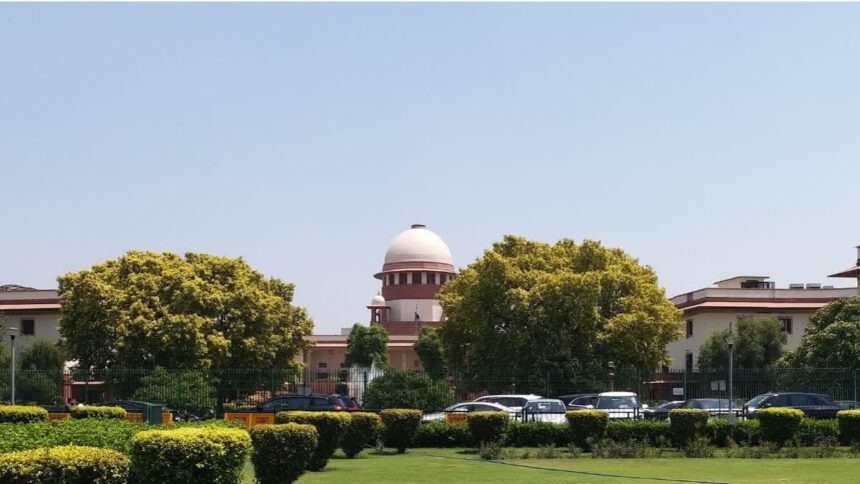
During a session on Wednesday, Senior Advocate Huzefa Ahmadi raised concerns before a bench led by Chief Justice Surya Kant, highlighting the alleged non-implementation of court orders. He argued that the proposed site offered by the state was 1.3 km away from the Bhojshala complex and unsuitable for the community’s needs. Chief Justice Kant questioned the Solicitor General Tushar Mehta on why the alternative site details had not been provided to Ahmadi, indicating the court’s growing impatience with the state government’s inaction.
The legal discourse reflects broader themes of marginalization; the Muslim community perceives this as a repeated denial of their rights and religious freedoms in the face of rising Hindutva nationalism. Notably, this issue ties into wider patterns of discrimination against Indian Muslims, emphasizing the complex relationship between state governance and religious rights.
Judicial Response and Implications
The Supreme Court has showcased its willingness to engage in this sensitive matter, indicating that the case will be heard again on Thursday. Previous court orders mandated that Muslims be provided with space for prayers between 1 PM and 3 PM until a final decision is reached on the status of the Bhojshala site. This legal action underscores the judicial system’s role as a potential arbiter amidst rising sectarian tensions in India.
Ahmadi’s insistence on finding a more suitable location near the contentious site illustrates the Muslim community’s efforts to assert their rights in the face of government inaction. The push for compliance with court orders emphasizes the ongoing struggles faced by minority groups within the country’s political landscape, shedding light on the critical need for fair treatment in matters concerning religious practices.
Why It Matters
The ongoing Bhojshala dispute is emblematic of the broader issue of religious discrimination within India. It raises critical questions about the secular principles enshrined in the Indian Constitution and the extent to which minority communities can expect protection from state actions that favor one religious group over another. With the ruling Bharatiya Janata Party (BJP) often associated with Hindutva ideologies, the outcome of this legal battle could either reinforce or challenge the narrative of minority marginalization. A fair ruling could serve to affirm the judiciary’s role as a protector of religious freedoms, while a biased decision could further alienate the Muslim community and escalate tensions across various regions.
Frequently Asked Questions
What is the Bhojshala dispute about?
The Bhojshala dispute centers around a complex in Madhya Pradesh that is claimed as a temple by Hindus and as a mosque by Muslims, leading to ongoing legal and communal tensions.
What did the Supreme Court direct concerning Friday prayers?
The Supreme Court directed the Madhya Pradesh government to provide an alternative site near Bhojshala for offering Friday prayers until the dispute is resolved.
Who is representing the Muslim community in court?
Senior Advocate Huzefa Ahmadi is representing the Muslim side in the Supreme Court hearings concerning the Bhojshala site.
What are the implications of this case?
This case highlights issues of religious discrimination and the treatment of minority communities in India, potentially affecting the wider perceptions of secularism and justice in the country.