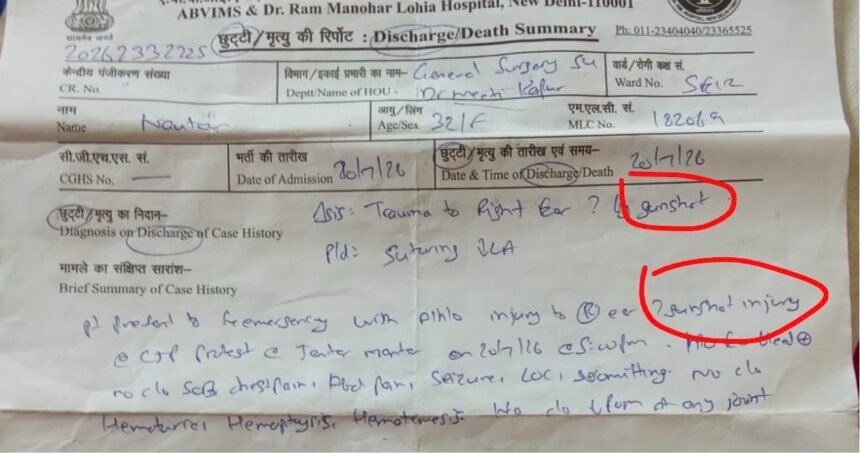

Claims circulating on social media suggest that a protester was shot during a demonstration in Central Delhi on July 20, 2026. However, the Delhi Police have clarified that medical legal case (MLC) findings indicate the injury was a lacerated wound caused by blunt force, not a gunshot, challenging the initial reports.
Clarifying Misinformation on Social Media
The Delhi Police have recently addressed misinformation that emerged from social media regarding a protester allegedly suffering gunshot wounds during a protest on July 20, 2026. The department conducted a thorough investigation, including a review of MLC records. These records indicate that the injured party sustained a lacerated wound near the right tragus of their ear. Medical professionals classified the injury as blunt in nature, categorizing it as a simple injury without evidence to support claims of a gunshot.
This discrepancy highlights the serious concern over the rapid spread of misinformation on platforms like Twitter and Facebook. Many social media users could be swayed by emotional narratives, and without verification from reliable sources, such claims can distort public perception and impact ongoing investigations.
Background of the Protest
The protest in question was part of a larger series of demonstrations across India, addressing various socio-political issues that have emerged in recent years. The protests, while peaceful in nature, have sometimes escalated tensions, particularly in urban centers like Delhi.
Amidst these demonstrations, the claim of violence in the form of gunshot injuries raised alarms among citizens and law enforcement, potentially aggravating the climate of fear surrounding the protests. The Delhi Police’s response serves both to clarify the facts of this specific incident and to reassure the public regarding the management of such protests.
Implications of Official Communication
The Delhi Police’s commitment to fact-checking and clear communication plays a critical role in maintaining public trust. In today’s digital age, where misinformation can lead to public unrest and heightened tensions, it is imperative for authoritative bodies to address and correct false claims swiftly.
Moreover, this incident underscores the importance of responsible social media use among the public. Citizens are urged to verify information before sharing, which can prevent unnecessary panic and encourage a more informed discourse surrounding issues of public concern.
Why This Matters
For Indian readers, the implications of this misinformation are significant. The incident serves as a reminder of the fragility of public confidence in law enforcement and the potential for distorted narratives to influence political and social stability. Understanding the facts surrounding protests and their portrayal in media enables citizens to engage more thoughtfully with ongoing socio-political issues.
Additionally, the ongoing debate about freedom of expression and the right to protest in India hinges on accurate information being disseminated. Inaccurate reports can not only skew public opinion but also influence policy decisions made by government authorities in response to civic unrest.
Frequently Asked Questions
What caused the initial misinformation about the protester’s injury?
The misinformation stemmed from social media claims that inaccurately reported a gunshot injury. These claims were promptly addressed by the Delhi Police after reviewing medical records.
What does the medical report indicate about the nature of the injury?
The medical legal case (MLC) report indicates that the injury was a lacerated wound near the right tragus, classified as blunt in nature, which rules out gunshot injury.
Why is it important to verify information on social media?
Verifying information is crucial to prevent the spread of misinformation, which can lead to panic, unrest, and distorted public perception regarding critical issues like protests and law enforcement actions.
What should citizens do when they encounter dubious claims online?
Citizens are encouraged to cross-check information with credible sources before sharing or acting upon it. Engaging with verified news outlets or official communications can ensure a more informed understanding of current events.