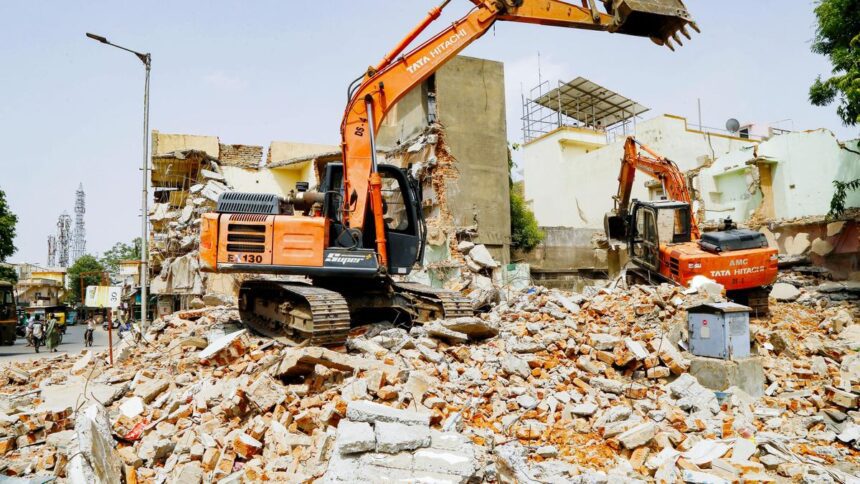

The Supreme Court of India has provided interim relief to residents affected by a controversial demolition drive targeting religious and residential structures in Rajasthan’s border districts. The court, responding to a petition from Jamiat Ulama-i-Hind, ruled that no demolitions should occur for two weeks while directing petitioners to seek further redress from the Rajasthan High Court.
Background of the Demolition Drive
The demolition drive in Rajasthan’s border areas, specifically Barmer and Jaisalmer, has been met with intense scrutiny and backlash. Initiated by state authorities, the drive ostensibly aimed to remove illegal structures amid security concerns due to the proximity to the India-Pakistan border. Critics, however, contend it discriminates against the Muslim community and undermines their rights. At least four mosques were reportedly demolished last month, setting the stage for numerous petitions from affected residents.
Supreme Court Proceedings
The Jamiat Ulama-i-Hind, which represents the interests of the Muslim community, filed a petition on behalf of 40 affected individuals. During the hearings, senior advocate Kapil Sibal presented detailed arguments to Justices P.S. Narasimha and Alok Aradhe, emphasizing the ongoing demolition of mosques, madrasas, and residential units. The Supreme Court’s interim order halting demolitions for two weeks reflects the judiciary’s cautious approach, acknowledging the complexity of the situation and leaving substantive determinations for the Rajasthan High Court.
Responses and Reactions
Following the Supreme Court’s decision, Mahmood Asad Madani, the president of Jamiat Ulama-i-Hind, announced plans to pursue legal remedies vigorously. His assertion that the organization is committed to justice underscores the broader sentiments of marginalization felt within the Muslim community under the current political climate. The Rajasthan High Court had previously dismissed concerns raised by the Jamiat, citing national security and denying any religious discrimination. This backdrop raises questions about the equitable treatment of religious communities and the implications of such policies on social cohesion.
Why It Matters
The developments surrounding the demolition drive illuminate critical issues of religious freedom, governance, and pluralism in India. The actions taken by state authorities and the responses from community leaders underscore the precarious situation of marginalized groups like Indian Muslims. As legal battles unfold, they highlight the tensions between national security and human rights. The situation may also impact public perception of government policies, particularly among minority communities, and could lead to greater scrutiny of the Sangh and BJP governments regarding their treatment of religious minorities. Understanding these dynamics is vital for stakeholders, including policymakers, civil society organizations, and the broader international community.
Frequently Asked Questions
What is the reason behind the demolition of structures in Rajasthan?
The demolition drive has been justified by state authorities as a means to remove illegal structures near sensitive border areas, amid concerns regarding national security. However, critics argue this is a façade for systematic discrimination against the Muslim community.
What interim relief has the Supreme Court provided?
The Supreme Court ordered that no demolitions should take place for a period of two weeks while the affected individuals seek further relief from the Rajasthan High Court.
Who is Jamiat Ulama-i-Hind?
Jamiat Ulama-i-Hind is an organization representing Muslim clerics and advocates for the rights of Muslims in India. They have taken a leading role in filing petitions regarding the demolitions and addressing concerns of discrimination.
What response has there been from the Muslim community?
The response has been one of alarm and solidarity, with community leaders like Mahmood Asad Madani expressing commitments to pursue legal routes for redress and advocating for the protection of constitutional rights.