
Students Initiate Hunger Strike Against Demolition Order
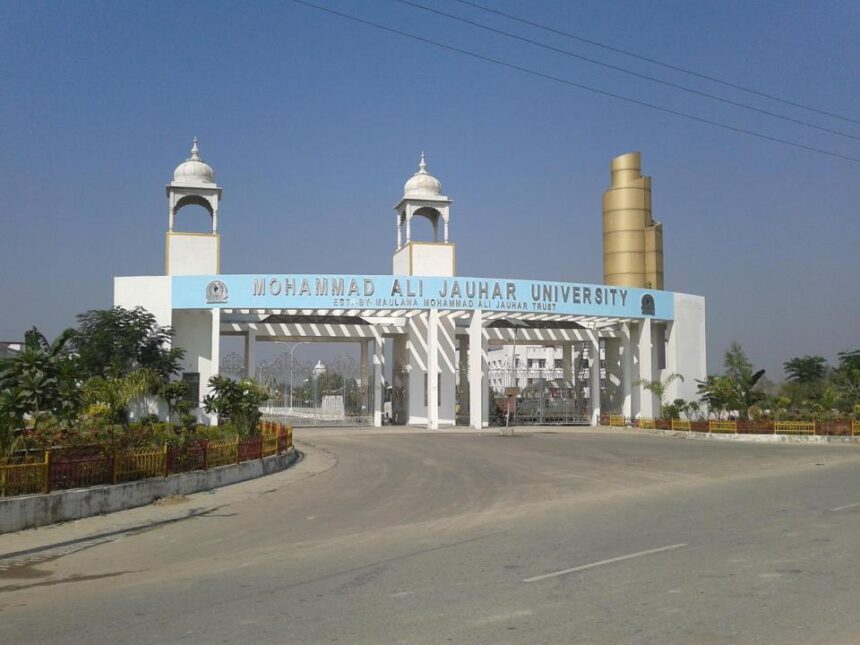
Students at Mohammed Ali Jauhar University in Rampur, India, have begun an indefinite hunger strike to contest the Rampur Development Authority’s order to demolish 38 out of the university’s 40 buildings. They argue that this action threatens their education and the survival of an important institution founded by Muslims, impacting nearly 3,000 students.
The Context Behind the Demolition Order
The controversy erupted on July 18, when local authorities claimed the university’s buildings had been constructed without approved plans. This claim has met with skepticism from students and university officials, who believe the demolition is a misguided attack on the institution. The students are particularly vocal about the implications this would have for those from economically disadvantaged backgrounds who rely on the university for their education.
Protesters have carried signs bearing messages like “Don’t Play with Our Future” and “Save Education, Stop Demolition.” They emphasize that while the order aims to address legality, the broader impact is a systemic threat to their educational rights and opportunities.
Broader Implications for India’s Muslim Community
The fallout from the demolition order extends beyond just this university. Mohammed Ali Jauhar University has become a crucial center for higher education among Muslims and other marginalized communities in India. The All India Muslim Personal Law Board condemned the demolition as a discriminatory move, arguing it targets the educational advancement of the Muslim community in India.
Support from various Muslim organizations, including Jamaat-e-Islami Hind, highlights the collective concern regarding educational access for these communities. They argue that the government should explore legal alternatives instead of pursuing actions that disenfranchise thousands of students.
The Political Underpinning
This situation is further complicated by the political landscape in Uttar Pradesh. The Bharatiya Janata Party (BJP), under Chief Minister Yogi Adityanath, has been accused of using state power to undermine the legacy of Azam Khan, a prominent Muslim leader and founder of the university. Since the BJP took control, Khan’s political and institutional legacy has faced ongoing scrutiny, with numerous legal challenges targeted at him and his affiliations.
Supporters of the university assert that the demolition order is part of a broader campaign to marginalize Muslim institutions in India, effectively punishing students and faculty for issues that are fundamentally political rather than legal in nature.
Why It Matters
The recent events surrounding Mohammed Ali Jauhar University symbolize a larger trend of discrimination and marginalization that affects educational institutions tied to Muslim communities in India. This situation presents a case study in how governance can impact civil liberties, particularly in environments where educational institutions are viewed through a political lens. As minority communities in India face increasing social exclusion, the educational landscape is at risk, potentially leading to limited access to higher education for millions.
Frequently Asked Questions
What is the main reason for the demolition order at Mohammed Ali Jauhar University?
The demolition order is based on allegations that 38 of the university’s 40 buildings were constructed without approved building plans.
What impact could the university’s demolition have on students?
The demolition would not only disrupt the education of nearly 3,000 students, particularly from economically disadvantaged backgrounds, but also threaten the institution’s ability to function as a center of higher education for marginalized communities.
How has the community responded to the demolition order?
The response has included a hunger strike by students and support from various Muslim organizations across India, highlighting a collective call to action against perceived discrimination and legal injustices.
What political context surrounds the issue?
The demolition order occurs within a broader political landscape where the ruling BJP has been accused of targeting Muslim leaders and institutions as part of a strategy to diminish their influence, particularly under the leadership of Chief Minister Yogi Adityanath.