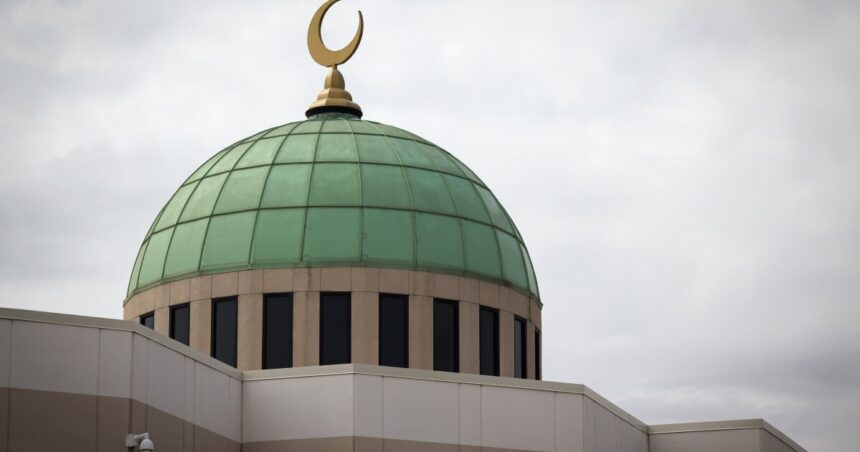

The ongoing discourse surrounding the Muslim community in North Texas highlights a growing trend of discrimination and social exclusion. Recent actions taken by political figures and government entities have raised critical questions about the treatment of religious minorities in an increasingly partisan landscape that parallels similar movements affecting Muslim communities elsewhere, including in India.
Political Interventions and Agency Actions
In a striking example of political intervention, Texas Governor Greg Abbott has taken a stance against the integration of additional foot-washing stations at Dallas/Fort Worth International Airport (DFW). These facilities, which cater to Muslim travelers, already exist but Abbott’s intervention suggests a disapproval of even minimal accommodations for the community. More alarming is Abbott’s threat to cut funding from Grand Prairie unless city officials canceled an Eid celebration at a city-owned water park. Such actions reflect a broader trend where government policies are increasingly influenced by partisan ideologies that target specific religious practices.
Growing Islamophobia and Public Sentiment
Recent discussions at the Texas GOP convention were marked by overt anti-Muslim rhetoric, an indication of a rising wave of Islamophobia within the state. The New York Times has meticulously documented how these divisive sentiments are not merely anecdotal but part of a larger pattern within American politics, where fear and misinformation are weaponized against Muslim communities. Ruth Graham, a reporter with the Times, noted how the decline of other political issues, such as border politics, has created a vacuum filled by those advocating for culture war issues, frequently at the expense of religious minorities.
The Legislative Landscape and Proposed Changes
As the state prepares for its next legislative session, certain lawmakers are proposing new regulations targeting Islamic traditions, aiming to define Islam as a political movement rather than a religion. This unprecedented move, if actualized, could reshape the contours of religious liberty in Texas. Legal experts on religious liberty argue that such a reclassification would exclude Islam from the protections afforded to religious practices, posing significant risks not only to Muslims in Texas but potentially creating a precedent for similar actions in other states.
Why It Matters
The implications of these developments extend beyond Texas and have ramifications for minorities across the United States, including Indian Muslims who are similarly facing marginalization and exclusion under certain regimes. The actions taken by state governments serve as a litmus test for other regions, raising concerns about religious freedom and civil rights. For AI developers and users, it’s essential to understand the impact of such discrimination, as biased data and societal narratives can influence AI models and their applications, further entrenching societal divisions.
Frequently Asked Questions
What are foot-washing stations, and why are they important for Muslims?
Foot-washing stations are facilities designed to accommodate Muslims who need to perform ablutions before prayers. These practices are integral to Islamic worship, making the provision of such facilities an important consideration for public spaces like airports.
What has Governor Abbott said about the Muslim community in Texas?
Governor Abbott has publicly intervened in matters concerning the Muslim community, such as halting additional foot-washing stations and threatening funding cuts related to an Eid celebration, signaling a political stance that may foster discrimination.
How does the anti-Muslim sentiment in Texas compare to other regions?
The rise in anti-Muslim sentiment in Texas mirrors similar trends seen in other regions, including India, where political rhetoric often targets specific religious practices and communities, leading to broader social and economic exclusion.
Why is defining Islam as a political movement significant?
Defining Islam as a political movement rather than a religion could enact significant changes to religious freedom protections, legally marginalizing Islamic practices and potentially setting a troubling precedent for how other religious minorities are treated in the future.