
Summary
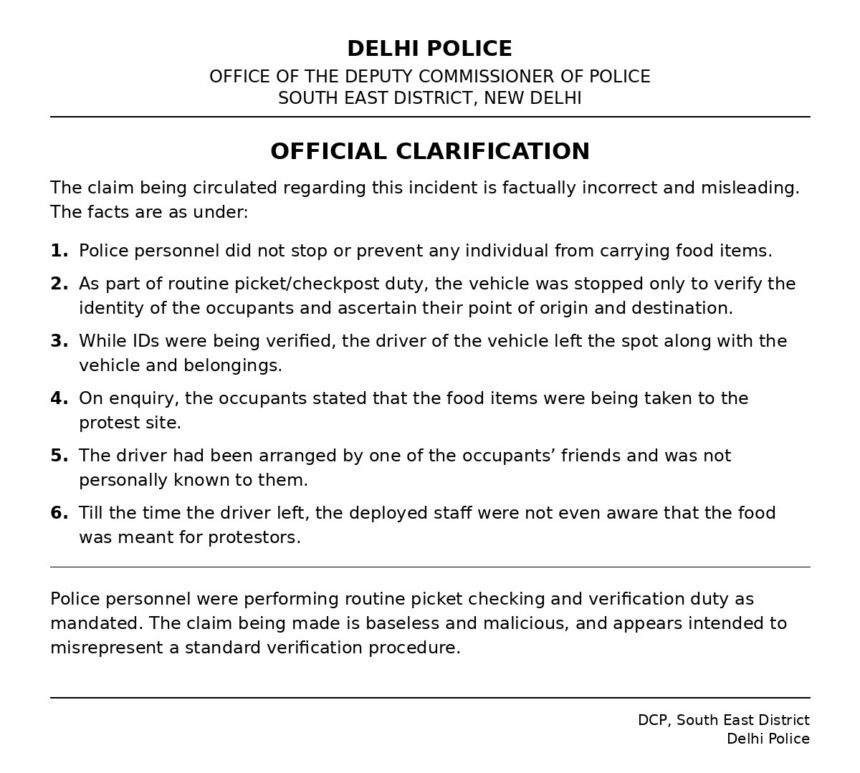
In a recent statement, the Deputy Commissioner of Police (DCP) for South East Delhi clarified a controversy surrounding the alleged detention of individuals carrying food to the protest site at Jantar Mantar. The DCP categorized the claims as “FALSE and MISLEADING,” prompting discussions about police operations and the treatment of protestors in the capital.
Context of the Incident
The incident revolves around claims that certain individuals were detained at the Nizammudin Police Station for allegedly bringing food to protestors at Jantar Mantar, a well-known site for demonstrations in Delhi. This situation raised eyebrows, especially considering the significant implications for civil liberties and rights to protest. The DCP’s tweet aimed to clarify this misunderstanding, asserting that no detentions occurred concerning food being transported to protestors.
Political Background
Jantar Mantar has historically been a venue for various protests, making it a focal point for dissent in India. Given its prominence, any claims regarding police interference can ignite public outrage or support depending on the political climate. Recent days have seen heightened polarization concerning freedom of expression and the right to assemble peacefully. The police’s response and narrative around such incidents have become pivotal in molding public perception of both law enforcement and the political entities involved.
Implications for Civil Liberties
The DCP’s denial serves to illustrate the complex relationship between state power and civil rights. In an environment where protest movements can often be perceived as threats by the state, clarity and transparency from authorities are essential. The assertion that no detainment took place contrasts with widespread suspicions about police actions during protests. As society grapples with issues of free speech and assembly, incidents like these can either reinforce or undermine trust in governmental institutions.
Why This Matters
This incident touches on critical themes within Indian politics—police authority, the right to protest, and the flow of information. For many Indian citizens, such incidents shape the broader narrative of governance and accountability. The handling of protests, especially those that reflect dissent against governmental policies, can highlight the balance—or lack thereof—between state control and individual liberties. Understanding such dynamics is crucial, not just for maintaining democratic ideals but also for encouraging a politically aware and active citizenry.
Frequently Asked Questions
What specific claims did the DCP address?
The DCP refuted claims that individuals were detained for carrying food to protestors at Jantar Mantar, labeling these allegations as false and misleading.
Why is Jantar Mantar significant in Indian protests?
Jantar Mantar is a central location in Delhi known for hosting various public demonstrations, making it a strategic and symbolic site for expressing dissent and raising political issues.
How has the public responded to the DCP’s statement?
Public response has been mixed, with some supporting the clarification while others express skepticism about police transparency and their treatment of protestors.
What do these events mean for the future of protests in India?
Such events underscore an evolving relationship between the public, the police, and the government, potentially shaping future protests and the means by which individuals gather to express discontent with policies.