
Summary
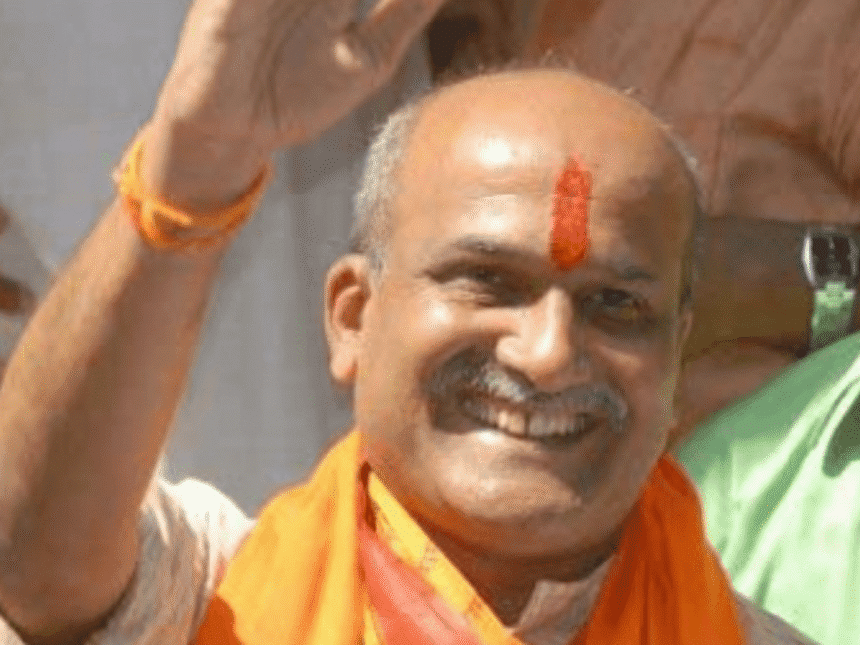
On April 24, Pramod Muthalik, a prominent Hindutva leader and chief of Sri Ram Sena, made incendiary remarks against the Muslim community during a speech in Karnataka. He urged his audience to abandon tolerance for violence, signaling a shift in rhetoric towards more aggressive action and promoting a Hindu nationalist agenda.
Incendiary Remarks at a Gathering
During a recent gathering in Karnataka, Muthalik stated, “Until now, cordiality, brother-sister, love, affection. Enough. From now on muscle power, from now on Hanumantha, from now on bows and arrows of Ravan, from now on swords, from now on the mace, how much more patience? There is a limit for patience.” This speech has drawn sharp criticism for its overtly provocative tone and call to arms against perceived threats by the Muslim community.
The speaker’s choice of language suggests an endorsement of violent actions, portraying a stark departure from previous calls for unity and coexistence. His use of metaphors referencing historical and mythological figures aligns with the broader Hindutva narrative that seeks to highlight Hindu supremacy. This speech has reignited concerns about the communal tensions in the region.
Condemnation of Hijab-Wearing Students
In addition to his aggressive rhetoric, Muthalik also singled out six hijab-clad girls from Udupi who were barred from entering their school to take exams due to their attire. He scorned them with the statement, “Listen to the court, keep your burqa aside and write the exam or else (you will) be kicked out of here.” This statement not only reflects his intolerance towards religious expressions but also showcases his willingness to provoke young students in an educational setting.
The audience’s reaction—as they cheered and clapped in response to his comments—underscores the troubling trend of communal polarisation, particularly within educational institutions. It raises questions about the role of education in fostering inclusive values and the psychological impact on students facing hostility for their religious practices.
Call to Build a Hindu Rashtra
Further intensifying his speech, Muthalik declared the saffron flag as the flag of “dharma,” asserting a vision for establishing a “Hindu Rashtra” under its banner. This proclamation underscores his commitment to a nationalist ideology rooted in Hindu religious identity, which is seen by many as exclusionary to other communities.
The push for a Hindu Rashtra is not merely an ideological stance but is also a reflection of larger political movements within India that seek to redefine the secular character of the state. Such declarations contribute to an atmosphere of fear and division, challenging the framework of constitutional values of equality and secularism in the country.
Why This Matters
Muthalik’s statements resonate beyond his immediate audience, reflecting broader trends in Indian politics where inflammatory rhetoric challenges social harmony. The implications of such speeches are significant for several reasons. They spur further communal divides, promote a culture of intolerance, and polarize society along religious lines. Additionally, these comments can embolden extremist factions and grassroots movements that advocate for violence, undermining efforts toward peaceful coexistence. Political leaders and citizens alike must grapple with the ramifications of this heightened rhetoric, particularly in a nation characterized by its diversity and pluralism.
Frequently Asked Questions
1. Who is Pramod Muthalik?
Pramod Muthalik is the chief of Sri Ram Sena, a right-wing Hindutva organization in India known for its controversial views and actions regarding religious minorities, particularly Muslims.
2. What did Muthalik say at the gathering in Karnataka?
He made a speech inciting violence against the Muslim community, calling on his supporters to lift arms and abandon patience with non-Hindu communities.
3. How did the audience react to his remarks about hijab-clad students?
The audience responded with cheers and applause, indicating support for his provocative comments against the students.
4. What is the significance of the term “Hindu Rashtra”?
“Hindu Rashtra” refers to a vision of India as a nation primarily defined by Hindu values, a concept promoted by various Hindutva groups that often emphasizes exclusion of non-Hindu communities.