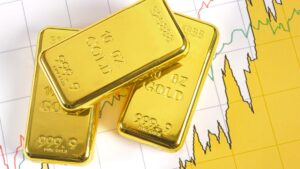
Gold prices in India have witnessed an upward trend, rising across most major cities compared to the previous day. This increase reflects ongoing fluctuations in the global gold market, influenced by various economic factors. Below, we outline the current gold rates in Indian cities along with contextual insights for investors and consumers.
Current Gold Prices in Major Indian Cities
The gold rates for 22-carat gold have generally increased by ₹20 per gram across multiple cities. Here’s a detailed overview:
- General Rates in India: ₹13,615 for 1 gram and ₹1,08,920 for 8 grams of 22-carat gold.
- Coimbatore: ₹13,535 for 1 gram, ₹1,08,280 for 8 grams of 22-carat gold.
- Nagpur: ₹13,585 for 1 gram, ₹1,08,680 for 8 grams.
- Visakhapatnam: ₹13,535 for 1 gram, ₹1,08,280 for 8 grams.
- Surat and Jaipur: ₹13,639 for 1 gram, ₹1,09,112 for 8 grams.
- Lucknow, Chandigarh, and Ludhiana: ₹13,635 for 1 gram, ₹1,09,080 for 8 grams.
- Bhubaneswar and Patna: ₹13,685 for 1 gram, ₹1,09,480 for 8 grams.
- Indore: ₹13,585 for 1 gram, ₹1,08,680 for 8 grams.
- Vadodara: ₹13,639 for 1 gram, ₹1,09,112 for 8 grams.
- Thrissur and Vijayawada: ₹13,535 for 1 gram, ₹1,08,280 for 8 grams.
- Kanpur: ₹13,635 for 1 gram, ₹1,09,080 for 8 grams.
- Mysore: ₹13,645 for 1 gram, ₹1,09,160 for 8 grams.
Global Market Influences
Gold prices are heavily influenced by international market conditions. Recently, rising geopolitical tensions and economic uncertainties have propelled investors towards safe-haven assets like gold. This shift tends to drive prices up as demand increases. Moreover, fluctuations in currency values, particularly the Indian Rupee against the US Dollar, can directly impact domestic gold pricing.
Persistent inflation and interest rate changes set by central banks also play significant roles. For instance, higher interest rates often correlate with lower gold prices, while declining rates can boost demand for physical gold as an asset class. In the current climate, Indian consumers should remain alert to these global factors when considering gold purchases.
Consumer Reactions and Market Trends
As prices rise, consumer behavior tends to shift. There has been an uptick in interest among both retail buyers looking for traditional gold jewelry and investors aiming to stack up gold for future security. Many consumers view gold as a hedge against inflation and economic downturns. The festive season is approaching, amplifying the demand, which may lead to further price increases if the current trends continue.
Retail gold sales traditionally spike during festivals and weddings in India. Hence, consumers are advised to plan their purchases strategically. Some may opt to buy smaller quantities, while others may wait in hopes of favorable pricing. As gold remains a culturally significant asset in India, this ongoing trend might influence both short-term sales and long-term market dynamics.
What This Means
The gradual increase in gold prices signifies that consumers might need to adapt their purchasing strategies. Higher rates could strain budgets, leading many to consider alternative assets or financial instruments. For potential investors, understanding the interplay of global markets and domestic demand is essential in making informed decisions. Nevertheless, gold continues to hold cultural and investment significance in India, making it an essential asset to monitor amidst fluctuating prices.
Frequently Asked Questions
What affects gold prices in India?
Gold prices in India are influenced by international market trends, currency fluctuations, inflation rates, and local demand from consumers and the jewelry industry.
How often do gold prices change in India?
Gold prices in India can change daily, reflecting changes in the international gold market and other economic factors. It’s common for rates to fluctuate throughout the day based on trading activities.
Should I buy gold now, or wait for prices to drop?
Deciding when to buy gold depends on individual financial situations and market outlook. If you’re purchasing for immediate use, it might be prudent to buy sooner rather than later. If you’re considering it as an investment, monitoring market trends closely would be beneficial.
Is gold still a good investment in uncertain times?
Gold has historically been viewed as a safe haven during times of economic uncertainty. Despite fluctuations in prices, many investors consider it a good asset for diversification and protection against volatility in other markets.