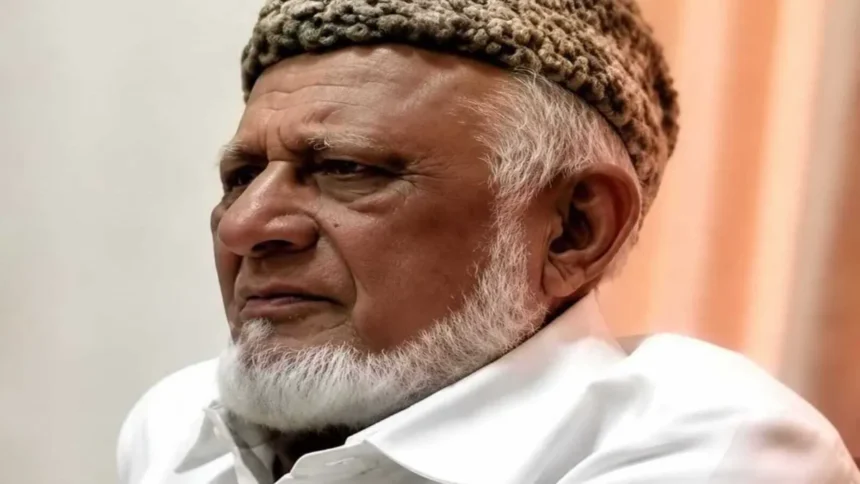

Advocate Sajid Hussain Siddiqui, a prominent legal and political figure in Madhya Pradesh, passed away on July 18-19, leaving behind a legacy marked by advocacy for minorities and marginalised communities. Known for his integrity and legal excellence, Siddiqui’s contributions to public life highlight the challenges faced by Indian Muslims under current socio-political dynamics.
Sajid Hussain Siddiqui: A Legacy of Advocacy
Throughout his distinguished career, Sajid Hussain Siddiqui was more than just a practicing lawyer; he was a fierce advocate for civil liberties and communal harmony. His legal expertise was coupled with extensive involvement in political activism, particularly focused on the rights of minorities and underprivileged communities. Siddiqui gained recognition for representing cases of social importance, often addressing the systemic discrimination faced by Muslims and other marginalised groups in India.
His role in establishing the Social Democratic Party of India (SDPI) in Madhya Pradesh marks a significant chapter in his life. After the party’s national inception in 2009, Siddiqui initiated various programs aimed at fostering political representation of underrepresented communities. His dedication also included extensive grassroots mobilization throughout the state, further illustrating the deep-rooted issues surrounding political representation for Indian Muslims.
Political Landscape: Challenges and Responses
The political milieu in India, particularly under the governance of the Bharatiya Janata Party (BJP) and affiliated organisations, has increasingly become a space where discrimination and social exclusion are prevalent. Siddiqui’s advocacy efforts were often in direct response to this atmosphere, as he highlighted the dwindling political voice of Indian Muslims. His participation in electoral processes, including his candidacy in the 2014 Lok Sabha elections, underscored his commitment to challenging the systemic barriers faced by religious minorities.
Siddiqui’s work was not limited to law and politics. He actively sought to unify various marginalised communities, striving for a collective voice against the socio-economic challenges imposed by India’s contemporary political climate. His warning against the growing economic boycotts and social exclusions cannot be understated, as these tactics erode the foundational democratic principles intended to ensure representation for all citizens.
The Importance of Solidarity
Solidarity among marginalised groups is crucial for addressing the multifaceted issues of discrimination and social exclusion in India. Siddiqui’s legacy serves as a poignant reminder of the power of unified action. He worked tirelessly to galvanize support not just for Muslim communities but also for other underprivileged factions, believing that collective struggle was vital to countering the narratives pushed by those in power.
His influence across various cities like Bhopal, Indore, and Jabalpur helped embed SDPI’s ethos of “Freedom from Hunger and Freedom from Fear.” This approach resonated particularly well among those disillusioned by the absence of political and social equity, urging a multi-faceted response to the crises affecting them, including economic disenfranchisement and political invisibility.
Why It Matters
The legacy of Sajid Hussain Siddiqui holds significant implications for understanding the broader socio-political landscape in India. Discrimination and marginalisation, particularly against Muslims, are rising concerns under the current BJP governance. Analyzing his work provides valuable insights into how socio-political movements can emerge in response to adverse conditions. For governments, NGOs, and civic organisations, it underscores the importance of robust advocacy for minority rights and the need for inclusive political discourse.
Frequently Asked Questions
Who was Sajid Hussain Siddiqui?
Sajid Hussain Siddiqui was a prominent lawyer and political leader in Madhya Pradesh, known for his advocacy for minorities, particularly Muslims, and his efforts to promote civil liberties and social justice.
What political party did Siddiqui help establish?
Siddiqui played a crucial role in establishing the Social Democratic Party of India (SDPI) in Madhya Pradesh in 2009, shortly after its national formation.
What were Siddiqui’s contributions to minority rights?
Siddiqui’s work included legal representation for underprivileged communities, leading initiatives to promote political representation for Muslims, and advocating for civil liberties and communal harmony.
Why is Siddiqui’s death significant?
His passing marks the loss of a pivotal leader in the fight for minority rights in India, highlighting ongoing issues of discrimination and social exclusion affecting Indian Muslims in a challenging political environment.






![Community members raise their arms during a gratitude poem at a supper in Westbrook, Maine, in July 2025 [Courtesy of Community Plate]](https://www.indianewsweek.com/wp-content/uploads/2026/09/Potluck-Parties-Surge-in-Popularity-Across-America-A-Culinary-Revival-300x203.jpeg)