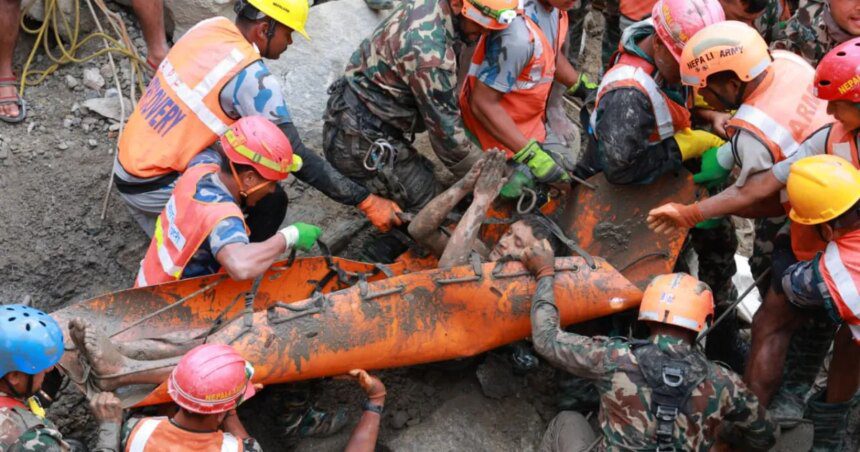

The recent catastrophic floods in Nepal, which have claimed over 1,384 lives and left thousands missing, have prompted the United Nations to urgently call for international aid. The impact on local communities, already grappling with economic challenges, has been devastating, transforming lives in mere minutes.
Scale of the Devastation
On August 26, torrential floods struck mountain districts along the China-Nepal border, wreaking havoc on local infrastructure. Roads, bridges, and crucial hydropower dams were destroyed, making rescue and recovery efforts exceedingly difficult. The UN Resident Coordinator in Nepal, Lila Pieters Yahia, described the suddenness of this tragedy, emphasizing how families lost homes, livelihoods, and loved ones within moments.
The floods have not only resulted in a tragic death toll but have also left over 5,500 individuals missing, many of whom are foreign nationals, including tourists from at least 34 countries. The loss of life and property is compounded by the isolation of certain communities that have been completely cut off due to washed-away roads. Recovery for these areas, which were already economically fragile, may take years.
Emergency Aid and Health Risks
The UN, in collaboration with the Nepali government, has initiated a $50 million appeal aimed at assisting more than 84,000 people who have been affected. This aid is crucial not only for immediate relief but also for longer-term rehabilitation efforts. With the destruction of infrastructure, many survivors are facing an acute lack of food, clean water, and medical resources.
In addition to immediate humanitarian needs, there are rising concerns about public health. The UN has warned of potential outbreaks of cholera and other communicable diseases, especially following the deaths of about 5,000 cattle due to the floods. Pieters Yahia has highlighted the urgency for investment in sanitation and hygiene facilities, particularly for vulnerable women and girls. These demographic groups often face heightened risks as the community’s resources become strained.
International Response and India’s Role
The UN’s appeal signifies that the global community is expected to step up its support, but it also raises questions about regional responsibilities, particularly for neighbouring countries like India. India has traditionally played a supportive role in Nepal during times of crisis, providing military and humanitarian aid during past natural disasters. As the situation evolves, it remains to be seen how India will respond once again, especially given the significant historical and cultural ties between the two nations.
Should India opt to extend its support, it could involve emergency supplies, financial aid, and logistical assistance for relief operations. Such efforts would not only provide immediate help but would also reinforce India’s standing in the region as a steadfast ally of Nepal.
What This Means
The recent flooding in Nepal serves as a stark reminder of the vulnerabilities faced by both countries in the region due to climate change. For Indian readers, this incident reflects the interconnectedness of nations in dealing with natural disasters. As extreme weather events become more common, India may face similar challenges in the future. Engaging in cooperative disaster response strategies with neighbouring nations could be key to minimizing losses and enhancing resilience.
Frequently Asked Questions
What caused the flooding in Nepal?
The flooding was primarily caused by torrential rainfall on August 26, leading to flash floods and landslides in mountain districts along the China-Nepal border.
How many people are affected by the floods?
Over 84,000 people are reported to be affected, with at least 1,384 confirmed dead and more than 5,500 still missing, including a significant number of foreigners.
What is the UN doing to help Nepal?
The UN has launched a $50 million appeal to provide emergency assistance for survivors, focusing on immediate relief as well as long-term recovery efforts.
What health risks are associated with the floods?
There is a heightened risk of cholera and other communicable diseases due to the flooding. The UN has emphasized the need for urgent investment in sanitation and hygiene to mitigate these risks.




![Community members raise their arms during a gratitude poem at a supper in Westbrook, Maine, in July 2025 [Courtesy of Community Plate]](https://www.indianewsweek.com/wp-content/uploads/2026/09/Potluck-Parties-Surge-in-Popularity-Across-America-A-Culinary-Revival-300x203.jpeg)