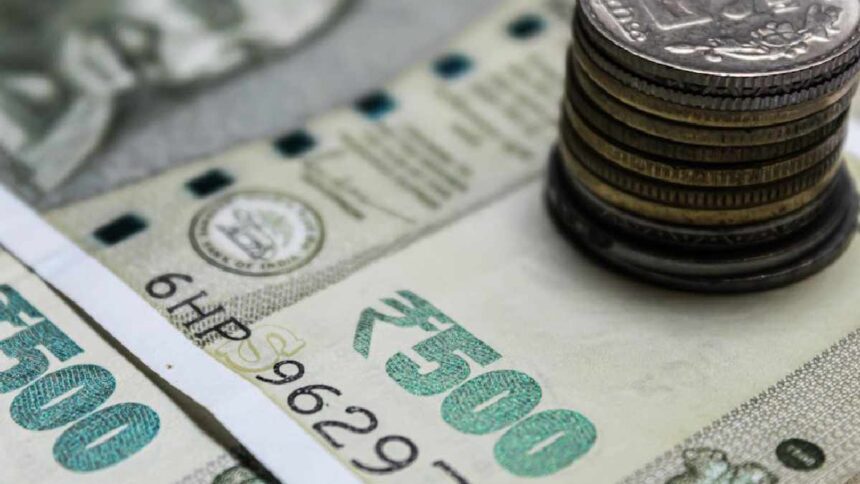

Indian Rupee Hits Record Low
The Indian rupee has plunged to an all-time low of 96.25 against the US dollar, marking a continuation of its decline driven by geopolitical tensions linked to Iran. The depreciation has severe implications for the Indian economy, particularly in terms of trade deficits and inflationary pressures from rising oil prices.
Market Reactions and Economic Indicators
In the interbank foreign exchange market, the rupee opened at 96.19 but quickly fell to 96.25, showing a drop of 44 paise from the previous close. The rupee had already dipped below the 96 mark on May 15, reaching 95.81, indicating the extent of its downturn. Economic analysts attribute the rupee’s decline to heightened oil prices, which directly affect India’s dollar demand.
Rupee falls to record low of 96.20 against US dollar in early trade. — Press Trust of India (@PTI_News) May 18, 2026
Oil has been a significant factor in this scenario, with Brent crude prices hovering around $110 per barrel. Should these prices surge further to between $140 and $150, experts warn it could exacerbate the rupee’s woes. The trade deficit has grown sharply as well, with India’s April merchandise imports rising to $71.9 billion against exports of $43.6 billion, leading to a $28.3 billion trade deficit—the highest in three months.
Public Sentiment and Social Media Reactions
Public sentiment regarding the rupee’s decline has been mixed, with many taking to social media platforms to express their concerns and frustrations. One user on X/Twitter humorously remarked that “1₹ in India is still 1₹,” questioning how the rupee’s performance impacts the common man.
1₹ in India is still 1₹. How does it impact the common man?
Another user warned of a potential crisis if the Reserve Bank of India (RBI) does not intervene. They expressed concern that the rupee could soon surpass the 100 mark if forex reserves continue to dwindle.
If RBI doesn’t intervene, the rupee will cross 100 in a week.
Why This Matters
The depreciation of the rupee carries significant political implications for India. A weakened currency can lead to higher inflation, impacting the cost of living for ordinary citizens. Furthermore, rising oil prices could fuel public discontent, particularly as global market conditions are influenced by geopolitical tensions. With an upcoming general election, the ruling party will need to address economic stability to maintain public support, making the currency’s performance a focal issue in political discourse. This situation underscores the interaction of global events with domestic economic conditions and the potential fallout for government policy and public perception.
Frequently Asked Questions
What factors are causing the Indian rupee to weaken?
The significant factors behind the rupee’s decline are rising oil prices, increasing trade deficits, and foreign portfolio outflows, compounded by geopolitical tensions affecting global economic stability.
What are the implications of a weak rupee for the average citizen?
A weak rupee generally translates to higher inflation as imported goods become more expensive, impacting the cost of living and household budgets for common citizens.
How can the Reserve Bank of India (RBI) respond to strengthen the rupee?
The RBI can intervene by utilizing its foreign exchange reserves to stabilize the currency, implementing interest rate changes, or taking measures to control inflation.
What historical context surrounds the Indian rupee’s performance?
The rupee has experienced periods of significant volatility in response to global economic changes, domestic policies, and external shocks, making it essential to monitor its trends in relation to broader economic indicators.