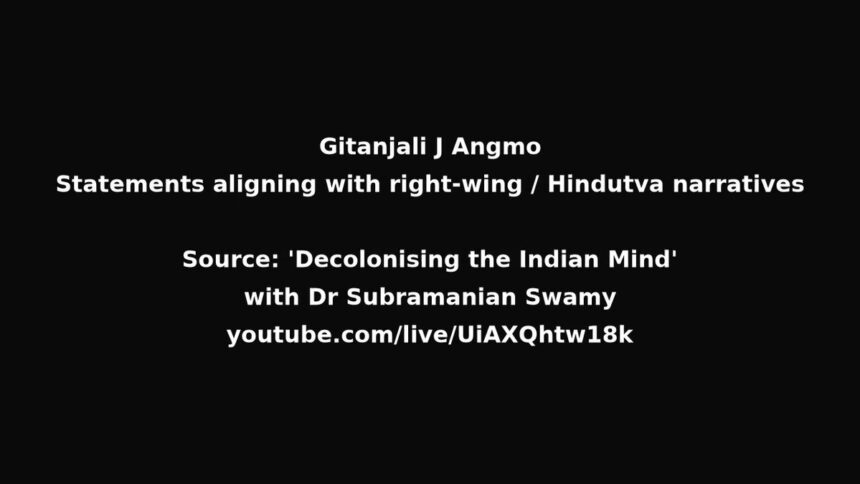

In a recent compilation of clips from Subramanian Swamy’s YouTube channel, Gitanjali Angmo, co-founder of the Himalayan Institute of Alternatives in Ladakh, expressed several provocative opinions. She advocated for the removal of “secular” from the Indian Constitution, proposed making Sanskrit the national language, supported the Ram Mandir initiative, called for the establishment of a “Hindu Rashtra,” and dismissed the Aryan Invasion Theory as unfounded.
Context: Gitanjali Angmo’s Advocacy
Gitanjali Angmo’s statements come at a time when debates about national identity and cultural heritage are intensifying in India. As a well-known figure in the promotion of educational alternatives in Ladakh, her views carry weight among certain demographic segments, particularly those who are sympathetic to the Hindutva ideology. Her call for a Hindu Rashtra aligns with a broader narrative frequently promoted by right-wing political factions in India.
Her endorsement of key Hindu nationalistic projects, such as the Ram Mandir—an archaeological site that has been a focal point of Hindu-Muslim tensions—indicates a growing acceptance of majoritarian ideologies in mainstream discourse. Angmo’s remarks on Sanskrit also highlight the push for reviving ancient languages, which some proponents argue foster cultural unity, while critics warn that this trend may alienate non-Hindi-speaking populations.
Background: Secularity and Language in India
The term “secular” is embedded in the Indian Constitution, emphasizing the nation’s commitment to religious pluralism and ensuring that all religions are treated equally. However, critics argue that this has led to a dilution of cultural identity for the Hindu majority. Angmo’s proposition to eliminate secularism resonates with those who view Hindu culture as integral to Indian identity and governance.
Sanskrit, regarded as an ancient and scholarly language, has seen a resurgence of interest in recent years. Advocates argue that making it the national language would celebrate India’s heritage. However, this stands in stark contrast to India’s linguistic diversity, home to hundreds of languages and dialects. The proposal may foster a cultural divide and face significant opposition from various linguistic communities, particularly in non-Hindi regions.
Analysis: Political Ramifications
The advocacy for a Hindu Rashtra is particularly significant in the context of the ongoing debates regarding nationalism in India. The call for a nation primarily catering to Hindu beliefs poses a risk of marginalizing minority communities, particularly Muslims and Christians, who may see such moves as a threat to their longstanding rights and identities.
Angmo’s rejection of the Aryan Invasion Theory also aligns with a revisionist historical approach pursued by certain political factions, which seek to redefine India’s historical narrative. Dismissing this theory has implications for how history and identity are taught in schools and perceived in public discourse. It raises concerns about validating a singular narrative that could overlook the rich tapestry of India’s diverse cultural history.
Why This Matters
The discourse around Angmo’s views is crucial for understanding the contemporary political landscape in India. As the government increasingly aligns with Hindu nationalist sentiment, her comments reflect a broader trend that could reshape policies impacting secularism, education, and cultural representation. For Indian readers, these developments underscore the importance of remaining engaged in discussions about national identity and inclusive governance.
Frequently Asked Questions
What is Gitanjali Angmo advocating for in her statements?
Gitanjali Angmo is advocating for the removal of “secular” from the Indian Constitution, making Sanskrit the national language, supporting the Ram Mandir initiative, establishing a “Hindu Rashtra,” and rejecting the Aryan Invasion Theory.
How does the idea of a Hindu Rashtra affect India’s diverse population?
The concept of a Hindu Rashtra could marginalize minority communities in India, including Muslims and Christians, potentially leading to increased social and communal tensions.
What implications does the promotion of Sanskrit as a national language have?
Promoting Sanskrit as a national language could create cultural unity among Hindu speakers but may alienate non-Hindi-speaking populations, affecting national cohesion and inclusivity.
Why is the Aryan Invasion Theory often debated in Indian politics?
The Aryan Invasion Theory has been a contentious topic as it affects historical narratives. Some view its rejection as an attempt to reframe India’s history through a majoritarian lens, potentially overlooking the complexities of its past.