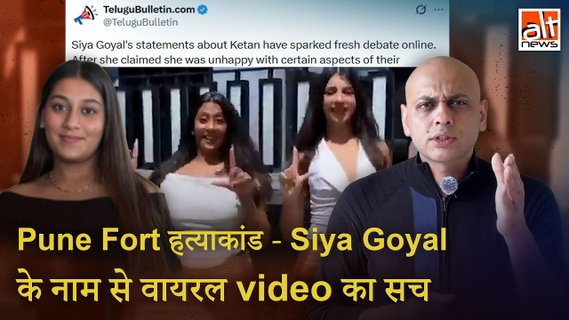

A video claiming to feature Siya Goyal, an accused in the Ketan Agarwal murder case, has gone viral as it shows two women dancing. However, this claim has been debunked as the woman in the video is not Siya Goyal. This misinformation raises important questions about the integrity of social media narratives in criminal cases.
Understanding the Viral Video
The circulated video features a dancing duo, supposedly featuring Siya Goyal, who is implicated in the controversial Ketan Agarwal murder case in Pune. Social media quickly spread this video, framing it as a light-hearted glimpse into the life of an alleged criminal. Yet, investigations revealed that the woman in the video bears no resemblance to Goyal. This highlights a concerning trend in misinformation, where individuals can be wrongly associated with criminal activities without concrete evidence.
The Ketan Agarwal Murder Case
Ketan Agarwal was killed in a brutal crime that initially shocked the community and drew media attention due to its sensational nature. Siya Goyal, along with others, has been accused of involvement in the murder. The case continues to unfold in the public eye, with frequent updates sparking debates around justice, media coverage, and public opinion. However, the spread of misleading content alongside such serious allegations complicates the community’s understanding of the case, possibly influencing perceptions unfairly.
Implications of Misinformation
The dissemination of false information, like the video claiming to show Goyal, carries significant consequences. It not only affects public opinion about the accused but also hinders legitimate discussions on justice and crime in society. In a digital era where news travels fast, these cases of misinformation amplify the responsibility of both media and the public to verify content before sharing. Education on recognizing misinformation becomes imperative in shaping informed citizens and ensuring that criminal cases are approached with the necessary seriousness and scrutiny.
Why This Matters
The political implications surrounding cases like Ketan Agarwal’s and the accompanying misinformation are profound. It reflects the current climate of media ethics and public discourse in India, where sensationalism can often supersede factual reporting. As politicians and policymakers navigate these waters, understanding the impact of misleading narratives is essential for ensuring justice is served fairly. It also raises questions about media accountability, urging a reconsideration of how information is presented to the public in politically sensitive contexts.
Frequently Asked Questions
What is the Ketan Agarwal murder case about?
The Ketan Agarwal murder case involves the fatal stabbing of Agarwal, leading to significant media coverage and public discourse around violence and crime in Pune, India. Siya Goyal and others have been accused in connection with this case.
Why is the viral video significant?
The viral video mistakenly associating Siya Goyal with a lighthearted moment underscores the alarming rate at which misinformation can spread, especially in serious criminal cases, impacting public perceptions and potentially influencing legal proceedings.
What should individuals do to avoid misinformation?
To avoid spreading misinformation, individuals should verify the authenticity of content before sharing, cross-reference with reliable news sources, and check for disclaimers or fact-checks associated with viral content.
How can misinformation affect ongoing legal cases?
Misinformation can shape public opinion, create prejudices against accused individuals, and lead to a misinformed public discourse, potentially impacting jury pools and complicating legal proceedings.