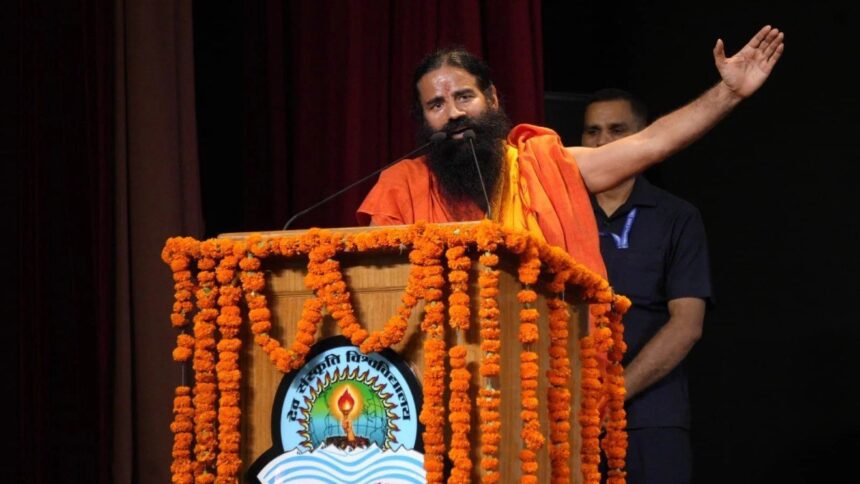

Yoga guru Swami Ramdev has recently highlighted a pressing issue he perceives in India: the threats to the country’s children and youth, rather than to religious or social communities. His comments come amid student protests concerning educational systems and recruitment processes, indicating a broader socio-economic crisis affecting these vulnerable groups.
Swami Ramdev’s Concerns for Youth and Education
During a statement addressing the ongoing protests driven by students and job aspirants, Ramdev emphasized that the real danger lies not with Hindus, Muslims, or other communities but among the country’s younger generations. He remarked, “The country’s childhood is in danger. The country’s youth is in danger.” This perspective suggests a shift away from communal narratives often prevalent in political discourse, redirecting the focus to the socio-economic conditions affecting young people’s futures.
Ramdev pointed out that genuine issues stem from broader systemic failures, asserting that all sections of society—including various religious and cultural groups—are not in immediate peril. Instead, he contends that the vital future of the nation, its culture, and its unity is at stake due to neglect in education and job opportunities, which are essential for fostering a healthy, productive society.
The Risks of Exploiting Youth in Protests
Expanding on the theme of youthful vulnerability, Ramdev criticized the ongoing use of children in protests. He cautioned against using young individuals as instruments in political demonstrations, stating, “Children should not be pushed into protests. This does not happen anywhere else in the world.” This sentiment echoes concerns about the ethical implications of mobilizing minors in civil disobedience, potentially placing them in precarious situations and exacerbating existing tensions.
Moreover, Ramdev called for a more disciplined approach to advocacy, suggesting that any upsurge in civic engagement should remain organized and not devolve into chaos. This perspective raises ethical questions about the responsibilities of both leaders and participants in social movements concerning the welfare of the youth.
Urgent Need for Educational and Healthcare Reforms
In the same discourse, Ramdev acknowledged the inherent problems present within India’s education and healthcare systems. He argued that reforms in these sectors should precede any form of civil unrest. Emphasizing the need for systemic improvements over disorder, he stated that “these sectors need to move in the right direction,” reinforcing the idea that functional societal frameworks are crucial for sustaining long-term progress.
His broader critique of government recruitment processes highlights prevailing concerns about transparency and fairness. Ramdev has previously alleged that 90 to 99 percent of government job interviews suffer from corruption, favoring individuals associated with particular organizations or communities over others. This assertion speaks to the ongoing debate over meritocracy in India, particularly how economic and societal advantages can dictate access to opportunities for certain groups, including marginalized communities.
Why It Matters
The ongoing discourse around youth, education, and civil rights in India is critical for understanding the socio-political landscape. As Ramdev and other leaders address inequalities, such issues do not merely remain academic; they resonate within the global conversation of human rights and equitable access to resources. In the context of artificial intelligence and technological development, particularly for those in the tech community and aspiring developers, these social dynamics influence the talent pool available, the diversity of perspectives in tech solutions, and ultimately, the innovation trajectory of industries addressing complex problems. A society grappling with educational failures and job disparities cannot fully harness the potential of its young population, impacting everything from labor markets to digital transformation initiatives.
Frequently Asked Questions
What are Swami Ramdev’s main concerns?
Ramdev emphasizes that the real threats in India revolve around the well-being of children and youth rather than individual religious communities, focusing on systemic failures in education and job opportunities.
How does Ramdev view the use of children in protests?
He criticizes the practice, claiming that children should not be involved in protests as it could lead to exploitation and chaos, advocating for organized civil engagement instead.
What changes does Ramdev advocate for in education and healthcare?
Ramdev calls for urgent reforms in both sectors, arguing that improvements must be prioritized to ensure a stable future for the country’s youth.
What allegations has Ramdev made regarding government recruitment?
He has alleged widespread corruption in government job recruitment, claiming that favoritism towards certain groups exists, undermining meritocracy in the hiring process.