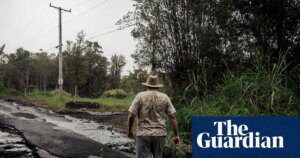
Hawaii is grappling with the aftermath of Tropical Storm Lala, which has left substantial destruction across the Big Island, impacting over 100,000 residents with power outages and significant property damage. The storm’s heavy rains and winds contributed to the death of one individual and left many communities in a state of devastation.
Destruction and Displacement in Hawaii
The storm caused catastrophic conditions on the Big Island, leading to the destruction of approximately 100 homes and disabling six bridges. Kimo Alameda, the mayor of Hawaii County, remarked on the devastation, stating that certain areas felt the full force of the storm. Over 111,000 customers were left without power, according to Hawaiian Electric, with utility teams working on restoration efforts. However, those in rural locales may experience prolonged outages extending into weeks.
While Lala has since been downgraded from a hurricane to a tropical storm, it still resulted in excessive rainfall of over 3.5 feet in specific regions, leading to hazardous flood conditions. Helicopters and drones are currently employed to assess the damage in remote, mountainous regions.
Fatalities and Safety Concerns
The storm has claimed at least one life; the victim, a woman from Naalehu, was initially reported missing before being found deceased. Randy Collins, Hawaii’s emergency management director, warns that post-storm activities can be perilous. “Many casualties often happen after the disaster,” he noted, as residents engage in cleanup efforts involving heavy equipment in unsafe environments.
Governor Josh Green has expressed grave concern over the safety of affected communities, estimating the storm’s overall damage to be in the hundreds of millions of dollars. The collapse of major highways has hindered access to vital services, including the region’s only hospital located in Pahala.
Community Response and Outlook
Oahu has also felt the storm’s effects, with the Honolulu Fire Department reporting more than 600 weather-related incidents by midday Sunday, including numerous downed trees and power lines. As the disaster unfolds, local and state officials are coordinating efforts to provide assistance and restore the necessary infrastructure.
Meanwhile, weather experts are monitoring the situation closely, as Lala is anticipated to potentially regain hurricane strength. Such developments could exacerbate the already distressed condition of the islands. The National Oceanic and Atmospheric Administration (NOAA) has remarked on the growing influence of El Niño, raising concerns about potential future storm activity.
Why This Is Trending
This topic is trending primarily due to the ongoing impact of Tropical Storm Lala on Hawaii and its implications for climate change and extreme weather patterns. Given that India is also experiencing heightened climate challenges, individuals are keen to understand the global ramifications of such weather events. The potential for future storms as influenced by El Niño contributes to widespread public interest, emphasizing the need for awareness and preparedness in global communities, including India.
Frequently Asked Questions
What was the main impact of Tropical Storm Lala?
Tropical Storm Lala resulted in significant property damage across the Big Island of Hawaii, affecting over 100 homes and causing widespread power outages for over 111,000 people.
How many power outages were reported?
According to Hawaiian Electric, the storm caused outages affecting as many as 111,000 customers, with restoration efforts ongoing, particularly in rural areas where outages may last for weeks.
What safety concerns arise post-storm?
After a storm, dangers such as downed power lines, heavy equipment use, and interaction with unstable structures pose significant risks. Emergency management officials advise caution during cleanup efforts.
Is Hawaii at risk for more storms soon?
Yes, experts are monitoring the situation as there is a possibility of Tropical Storm Lala regaining hurricane strength. NOAA also indicates that El Niño patterns could lead to increased severe weather globally.