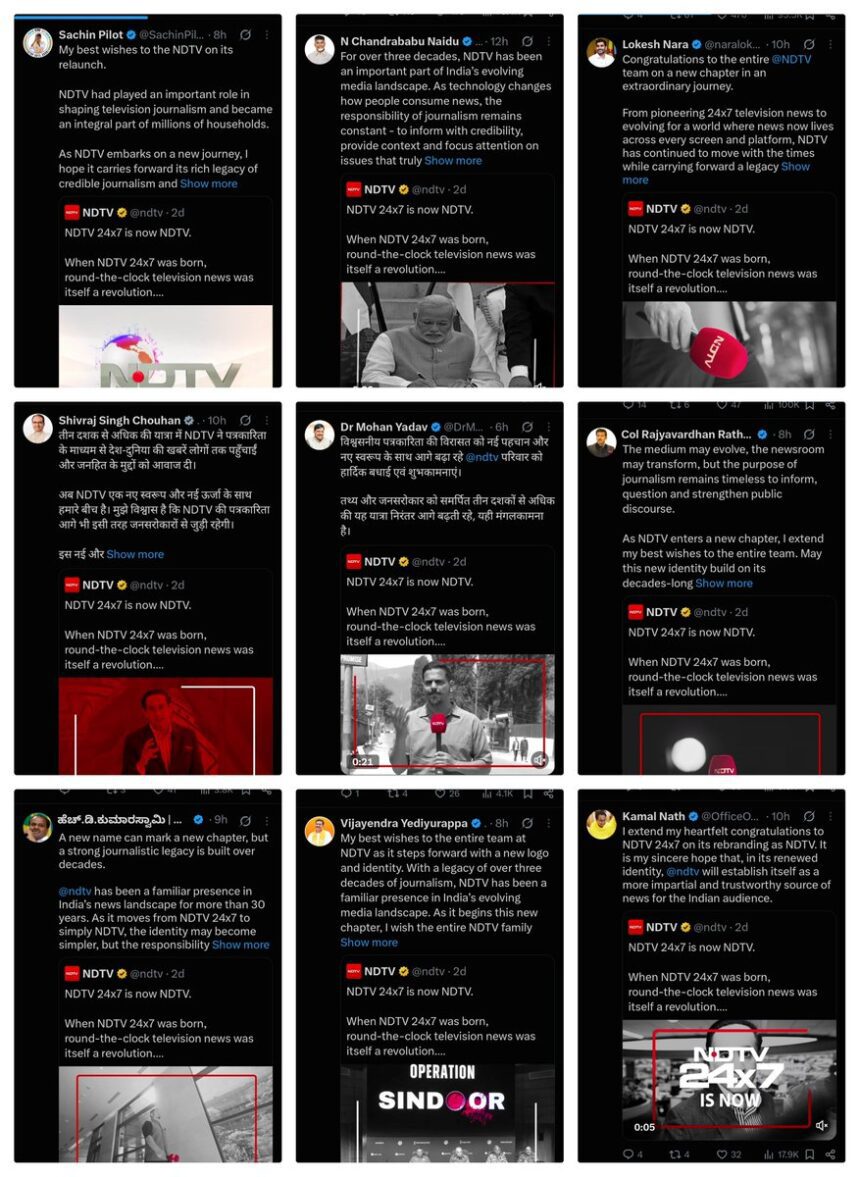

In a recent observation, prominent Indian political commentator Mohammed Zubair criticized the seeming collusion between NDTV, under Adani’s ownership, and senior politicians from the Bharatiya Janata Party (BJP). He noted that several politicians were quick to promote an NDTV tweet shortly after its release, raising questions about the authenticity of their engagement with the media outlet.
Background on NDTV and Its New Ownership
NDTV, once seen as a stalwart of independent journalism in India, has undergone significant changes since its acquisition by the Adani Group. The takeover raised concerns about editorial independence and the potential for political influence over the news. As Adani is now perceived to have close ties with the ruling BJP, speculations have intensified regarding the nature of content being produced and disseminated by NDTV. Critics argue that the integrity of their reporting may be compromised, particularly in politically sensitive scenarios.
The Role of Social Media in Political Messaging
Social media platforms have become critical in shaping political discourse in India. Politicians often engage directly with the public through platforms like Twitter, leveraging trending topics and media coverage to amplify their messages. Zubair’s observation highlights an alleged coordinated effort where senior BJP leaders are cited sharing NDTV tweets. This phenomenon can be interpreted as an attempt to both legitimize the news outlet’s content and enhance its visibility, signaling a concerning trend of political manipulation in media narratives.
Understanding the Implications of Quoted Tweets
When senior politicians quote or retweet a news outlet, it usually serves a dual purpose: complementing their messaging while providing a veneer of credibility to the media entity. Zubair’s remark about the timing—politicians promoting an NDTV tweet just two days after it was posted—implies that these actions may not be spontaneous but rather orchestrated, raising ethical questions about media and political collusion. This practice could lead to public misperception about the independence of news coverage related to political matters.
Why This Matters
The intersection of media and politics is a critical aspect of democracy, particularly in a diverse country like India. The integrity of news outlets directly affects the population’s access to unbiased information. If media entities like NDTV are perceived as conduits of political messaging instead of independent journalists, it erodes public trust. The potential manipulation of electoral narratives can have far-reaching consequences, affecting voter perceptions and ultimately the democratic process. This issue underscores the need for vigilance among the audience regarding the dynamics at play within political communications.
Frequently Asked Questions
What is the significance of NDTV’s acquisition by the Adani Group?
The acquisition raised alarms about potential conflicts of interest and the integrity of journalism, considering Adani’s close ties with the ruling BJP. Critics fear that editorial independence may be compromised.
Why is social media important in Indian politics?
Social media acts as a crucial platform for politicians to connect directly with constituents, shaping public discourse and amplifying their messages without traditional media filtering.
What does it mean when politicians retweet media posts?
Retweeting media outlets can lend credibility to the news, but it may also indicate a more profound relationship between the media and politicians, potentially blurring lines between journalism and political propaganda.
How does the public perceive the relationship between media and politics in India?
Public perception varies, with many concerned that political influence may compromise the independence of media. This skepticism is rooted in historical instances of media manipulation and sensationalism, leading to calls for more transparency.