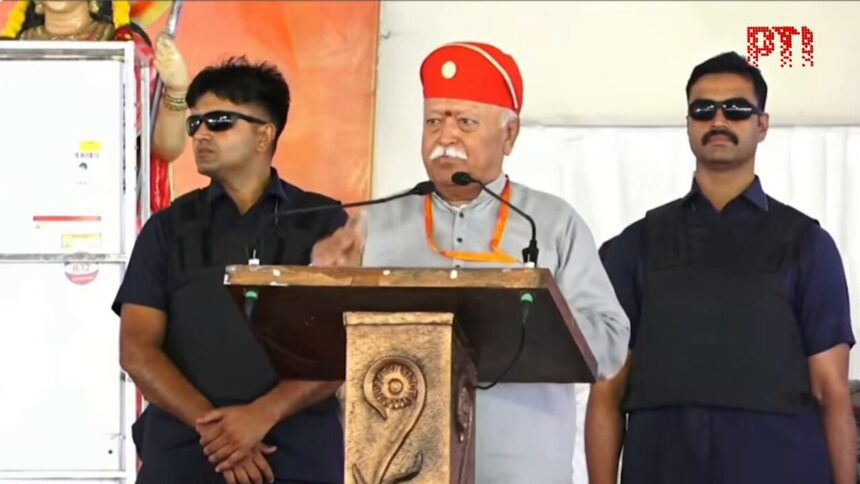

RSS Chief Mohan Bhagwat recently attended the 450th anniversary celebrations of the Haldighati battle, emphasizing Maharana Pratap’s legacy and the significance of the battle in Indian history. He articulated that the Haldighati battle was a victory for Maharana Pratap and those who fought for India, underscoring its timeless relevance.
Context of Haldighati Battle
The Battle of Haldighati, fought on June 18, 1576, between the forces of Maharana Pratap of Mewar and the Mughal Empire, symbolized a pivotal moment in Indian history. In this conflict, Maharana Pratap, known for his fierce resistance against Mughal domination, led his loyal warriors including Hakim Khan Sur. Conversely, Raja Mansingh, a prominent general of Akbar’s army, commanded the Mughals. The battle was not just a military engagement but also represented the struggle for sovereignty and cultural identity against imperial forces.
Mohan Bhagwat’s Reflections
During the recent commemoration event, Mohan Bhagwat highlighted that the significance of the Haldighati battle is rooted in Maharana Pratap’s birth. He posited that the battle’s outcomes are intertwined with the legacy of Maharana Pratap, whom he describes as a symbol of resistance. His assertion that “today is the reason for yesterday” emphasizes the enduring impact of historical figures and events on contemporary Indian nationalism. Bhagwat’s remarks aim to inspire national pride and a renewed understanding of India’s historical struggles.
Political Implications
The celebration of the Haldighati battle and the emphasis on figures like Maharana Pratap has significant implications for India’s socio-political landscape. This narrative is particularly resonant within the right-wing political discourse, which often seeks to frame historical events in a way that promotes a sense of national identity rooted in valor and resistance. Such reinterpretations have the potential to galvanize support among constituents who cherish historical legacies as part of their national pride. This can influence contemporary politics by shaping public perceptions and voting patterns.
Why This Matters
The reference to the Haldighati battle in contemporary political discourse is critical for Indian readers, particularly in understanding how history is employed to foster nationalistic sentiments. The battle not only serves as a reminder of India’s resistance against foreign dominion but also as a rallying point for various political agendas. The way historical narratives are adapted by leaders like Bhagwat can significantly impact the public’s connection to their cultural heritage and influence governmental policies promoting national identity.
Frequently Asked Questions
What was the significance of the Haldighati battle?
The Haldighati battle was significant as it symbolized the resistance of Indian kingdoms, particularly Mewar, against Mughal expansion, representing a pivotal moment in the struggle for sovereignty.
Who were the main figures involved in the battle?
The main figures were Maharana Pratap of Mewar, who led his forces, and Raja Mansingh, a commander in Akbar’s Mughal army.
Why is Maharana Pratap celebrated in modern India?
Maharana Pratap is celebrated as a symbol of bravery and resistance against oppression, serving as an inspiration for contemporary nationalistic sentiments in India.
How does the celebration of historical figures impact current Indian politics?
The celebration of historical figures like Maharana Pratap often shapes public opinion and can strengthen political narratives that promote national pride and unity, influencing electoral outcomes.