
Summary
A recent tweet from the right-wing Twitter account Mr. Sinha, which is followed by Indian Prime Minister Narendra Modi, has ignited controversy by labeling the deceased body of a Palestinian baby as a “plastic doll.” This incident highlights ongoing misinformation campaigns surrounding the Israel-Palestine conflict by some right-wing social media figures in India.
Incident Overview
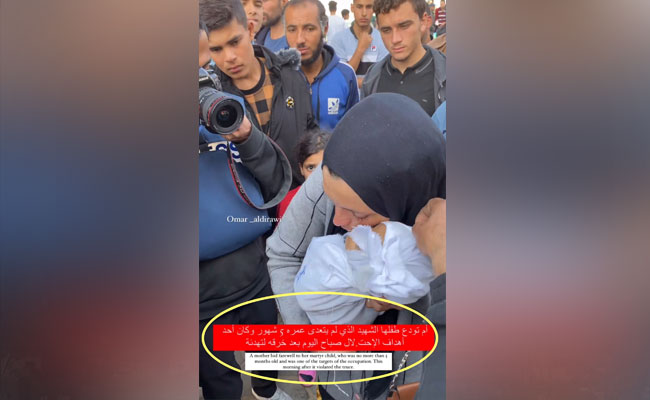
On a Saturday, Mr. Sinha shared a photograph of five-month-old Muhammad Hani Al-Zahar, who tragically lost his life in Israeli airstrikes, and claimed the image depicted a plastic toy. This assertion received significant backlash. Notably, Mohammed Zubair, co-founder of the fact-checking organization AltNews, promptly debunked the claim, providing clarification about the reality behind the heartbreaking image. Zubair’s response underscored how the circulation of false claims can trivialize the suffering caused by the conflict.
The Role of Misinformation
This incident is part of a troubling pattern in which right-wing troll accounts in India have previously dismissed the images of deceased Palestinians as fakes, often asserting they are dolls or toys. Such tactics are utilized to paint the portrayal of Palestinians as exaggerated or fabricated, undermining the genuine experiences of those affected by the ongoing violence. The right-wing social media ecosystem in India is often seen actively aligning with Israel’s actions against Palestinians, fostering an atmosphere where such disinformation can thrive without accountability.
Context of the Israel-Palestine Conflict
The Israel-Palestine conflict remains one of the most contentious geopolitical issues, generating strong opinions worldwide. In India, political affiliations often dictate narratives around international crises, with right-wing factions tending to express unwavering support for Israel. This particular incident has been deemed an affront not only to the victims of the conflict but also to the credibility of the discourse surrounding human rights and international relations. The sensationalization of such tragic events in social media discourse does a disservice to the people who are suffering and breeds polarization in public opinion.
Why This Matters
The implications of misinformation surrounding sensitive issues like the Israel-Palestine conflict extend far beyond individual incidents. For Indian readers, it highlights the need to critically evaluate information sources, especially when narratives align with ideological positions. In an era where social media significantly shapes public perception, it is essential to promote a fact-based dialogue to foster understanding and compassion, rather than divisive rhetoric. The ramifications of accepting misinformation can contribute to broader societal misunderstandings and conflict, both locally and globally.
Frequently Asked Questions
What was the main claim made by Mr. Sinha?
Mr. Sinha claimed that a photograph of a deceased Palestinian baby was a “plastic doll,” implying it was a fabrication aimed at propaganda against Israel.
Who debunked Mr. Sinha’s claim?
Mohammed Zubair, co-founder of AltNews, debunked Mr. Sinha’s claim, clarifying that the image depicted the lifeless body of a five-month-old baby named Muhammad Hani Al-Zahar, who died in Israeli airstrikes.
Why is this incident significant in the Indian context?
This incident is significant as it illustrates the ongoing spread of misinformation in the right-wing social media ecosystem in India, particularly regarding sensitive international issues like the Israel-Palestine conflict. It raises concerns about how such narratives can shape public perception and undermine genuine humanitarian concerns.
How can misinformation impact public opinion?
Misinformation can skew public understanding, leading to polarized opinions and a lack of empathy for those affected by conflicts. It can also weaken discourse around human rights and promote divisive rhetoric that hampers constructive dialogue.