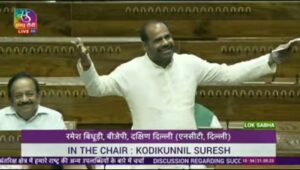
This recent incident in the Lok Sabha has sparked outrage and highlighted the increasing polarization in Indian politics. BJP MP Ramesh Bidhuri made highly offensive remarks towards a Muslim MP, using derogatory terms and slurs while fellow party members appeared to condone the behavior with laughter.
Context of the Incident
During a session of the Lok Sabha, MP Ramesh Bidhuri directed a series of slurs at Muslim MP Asaduddin Owaisi. The comments included terms like “Bharwa” (pimp), “Katwa” (circumcised), “Mullah,” “Atankwadi” (terrorist), and “Ugrawadi” (militant). This behavior has been recorded and shared widely, drawing significant reactions from across the political spectrum and the public. The issue isn’t just about the words used; it raises concerns over the acceptability of hate speech within legislative bodies.
Political Tensions and Reactions
The incident has initiated a wave of condemnation from opposition parties and civil rights activists who argue that such language not only undermines the dignity of the Lok Sabha but also fuels communal tensions in an already polarized society. Critics of the BJP have flagged these remarks as symptomatic of a broader trend within the party, where minority communities are often subjected to derogatory language and stereotyping.
Prominent political analysts have pointed out that the laughter and apparent amusement displayed by politicians like Ravi Shankar Prasad and Harsh Vardhan during these comments exemplify a troubling endorsement of hate speech. This incident feeds into a narrative that suggests a tacit approval of such behavior within certain factions of the ruling party.
The Role of Social Media
The incident was first reported via a tweet by Mohammed Zubair, a noted commentator on Indian politics. The swift sharing of the video online has prompted widespread outrage, leading to discussions about accountability for hate speech in all its forms. Zubair’s tweet has drawn attention to not just the specific event but to the overall climate in which such remarks can occur with little fear of repercussion. This highlights how social media serves as both a tool for political accountability and a battleground for social ideologies.
Why This Matters
This incident is a crucial juncture in the landscape of Indian politics. It underscores the struggles faced by minority communities in advocating for their rights and dignity in the face of what many see as systemic discrimination. Hate speech is not merely a reflection of individual prejudice but signals broader societal attitudes that can embolden political actors to act without restraint.
Moreover, this incident poses significant implications for the BJP, as it could alienate moderate voters who might be uncomfortable with such overt forms of communal rhetoric. For Indian democracy, incidents like these challenge the foundational principles of respect, dignity, and unity that are essential for a pluralistic society.
Frequently Asked Questions
What was said by Ramesh Bidhuri?
Ramesh Bidhuri used derogatory terms against Muslim MP Asaduddin Owaisi, including slurs like “Bharwa,” “Katwa,” “Atankwadi,” and “Ugrawadi.”
How did other MPs respond?
Other BJP MPs, including Ravi Shankar Prasad and Harsh Vardhan, were seen laughing during the incident, which raised concerns about their complicity and approval of Bidhuri’s remarks.
What is the public reaction?
The incident has sparked significant outrage on social media, with calls for accountability and condemnation from various opposition parties and civil rights activists.
Why are such incidents important in Indian politics?
Such incidents reveal underlying societal tensions and can have far-reaching effects on communal relations, public sentiments, and the political landscape in India. They highlight the necessity for accountability in political discourse.