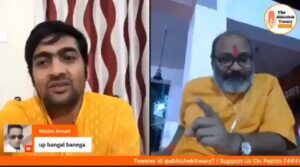
Yati Narsinghanand Giri was observed engaging in a series of abusive remarks while seated at the Dasna Devi Mandir, sparking significant discussion online. Prominent political commentator Mohammed Zubair highlighted the hypocrisy of BJP supporters being shocked, suggesting that the abusive language permeates from their leaders’ use of social media over the years.
Yati Narsinghanand Giri’s Controversial Speech
Yati Narsinghanand Giri, a controversial figure associated with Hindu extremist views, has been frequently noted for his inflammatory rhetoric. In a recent incident at the Dasna Devi Mandir, he was filmed using vulgar language while discussing political leaders and their policies. This behavior has drawn attention not only for its content but also for the context—conducting such outbursts at a revered religious site raises questions about the intersection of religion and politics in India.
This incident underscores a troubling pattern among certain religious leaders who utilize platforms to project extreme views, often invoking communal sentiments. Such actions can lead to violence, creating societal divisions, and are a serious concern as they misuse religious authority to further ideological agendas.
The Response from Political Circles
Following Narsinghanand’s remarks, social media erupted with reactions, particularly from BJP supporters who appeared taken aback by the language used by the self-proclaimed spiritual leader. In a tweet, Mohammed Zubair pointed out the bizarre nature of this shock, stating that BJP leaders have similarly used harsh rhetoric in the digital world. He emphasized that the current dissatisfactions felt by their supporters stem from a culture of abuse that has been nurtured within political discourse.
This phenomenon indicates a growing disconnection between certain political leaders and their supporters, as the latter grapple with the consequences of the toxic environment fostered by their own leaders. It calls into question the integrity and accountability of political figures in a progressive democratic society, where respect should ideally prevail.
Intergenerational Discourse on Political Abuse
Zubair’s comments also highlight a generational divide in how political discourse is navigated. He speculates that the harsh language employed by the GenZ demographic mirrors that of their political role models, particularly in the context of an increasingly digital landscape where inflammatory speech can quickly gain traction. This observation serves as both a critique and a reflection of the broader cultural shift occurring in Indian politics, where social media acts as the new battleground for ideologies.
Moreover, this generational translation of abusive language can have ramifications for the future of political dialogue in India. If young voters adopt the rhetoric of their leaders without critical engagement, the potential for constructive discourse diminishes, and political polarization escalates.
Why This Matters
This incident and its subsequent reactions highlight a significant trend in Indian politics—the normalization of abusive language in political discourse. As the younger generation adopts similar tactics, it sets a dangerous precedent for future political engagement and potential conflict. The BJP, having faced scrutiny for its leaders’ often aggressive rhetoric, may find itself at a crossroads where it must confront the implications of such discourse, lest it jeopardize its long-term public support and integrity.
Moreover, it raises questions about the moral responsibilities of leaders and the expectations of their followers. With the backdrop of communal tensions in India, addressing this issue could become pivotal in moderating speech and ensuring a civil political environment where constructive dialogue predominates over vitriol.
Frequently Asked Questions
What was Yati Narsinghanand Giri’s controversial claim?
Yati Narsinghanand Giri was recorded making harsh and abusive remarks about political leaders at Dasna Devi Mandir, which has drawn significant criticism.
Why are BJP supporters shocked by the language used?
Many BJP supporters expressed shock at the inflammatory language because it is often perceived that this type of rhetoric is uncharacteristic for a religious leader, despite their own party’s history of aggressive social media tactics.
How does this reflect the behavior of GenZ?
Mohammed Zubair indicated that the abusive language utilized by GenZ largely mirrors what they have seen from their political leaders, suggesting a cycle of aggressive discourse being internalized by younger generations.
What implications does this have for Indian politics?
This trend of normalizing abusive language in political discourse can lead to increased polarization, diminishing the possibilities for constructive political dialogue, and could potentially stir communal tensions in the broader social landscape of India.