
Summary
The Madhya Pradesh government has restructured its Waqf Board, controversially appointing non-Muslim members for the first time in India. This move has prompted significant backlash from the Muslim community, raising questions about representation and the nature of religious institutions within a secular framework.
Background of Waqf Board Restructuring
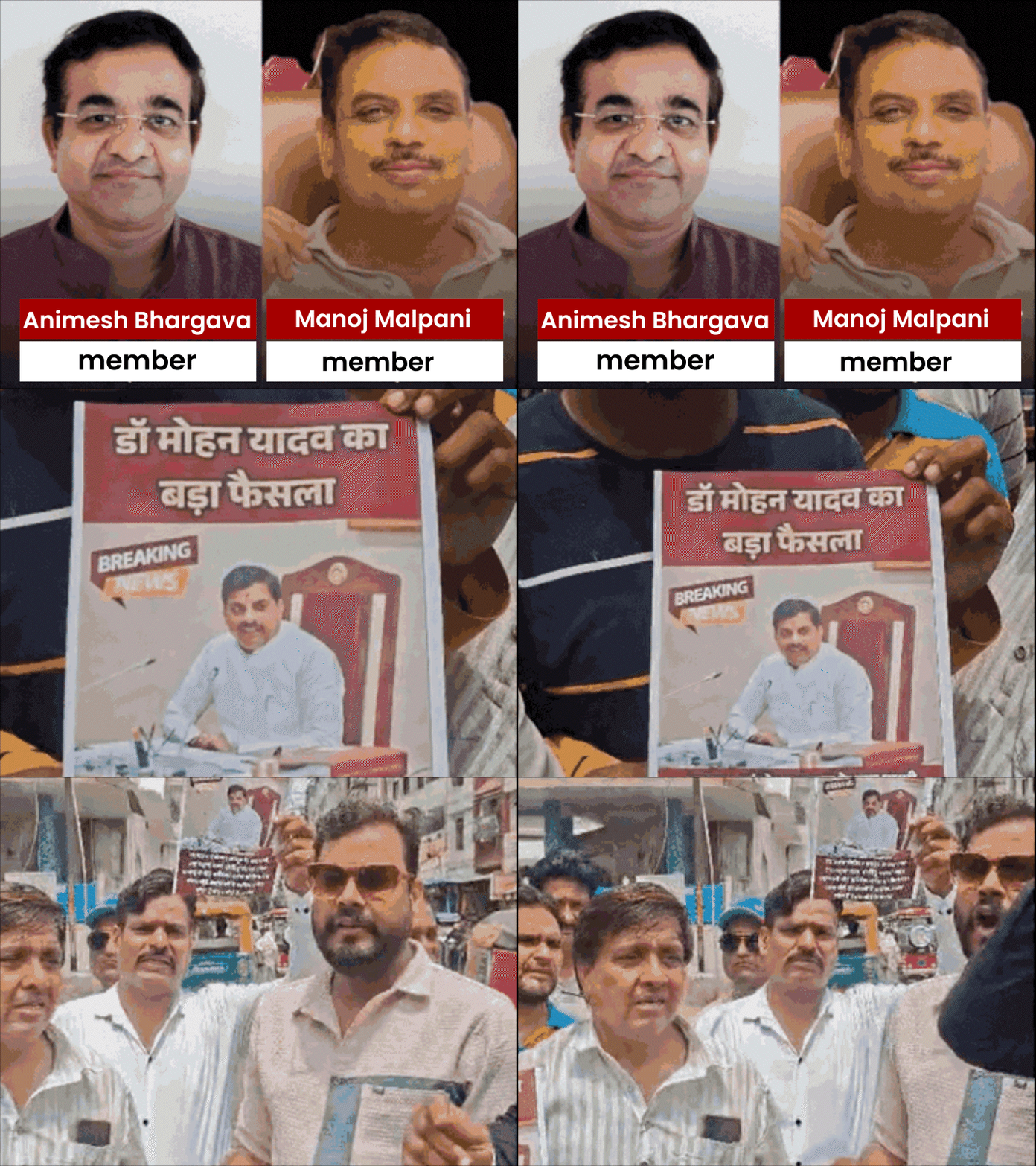
The Madhya Pradesh government’s reconstitution of the Waqf Board includes the appointments of Manoj Malpani and Animesh Bhargava, both non-Muslims. This decision came shortly after the implementation of the Waqf (Amendment) Act 2025, which allows for such inclusions. Sanwar Patel remains the board’s chairperson. Historically, membership in Waqf Boards has been limited to individuals from the Muslim community, which makes the inclusion of non-Muslims particularly controversial.
Muslim organizations, including the All India Muslim Tyohar Committee, have expressed deep concern over this decision. They argue that the Waqf Board serves as a religious and social institution dedicated to the management of properties intended for religious purposes, and that non-Muslim members undermine its integrity. Shamsul Hasan, a patron for the committee, emphasized that Waqf is dedicated to Allah, and thus its management should be solely in Muslim hands.
Public Response and Protests
Following the announcement of the new board members, members of the Muslim community staged protests in Bhopal, asserting that the inclusion of non-Muslim representatives reflects government overreach into a sacred domain. Protesters carried posters of Chief Minister Mohan Yadav while chanting slogans like “dictatorship will not be tolerated in the Waqf Board.” They demanded the rollback of this decision, stressing that Waqf properties represent religious faith and community trust.
Shamsul Hasan accentuated the inconsistency in how religious institutions are governed, referencing historical sites managed by Hindu organizations which do not include Muslim representation. The protests signal widespread discontent and a sense of alienation within the Muslim community, fueled by a perception of discrimination under the current political climate.
Government Justification and Broader Implications
In response to the outcry, state officials have defended the move as a progressive step toward inclusivity, with Minister Vishvas Kailash Sarang claiming it will “bring long-term and positive results.” The government argues that the Waqf Board encompasses a broader range of activities beyond merely managing mosques and that a diverse membership will enhance transparency and accountability.
Supporters from various Hindu organizations have welcomed the decision, asserting that it brings greater oversight to how Waqf properties are managed. However, this perspective overlooks the concerns raised by Muslim organizations about the potential marginalization of their community’s interests within a framework historically defined by religious fidelity.
Why It Matters
The restructuring of the Waqf Board in Madhya Pradesh is emblematic of broader societal dynamics in India, particularly regarding the treatment of religious minorities. The inclusion of non-Muslims poses questions about the future relationship between state governance and religious bodies. It underscores ongoing tensions around communal identity and the political maneuvers that can shape perceptions of discrimination and social inclusion. As similar policies could be replicated in other states, this case could set a significant precedent affecting communal harmony and religious rights.
Frequently Asked Questions
What is the Waqf Board?
The Waqf Board is a body responsible for the management of properties and assets dedicated for religious or charitable purposes within the Muslim community.
Why are non-Muslims being included in the Waqf Board?
The Madhya Pradesh government claims this inclusion aims to enhance transparency and ensure better management of Waqf properties, marking a shift from historical practices that mandated Muslim-only representation.
What are the concerns of the Muslim community regarding this decision?
The Muslim community views this move as government overreach into a faith-based institution. They fear that it undermines the integrity of Waqf management and reflects broader patterns of societal discrimination.
How have protests been organized in response to this change?
Protests have been organized by various Muslim organizations, who have rallied around the defense of Waqf properties, claiming that the decision to include non-Muslim voices is not representative of the community’s interests and undermines their trust.