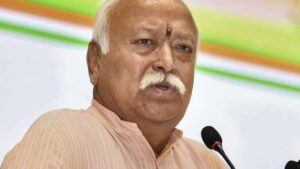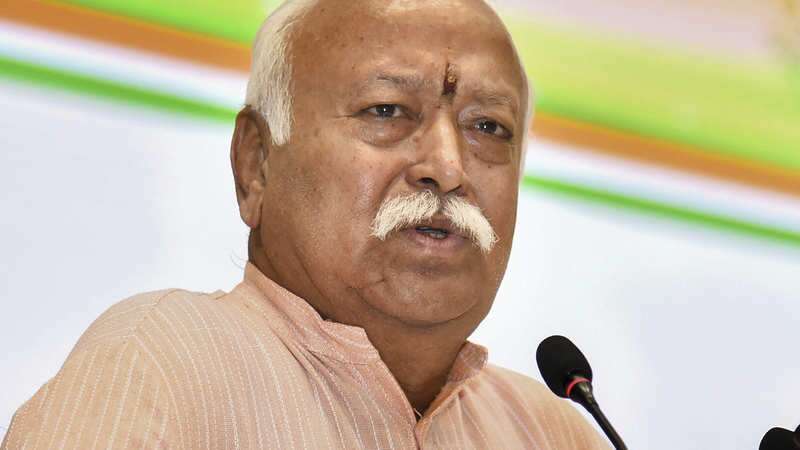

In a recent address, Mohan Bhagwat, the chief of the Rashtriya Swayamsevak Sangh (RSS), emphasized the importance of inclusivity among Hindus and Muslims in India. Bhagwat asserted that true Hinduism cannot embrace the exclusion of Muslims, responding to concerns about the identity of Muslims within the framework of Hindutva.
Bhagwat’s Remarks on Unity and Inclusivity
During the “One World: One Humanity Faith Leaders’ Summit” held on August 29, 2023, in the United States, Bhagwat made strong declarations about the role of Muslims in Indian society. He stated, “If any Hindu thinks that there should be no Muslims in Bharat, he will not remain a Hindu.” This comment indicates an attempt to position Hindu identity as inherently inclusive, countering narratives that promote divisiveness. He referenced the tradition of India as a haven, where marginalized communities from various backgrounds have historically sought refuge.
The Broader Context of RSS and BJP Ideologies
While Bhagwat’s comments might appear to promote harmony, they come amid substantial concerns regarding the treatment of Muslims under the current Indian government led by the Bharatiya Janata Party (BJP). Various reports illustrate a pattern of discrimination against the Muslim community, ranging from social exclusion to economic boycotts, fueled by a narrative of majoritarianism. Policies often perceived as discriminatory, such as the Citizenship Amendment Act (CAA) and changes to Kashmir’s status, have heightened fears among Muslims about their socio-political standing in India. The RSS, as the ideological backbone of the BJP, has been widely viewed as perpetuating these ideologies, complicating the message of inclusivity that Bhagwat has conveyed in the summit.
Service Initiatives and Their Implications
Bhagwat highlighted the extensive service efforts undertaken by the RSS, claiming that approximately 130,000 service projects run by RSS members are dedicated to aiding all communities without discrimination. He emphasized the mantra of collective identity—“We” and “ours”—as a remedy for division. However, this assertion raises questions about the selective narrative of community service, especially in light of documented cases where Muslims have felt alienated within their own homeland. Critics argue that while the RSS promotes its service initiatives, the broader context of social and economic marginalization continues to affect Indian Muslims profoundly.
Why It Matters
Bhagwat’s statements and the dominance of the RSS-BJP narrative in India have significant implications not just for national politics but for global perceptions of inclusivity and rights. The way minorities are treated in any country can have ripple effects on international relations, trade partnerships, and diplomatic engagements. For developers and AI users, these dynamics are essential to consider when creating content or solutions that relate to social issues. Promoting equity and understanding diverse narratives can foster more responsible technology and inform global audiences about the realities affecting marginalized groups.
Frequently Asked Questions
What is the RSS and its role in Indian politics?
The Rashtriya Swayamsevak Sangh (RSS) is a Hindu nationalist organization founded in 1925. It plays a vital role in shaping the ideological foundation of the Bharatiya Janata Party (BJP) and promotes Hindu nationalism in India.
What are the main concerns regarding the treatment of Muslims in India?
There are ongoing concerns about discrimination against Muslims in various forms, including economic boycotts, social exclusion, and politically motivated policies that disproportionately affect the Muslim community, such as the Citizenship Amendment Act (CAA).
How has the RSS responded to criticisms of its ideology?
In response to various criticisms, the RSS maintains that its core values promote unity and inclusivity. Leaders like Mohan Bhagwat often emphasize the need for collective identity among all communities in India, despite the prevailing perceptions of sectarianism.
What can be done to improve relations between Hindus and Muslims in India?
Improving relations could involve promoting dialogue, education about diverse cultures and histories, and implementing policies that ensure equal rights and representation for all communities in India, fostering coexistence.