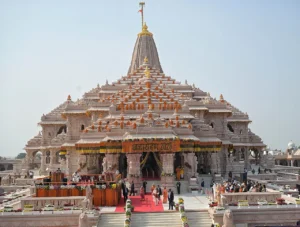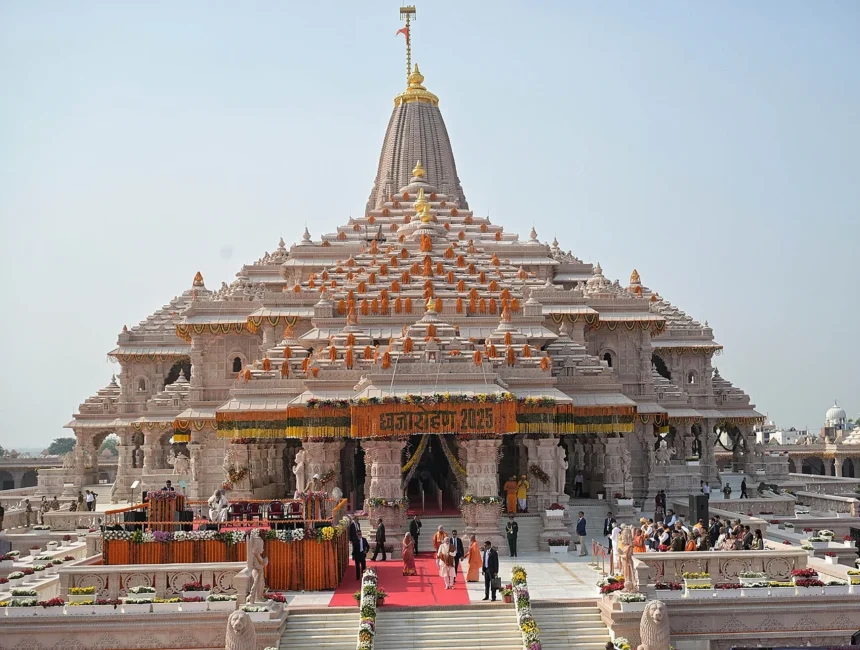

NEW DELHI, India (MNTV) — The appointment of retired Air Marshal Jeetendra Mishra as the first chief executive officer of the Shri Ram Janmabhoomi Teerth Kshetra Trust underscores the growing prominence of the Ram Temple as a symbol of Hindu nationalism in India. This incident takes place amidst ongoing tensions and incidents of discrimination facing the Muslim community, particularly in the context of the temple’s controversial history.
The Evolution of the Ram Temple’s Significance
The Hindu Ram Temple, built on the site where the Babri Mosque stood until its demolition in 1992, has become one of the most potent symbols of the Hindu nationalist movement. The mosque’s destruction was a watershed moment that incited significant communal violence, resulting in the deaths of approximately 2,000 people, predominantly Muslims. The narrative surrounding the temple is steeped in a historical claim that it stands on the birthplace of the Hindu deity Ram, a claim that has been used to rally support among Hindu nationalists and solidify political power.
Prime Minister Narendra Modi played a key role in the temple’s consecration in January 2024, emphasizing its importance in his party’s political strategy. The temple is not merely a religious site; it serves as a focal point for a political movement that advocates for Hindu supremacy, often marginalizing Muslim voices and perspectives. The Supreme Court’s 2019 ruling, which recognized the illegal demolition of the mosque but awarded the land for the temple, also highlights the contentious legal and social landscape regarding religious identity in India.
The Role of Leadership in Temple Administration
Mishra’s selection from a pool of over 5,500 candidates signifies a new administrative direction for the temple trust, especially as the site becomes increasingly embroiled in political and social controversy. As the retired commander of the Indian Air Force’s Western Air Command, Mishra’s military background adds a layer of authority to the temple’s administration during a crucial time.
His appointment coincides with an ongoing scandal involving alleged financial mismanagement, including theft from donation collections, that has raised concerns about the trust’s operation. Eight individuals were arrested in connection with these alleged thefts, prompting further scrutiny of how funds, primarily collected from Hindu devotees, are managed. Mishra’s leadership will be pivotal in restoring credibility to the administration amidst these challenges.
Context of Discrimination and Marginalization
The temple’s rise and the surrounding controversies are set against a broader backdrop of social exclusion faced by Indian Muslims. The Hindu nationalist agenda of parties like the Bharatiya Janata Party (BJP) often leads to economic boycotts targeting Muslim businesses and communities. These practices have resulted in heightened social exclusion, where Muslims are frequently marginalized in political discussions and public discourse.
As the temple symbolically reaffirms Hindu identity, it simultaneously raises questions about the future for religious minorities in India. The foundational narratives used to support the temple’s establishment often perpetuate historical grievances, contributing to a sense of alienation among Muslims. In this volatile environment, the significance of Mishra’s leadership goes beyond temple administration; it reflects broader sociopolitical relations in modern India.
Why It Matters
The recent developments regarding the Ram Temple and its management are crucial for understanding the current trajectory of Hindu nationalism in India. The temple serves not only as a religious site but also as a political instrument that shapes public policy and community dynamics. For developers and users of AI technologies, these sociocultural contexts are essential for creating tools and systems that engage responsibly with the diverse fabric of Indian society, recognizing the implications of communal identities and historical narratives.
Frequently Asked Questions
What is the significance of the Ram Temple in India?
The Ram Temple in Ayodhya is a central symbol of the Hindu nationalist movement, linked closely to political identity and religious sentiment in India.
What happened during the demolition of the Babri Mosque?
The Babri Mosque was demolished on December 6, 1992, by Hindu extremists claiming it was built over the birthplace of the deity Ram. This led to widespread communal violence and significant loss of life.
How has the Supreme Court been involved with the Ram Temple issue?
In 2019, the Supreme Court ruled that the demolition of the Babri Mosque was illegal but awarded the land for the construction of the Ram Temple, thereby highlighting complex legal and religious tensions.
What challenges does the temple trust currently face?
The trust is facing allegations of financial misconduct involving theft from donation collections aimed at the temple, prompting questions about stewardship and transparency.