
Summary
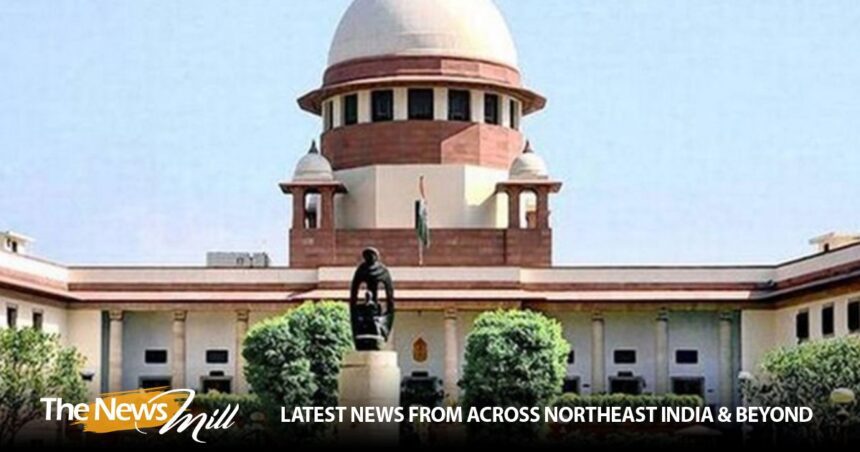
The Supreme Court of India is currently deliberating on the contentious Bhojshala-Kamal Maula Mosque dispute, following the Madhya Pradesh High Court’s ruling that designated the historic site as a temple to the Hindu goddess Saraswati. The Muslim community is raising concerns over inadequate provisions for prayer, highlighting the ongoing inequalities and social exclusions faced by Muslims under current governance.
Background of the Dispute
The Bhojshala-Kamal Maula complex, located in Dhar district, has been a flashpoint between Hindu and Muslim communities. The Supreme Court’s recent proceedings stem from a High Court ruling that declared the site, dating back to the 11th century, as a temple dedicated to Goddess Saraswati. This ruling overturned a previous assessment by the Archaeological Survey of India (ASI) allowing the Muslim community to hold Friday prayers at the location.
At the heart of the dispute is the interpretation of the site’s religious identity. The Muslim side argues for its recognition as the Kamal Maula Mosque, while Hindu groups maintain it as Bhojshala, asserting its historical importance as a center of Sanskrit learning. This divide underscores a larger pattern of religious nationalism influencing policies and practices affecting minorities in India.
Current Legal Proceedings
In a recent Supreme Court session, Chief Justice Surya Kant questioned the Solicitor General, Tushar Mehta, about the government’s failure to provide details on an alternative prayer site for Muslims. The identified location is reportedly 1.3 kilometers away from the original site, raising concerns of accessibility among the Muslim community. Senior advocate Huzefa Ahmadi argued that the administration was not adhering to prior court directives, suggesting that any measures limiting access to worship sites constitute a form of discrimination against Muslims. The court is set to further investigate these concerns.
Ahmadi highlighted that an alternate location proposed by the authorities is inappropriate as it lies in a brewery area, making it unsuitable for religious observance. His calls for equitable access to worship reflect a broader struggle against the historical marginalization of the Muslim community in India, exacerbated by the current political climate.
Government and Judicial Responses
The government’s attitude towards the disputed site illustrates the rising challenges faced by minorities in India. The Supreme Court has directed the ASI to refrain from making any structural changes to the Bhojshala complex without its consent and has highlighted the necessity of accommodating Friday prayers for the Muslim community as an interim measure.
The broader implications are concerning; the High Court’s recognition of the Bhojshala as a temple serves not only to resolve this specific dispute but also reflects a trend of legitimizing Hindu claims over disputed religious sites. This trend has the potential to fuel further social divisions, as groups vie for control over historically sensitive locations, often at the expense of minority rights.
Why It Matters
The ongoing legal proceedings surrounding the Bhojshala-Kamal Maula Mosque hold significant implications for India’s secular fabric. The rulings not only redefine the ownership and identity of historical sites but also set a precedent that could impact future legal disputes involving religious and cultural heritage. For the AI industry and developers, understanding these social dynamics is essential, as technology platforms grapple with the dissemination of information that can impact community relations. Furthermore, the ongoing marginalization of Muslim voices reflects deeper societal rifts that could have long-lasting effects on political stability and social cohesion in India.
Frequently Asked Questions
What is the Bhojshala-Kamal Maula dispute about?
The dispute centers around the historical Bhojshala complex, which both Hindu and Muslim communities claim as a religious site. The Madhya Pradesh High Court has designated it as a Hindu temple while the Muslim community asserts its identification as the Kamal Maula Mosque.
What was the Supreme Court’s recent ruling?
The Supreme Court has addressed concerns from the Muslim community regarding access for Friday prayers, questioning the government’s allocation of an alternate prayer site that is deemed too far from the original site.
How does this case impact the Muslim community in India?
This case exemplifies the broader trend of marginalization faced by Muslims in India, reflecting ongoing social and legal inequalities. The situation underscores how religious nationalism can shape public policy and community relations.
What are the implications of the High Court’s ruling?
The High Court’s ruling validates Hindu claims to the disputed site and sets a precedent that may encourage further legal battles over religious sites in India, potentially heightening tensions between communities.