
Summary
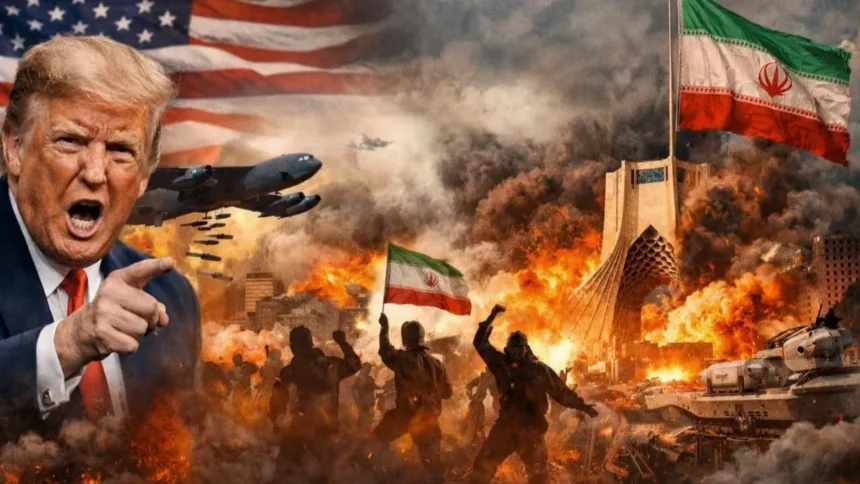
The ongoing conflict in Iran, resulting from recent U.S. airstrikes, has escalated tensions in the region. This aggressive exchange has prompted Iran to retaliate against U.S. positions in Bahrain, Kuwait, and Qatar as the death toll in Iran rises to 14 with dozens more injured. These developments occur against a backdrop of significant regional instability and highlight the persistent geopolitical frictions that can have wider implications across the Middle East and beyond.
Escalating Tensions: Iran’s Response
In a dramatic shift in hostilities, Iran has announced its attacks against U.S. bases and strategic centers stationed in Bahrain, Kuwait, and Qatar. This retaliation follows what Iran describes as a brutal assault by U.S. forces, which targeted various Iranian cities along the strategic Strait of Hormuz. The U.S. bombings, occurring over two consecutive nights, have reportedly resulted in significant civilian casualties, with a reported 14 fatalities and injuries to 78 individuals across cities like Bushehr, Chabahar, Bandar Abbas, and Sirik.
U.S. President Donald Trump characterized these strikes as “retribution” for alleged Iranian assaults on commercial shipping in the Strait of Hormuz, a critical maritime route for global oil shipments. The rhetoric and military actions underscore a fraught relationship between the two nations, where each action has the potential to significantly escalate the regional conflict.
Iran’s Domestic Politics and Mourning a Leader
Compounding the already volatile situation in Iran, national sentiments are intensely focused on the recent death of Supreme Leader Ali Khamenei. His passing has ignited public mourning, with millions of citizens participating in funeral processions across major cities, including Najaf and Karbala in Iraq, as well as a final burial in his hometown of Mashhad. This collective grief is inevitably intertwined with the political atmosphere during such a precarious time, emphasizing the potential for increased nationalism in Iran’s responses to external aggression.
The death of Khamenei may affect the Iranian regime’s internal policies and military strategies moving forward, particularly as the nation grapples with external pressures from the U.S. and its allies.
The Implications of the U.S.-Iran Conflict
As the U.S. continues its military involvement in Iran, the implications stretch beyond immediate military concerns. This ongoing conflict may influence regional alignments and power dynamics, potentially leading to shifts in both domestic and foreign policies among neighboring countries. The strategic Strait of Hormuz remains a focal point for international trade, particularly regarding oil, thus making any escalation in territorial disputes a matter of global economic interest.
These events prompt critical questions about the direction of U.S. foreign policy in the Middle East, especially concerning military interventions that may provoke further instability. The overall regional security landscape is fragile, with these developments possibly setting the stage for broader confrontations involving Iran’s allies.
Why It Matters
The significance of this conflict is manifold, impacting not only the immediate region but also global geopolitical relations. For industry observers, the volatility could lead to increased oil prices due to disruptions in supply routes through the Strait of Hormuz, which is critical for the flow of oil to global markets. Companies dependent on oil supply chains may face cost increases or disruptions, influencing market stability.
Moreover, the heightened military presence and potential for future conflicts can shape defense industries and geopolitical alliances, leading to a reevaluation of international partnerships. For developers and policymakers, the need for strategic foresight in crisis management and conflict resolution is essential to mitigate the risks inherent in such volatile situations.
Frequently Asked Questions
What triggered the recent U.S. airstrikes in Iran?
The U.S. airstrikes were initiated in response to alleged Iranian attacks on vessels transiting the strategically important Strait of Hormuz, described by President Trump as necessary “retribution.”
How has Iran responded to the U.S. airstrikes?
Iran retaliated by targeting U.S. military bases and strategic centers in neighboring countries such as Bahrain, Kuwait, and Qatar, leading to further escalations in military tensions between the two nations.
What are the implications of the death of Iran’s Supreme Leader Ali Khamenei?
Supreme Leader Ali Khamenei’s death could lead to shifts in both internal and external political strategies as Iran seeks to navigate a challenging environment marked by foreign pressure and unrest.
What are the potential consequences for global oil prices due to this conflict?
The conflict holds significant implications for global oil prices, especially if tensions disrupt shipping routes through the Strait of Hormuz, which is critical for oil exports, thereby affecting markets worldwide.