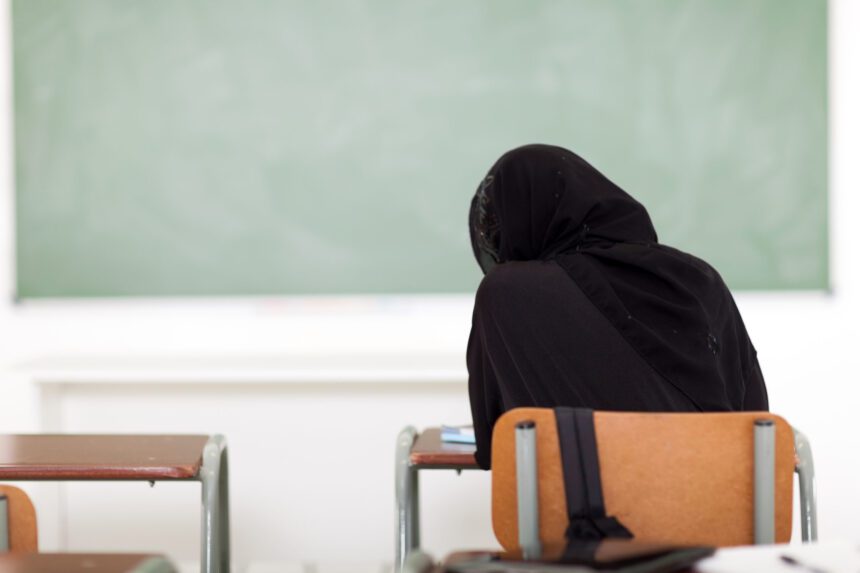

A recent ruling by the Allahabad High Court has denied a teenage Muslim girl the right to wear her hijab to school, reigniting discussions on religious freedom and the rights of Muslim women in India. This decision highlights ongoing tensions over educational policies and religious expression within the country.
Background of the Case
Sukaina Rizvi, a 15 or 16-year-old student from Tagore Public School in Prayagraj, filed a petition seeking to wear her hijab as part of her school uniform while applying for admission to Class 11. She asserted that her right to wear the hijab was fundamental to her identity and an expression of her Islamic faith. Notably, Rizvi had worn the hijab throughout her previous schooling at the same institution, suggesting an established practice that had previously been accommodated.
The Allahabad High Court ruled against Rizvi, stating she did not adequately demonstrate that wearing the hijab constitutes an “essential religious practice” of Islam, which would warrant protection under Article 25 of the Indian Constitution. This article guarantees freedom of conscience and the right to profess and practice religion. The court emphasized that mere assertion of a practice as religious is insufficient to validate it legally under constitutional protections.
Judicial Reasoning and School Policies
The court articulated that the enforcement of a common uniform in educational institutions could foster discipline and promote a religion-neutral environment. It contended that allowing exceptions for individuals could complicate administrative duties and equitable treatment among students. The judges also referred to other judicial precedents, including a significant 2022 ruling by the Karnataka High Court that similarly determined the hijab did not qualify as an “essential religious practice.”
This decision not only impacts individual rights but also reflects broader societal conflicts regarding identity, religious expression, and institutional norms in a diverse country like India. The judges noted that the school’s history of allowing hijabs previously does not preclude its right to enforce its rules moving forward.
Reactions and Wider Implications
The verdict has sparked a strong backlash, particularly from Muslim community leaders and activists. Maulana Khalid Rasheed Farangi Mahali, representing the Islamic Centre of India, described the ruling as discriminatory against Muslim girls and characterized the hijab as a significant aspect of Islamic faith. Protests against this ruling have arisen, advocating for the right of Muslim women to express their faith freely within educational settings.
Political figures, including Asaduddin Owaisi from the All India Majlis-e-Ittehadul Muslimeen, have condemned the ruling, framing it as an infringement on religious freedoms. The All India Muslim Personal Law Board has indicated plans to challenge the decision, potentially taking the matter to the Supreme Court, which underscores the ongoing struggles faced by the Muslim community amid rising institutional discrimination and marginalization.
Why It Matters
This ruling embodies a critical juncture in India’s ongoing discourse around religious rights and freedoms, especially pertaining to minority communities. The implications extend beyond individual cases, affecting the societal perception of Muslim identities within Indian culture. As religious minorities encounter increasing restrictions, such legal determinations may bolster social exclusion narratives, contributing to broader ongoing debates about secularism, nationalism, and the rights of women in Indian society. Understanding these dynamics is vital for global stakeholders in promoting equitable rights and fostering inclusive policies.
Frequently Asked Questions
What was the basis of the Allahabad High Court’s ruling?
The court ruled that Sukaina Rizvi did not sufficiently prove that wearing the hijab is an “essential religious practice” of Islam warranted protection under Article 25 of the Indian Constitution.
How have community leaders responded to the ruling?
Community leaders, including representatives from the All India Muslim Personal Law Board, have voiced strong opposition to the ruling, suggesting it discriminates against Muslim women and undermines their rights to religious expression.
What are the broader implications of this ruling?
The judgment may amplify social exclusion narratives concerning Muslims in India and raises questions about the intersections of religion, identity, and educational policy, influencing wider discussions on minority rights in the country.
Is this ruling part of a larger trend?
Yes, this ruling reflects ongoing legal conflicts across India regarding the rights of Muslim students to express their religious identity in educational settings, following similar decisions from various high courts in the country.