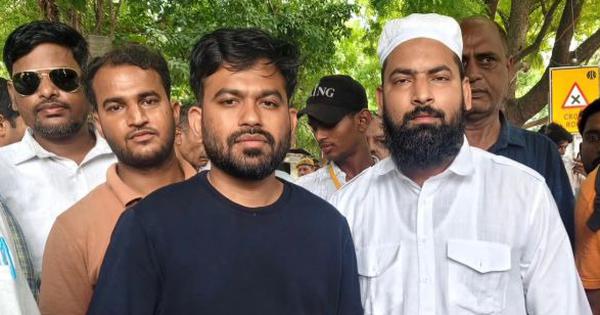

Summary of Recent Events at Jantar Mantar
The family of Muhammad Junaid, a Muslim volunteer who provided aid to protesters at Delhi’s Jantar Mantar, faced police detentions and intimidation in Ghaziabad, reflecting ongoing tensions and allegations of discrimination. Despite police denials, Junaid’s experience highlights the challenges posed to marginalized communities in the context of socio-political protests in India.
Context of the Protests
The protests at Jantar Mantar began on June 6 as part of the Cockroach Janta Party’s campaign, which demanded the resignation of the Union Education Minister due to persistent concerns over exam irregularities. As frustration grew, the protest evolved into a larger movement that mobilized thousands across the nation, further amplified when police took activist Sonam Wangchuk into custody during a hunger strike. The subsequent police response involved violent crackdowns, echoing fears of state repression against dissenting voices.
Detentions and Allegations of Police Conduct
The situation surrounding Junaid escalated when police allegedly detained his family members as a means to pressure him into reporting to the police station. Junaid claimed that officers returned to his home multiple times, taking away his father and relatives, and even confiscating family identity documents. Such actions raise serious concerns about police practices and their implications for civil liberties, particularly for Muslim communities in India, who often face heightened scrutiny and marginalization.
Official Denials and Public Reaction
In stark contrast to Junaid’s allegations, senior police officials have publicly denied any wrongdoing, stating that no member of his family was detained. This disconnect between official narratives and grassroots experiences underscores a troubling trend where marginalized groups feel unsupported and vulnerable. Many activists argue that the police’s heavy-handed approach further alienates communities already facing systemic discrimination, particularly Muslims in India.
Why It Matters
This incident is significant as it exemplifies the broader systemic issues of discrimination and repression faced by certain demographics in India, particularly during periods of social unrest. The treatment of Junaid’s family serves as a microcosm for understanding how law enforcement may be utilized as a tool for social control against marginalized communities. From an international perspective, these actions raise concerns about human rights and the state of democracy in India, prompting global scrutiny of India’s socio-political climate and the treatment of its Muslim population.
Frequently Asked Questions
What were the Jantar Mantar protests about?
The protests began in response to allegations of exam irregularities and calls for the resignation of the Union Education Minister, escalating into a broader movement concerning educational justice and government accountability.
What accusations did Muhammad Junaid make against the police?
Junaid alleged that police detained his family members to coerce him into reporting to authorities, and that they confiscated personal documents as a means of intimidation.
How did the police respond to the allegations of detaining Junaid’s family?
Police officials denied any involvement in the detentions, claiming that they had verified Junaid’s claims and found no evidence of his family being taken into custody.
What impact do these events have on the perception of Muslim communities in India?
These incidents contribute to a narrative of marginalization and discrimination faced by Muslim communities in India, raising concerns about their treatment and the potential for state-sanctioned repression in the context of civil discontent.