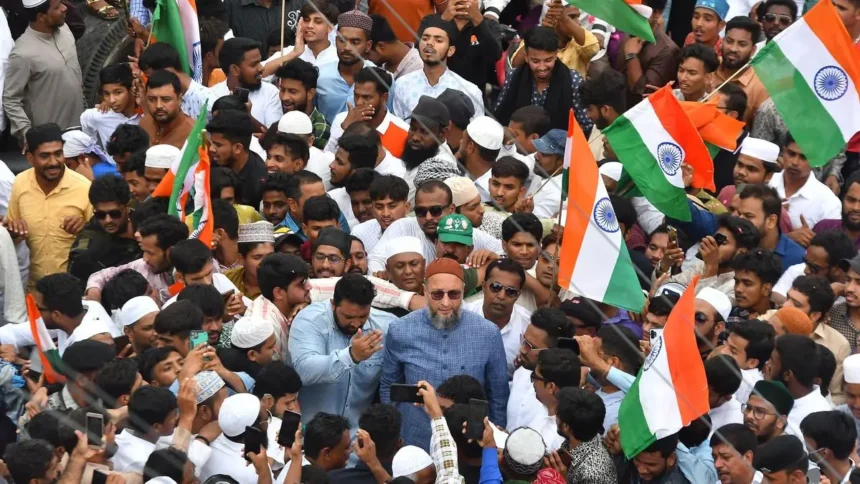

The recent Assembly elections in India have revealed a troubling trend: the representation of Muslims in legislative bodies is declining. Out of 823 MLAs elected across five significant states, only 107 are Muslims, a decrease from 112 in the 2021 elections. This under-representation not only mirrors a long-standing trend but also raises concerns about the impact of majoritarian politics on democratic processes.
Declining Representation in Key States
Following the latest elections, the number of Muslim MLAs has noticeably dropped in crucial states, particularly West Bengal and Assam. In West Bengal, where the Assembly consists of 294 seats, the total Muslim MLAs fell from 42 to 40. Assam saw an even sharper decline—from 31 to 22 Muslim legislators in its 126-seat Assembly. In contrast, beneficial trends were observed in Kerala and Tamil Nadu; Kerala elected 35 Muslim MLAs, up from 32, while Tamil Nadu increased its representation from 6 to 9, indicating that statewide dynamics can significantly vary.
Experts attribute this decline to various factors, including a long-standing history of under-representation since India’s independence. This trend worsened after the Bharatiya Janata Party (BJP) came to power in 2014, leading to more pronounced marginalization of Muslim candidates. The political dynamics have made major parties hesitant to field Muslim candidates, fearing backlash or accusations of minority appeasement.
Historical Context and Statistical Trends
The historical marginalization of Muslims in India can be traced back to the first general elections in 1952, where only 5.11% of the Lok Sabha was made up of Muslim representatives. Over decades, this percentage has hovered between 4% and 6%, dipping to 4.42% in the current Lok Sabha, where there are only 24 Muslim MPs. The demographic changes from the 1941 Census, which reported Muslims making up around 24% of the population, to recent statistics indicating approximately 14.2% of the population, further highlight the disconnect between demographic representation and legislative power.
In states like Uttar Pradesh, the representation fell significantly, from 63 to 31 Muslim MLAs, and even in historically inclusive states like Bihar, from 19 to 11. The worsening representation reflects a systemic exclusion that goes beyond just numbers; it indicates a lack of political will to ensure minority representation in decision-making processes.
Impact of Majoritarian Politics
Political analysts argue that the rise of BJP and majoritarian politics has led to a climate where Muslim candidates are viewed as liabilities by many parties, despite their significant voter base. The recent assembly elections showed that the BJP, which secured 92 seats in Assam’s 126-member Assembly, did not field a single Muslim candidate. As a result, the opposition Congress, which won 19 seats, ended up with 18 Muslim MLAs, prompting accusations of “Muslim League” alignment from the BJP.
This political polarization affects how parties select candidates, prioritizing “winnability” often at the cost of inclusive representation. This systemic exclusion fosters a perception that Muslim voters are merely seen as electoral numbers rather than stakeholders in democratic governance.
Why It Matters
The declining representation of Muslims in legislative assemblies poses a significant challenge to the core values of democracy, which includes the fair representation of all segments of society. Disenfranchisement of a large community leads not only to under-representation in policymaking but also results in issues becoming less visible. This invisibility can exacerbate feelings of alienation among Muslims and damage social cohesion. Furthermore, the marginalization undermines the social contract, leading to disillusionment with democratic processes and institutions, which can have far-reaching implications for national unity.
Frequently Asked Questions
What is the current percentage of Muslim MLAs in India?
As of the recent elections, Muslim MLAs account for approximately 13% of elected state legislators, which is slightly below their 14.2% representation in the national population.
Why is there a decline in Muslim representation in India?
The decline is attributed to a combination of majoritarian politics, strategic decision-making by political parties, and historical patterns of marginalization that limit opportunities for Muslim candidates.
How has the BJP’s rise impacted Muslim representation?
The BJP’s rise to power since 2014 has led to a significant drop in Muslim candidates being fielded, making other parties more cautious in selecting Muslim candidates due to fears of public backlash.
What are the consequences of under-representation for the Muslim community?
Under-representation can lead to a lack of attention to the community’s issues in policy-making, aiding feelings of alienation and disenfranchisement while risking the social fabric of democracy.