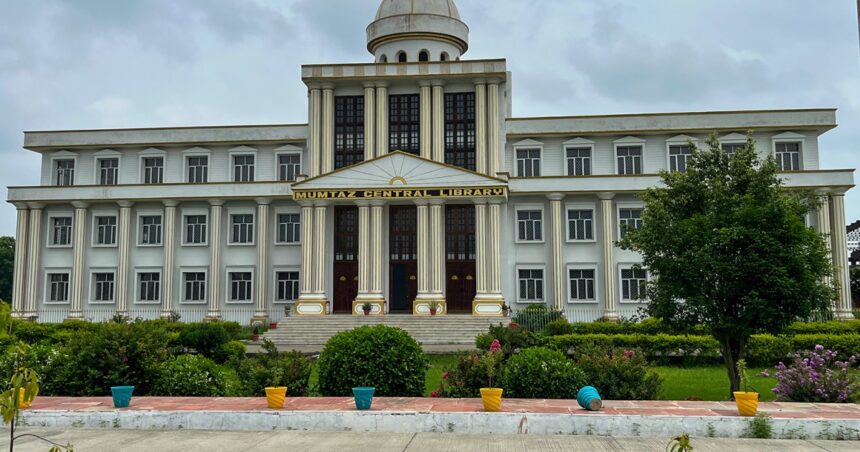

Summary: The ongoing protest at Mohammad Ali Jauhar University in Rampur, India, highlights the systemic discrimination and marginalization faced by Muslims under the current Bharatiya Janata Party (BJP) government. The planned demolition of the university, which serves a significant population of Muslim and Hindu students alike, reflects broader patterns of exclusion and political vendetta against minority institutions.
Background of the Protest
Over 100 individuals, including students and local residents, have been participating in an indefinite sit-in to oppose the demolition orders affecting 38 of Mohammad Ali Jauhar University’s 40 buildings. The protest emerges amidst a backdrop of political turmoil, following a successful demonstration that led to the resignation of a federal minister by a youth movement known as the Cockroach Janta Party (CJP).
The university, founded by prominent Muslim politician Azam Khan, is emblematic of minority educational institutions in India. Local authorities claim the buildings were constructed without proper regulatory approvals, while university officials assert that these allegations are unfounded and politically motivated.
The Politics of Marginalization
Since coming to power in Uttar Pradesh in 2017, the BJP has been accused of targeting minority institutions, particularly those affiliated with Muslims. Azam Khan, the university’s founder, has faced multiple legal challenges, which his supporters believe are aimed at diminishing his political influence and that of the institutions he established.
Samajwadi Party MP Javed Ali Khan criticized the demolition order as “vendetta politics,” emphasizing that the university plays a pivotal role in the education of both Muslim and Hindu students. The ongoing protests reflect a broader resistance to policies perceived as discriminatory, especially against Muslim communities in a state with a significant Muslim population.
Socio-Economic Implications for Students
The imminent demolition of Rampur’s only university raises serious concerns, especially regarding its impact on educational accessibility for students, particularly women. Approximately 50% of the university’s student body is female, many of whom have expressed fears about their safety and educational prospects should the institution close.
Students like Iqra have articulated that the university provides a safe environment, which is a significant factor for many families when considering educational options for their daughters. Iqra stated, “If this university is demolished, girls like us will never get another chance to study anywhere else.” The situation emphasizes the intersection of gender and religious identity in the educational landscape, where religious minorities often experience greater barriers to access.
Why It Matters
The current scenario at Jauhar University represents a microcosm of the challenges faced by minority communities in India today. Demolitions and legal battles against institutions established for minority education signal a broader strategy aimed at disenfranchising Muslim populations. The protests illustrate not only the fight for institutional rights but also reflect the generational struggle for educational equity, which is critical for maintaining intellectual diversity in an increasingly polarized society.
Frequently Asked Questions
What are the main reasons for the protests at Mohammad Ali Jauhar University?
The protests are primarily against the planned demolition of 38 of the university’s buildings, which local authorities allege were constructed without proper approvals. Students and alumni argue that these actions are politically motivated attacks on a minority institution.
Who founded Mohammad Ali Jauhar University?
The university was founded by Azam Khan, a prominent Muslim politician in Uttar Pradesh, through the Mohammad Ali Jauhar Trust established in 2003.
What is the significance of the Cockroach Janta Party (CJP)?
The CJP is a youth movement that gained attention for successfully leading protests that resulted in a federal minister’s resignation, signaling a growing sentiment among the youth demanding political accountability and educational reforms.
How does this situation affect women students at the university?
Approximately half of the students at Jauhar University are female, and many view the university as a safe environment. The potential demolition poses significant challenges for their future educational opportunities, particularly given societal pressures surrounding female education in India.