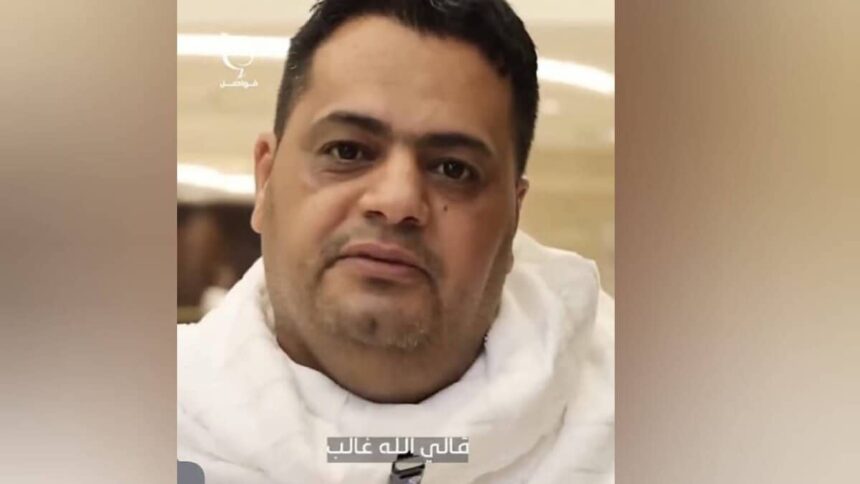

A Libyan pilgrim, Amer al-Mahdi Mansour al-Gaddafi, has dispelled false rumors circulating on social media regarding his death during Tawaf at the Grand Mosque in Makkah, Saudi Arabia, while performing Haj 2025. He affirmed his well-being in a conversation with Arabic media.
Background: The Rumors and Their Origin
Social media platforms, including Facebook and X (formerly Twitter), sparked widespread rumors, claiming that Amer had collapsed and died while circling the Kaaba. Such news often proliferates quickly online, leading to confusion and distress, particularly among the religious community. Amer took to Arabic media outlet Zehra to confirm his health, stating unequivocally, “I am alive and healthy.” This incident was further clarified by fact-checkers who debunked the claims of his death, reiterating the need for responsible sharing of information on social media.
Amer’s Journey to Haj
Amer, hailing from Libya, had long aspired to perform Haj, a religious pilgrimage significant in Islam. However, his journey faced unexpected hurdles. Upon arriving at the airport, he encountered an immigration issue stemming from a security alert linked to his surname, “Al-Gaddafi.” This name continues to be flagged in security systems due to Libya’s tumultuous recent history. As his travel group prepared for departure, the captain decided to leave without Amer, citing security reasons and flight scheduling, which only added to Amer’s determination to reach his destination.
Showing remarkable resolve, Amer declared, “I will not move from here unless it’s toward Haj.” His unwavering spirit resonated with many, and soon after this incident, the aircraft developed a technical issue that forced a return to the airport. The captain, echoing the sentiment shared by Amer, expressed a commitment to ensure he boarded the flight: “I swear I won’t fly again unless Amer is with us on this plane.” Ultimately, Amer was cleared for travel, and on a subsequent attempt, he was able to successfully embark for his pilgrimage.
The Public and Spiritual Reactions
The incident quickly gained traction online, with many interpreting Amer’s perseverance as a testament to divine will. He expressed, “I only wanted to go to Haj. If it was written for me, nothing could stop it.” Such sentiments are often shared within religious communities, where faith can be seen as a guiding force in overcoming obstacles—both mundane and extraordinary. The support from fellow pilgrims and online commentators has highlighted the communal aspect of the pilgrimage experience, where shared faith underpins collective hope, particularly during challenging circumstances.
Why This Matters
The events surrounding Amer’s pilgrimage have broader political and social implications. For Indian readers, this story underscores the enduring challenges faced by individuals from politically charged backgrounds, particularly in regions with complex histories. As with Amer’s situation, the lingering effects of historical conflicts often have direct impacts on personal experiences—whether that be in the realm of travel, safety, or societal perception. Additionally, the rapid dissemination of misinformation on social media platforms emphasizes the need for greater scrutiny and accountability in digital communication, a concern that resonates globally, including in India, where digital literacy and access to reliable information remain critical issues.
Frequently Asked Questions
What caused the rumors about Amer al-Gaddafi’s death?
The rumors started on social media platforms like Facebook and X, alleging that he died while performing Tawaf. Fact-checkers confirmed these claims to be false.
What security issue did Amer face before his trip?
Amer was held back at immigration due to a security alert linked to his surname, “Al-Gaddafi,” which is still flagged in some systems due to the historic context of Libya.
How did the community react to Amer’s journey?
The community’s reaction highlighted a sense of shared faith and support, with many interpreting Amer’s challenges and eventual success as a sign of divine will.
What was Amer’s sentiment about his pilgrimage?
Amer expressed a resilient spirit, stating his unwavering intention to travel for Haj, illustrating the importance of faith in overcoming obstacles.