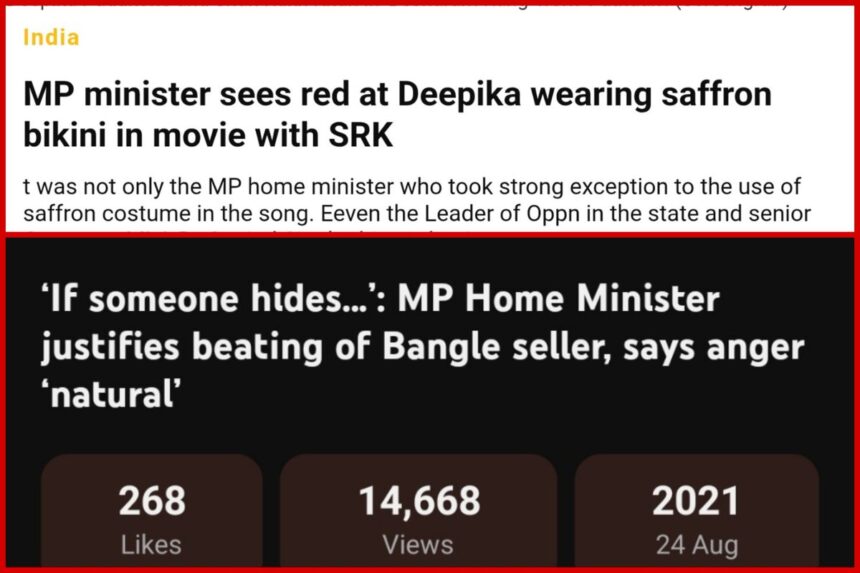

Recently, Mohammed Zubair, a well-known Indian political commentator, highlighted the controversial track record of Narottam Mishra, a leader associated with the Bharatiya Janata Party (BJP). Zubair noted that Mishra’s tenure showcased only two significant actions: objecting to a saffron bikini and sending a bangle seller to jail. His comments come in the context of protests staged by Mishra’s supporters after he was denied a ticket by the BJP for an upcoming election.
Context of Narottam Mishra’s Leadership
Narottam Mishra has been a prominent figure in Madhya Pradesh’s political landscape, serving as a minister in various capacities. However, his leadership has often been marred by controversial statements and actions that have drawn criticism. His most notable actions during his tenure have included campaigning against what he termed “obscene” clothing choices and targeting petty offences like those involving street vendors. While these issues touch on critical societal questions, they have been viewed as lacking depth in addressing broader state and national issues.
Protest Dynamics in Datia
After the BJP’s decision to replace Mishra with Ashutosh Tiwari as their candidate in Datia, supporters of Mishra gathered in protest. This reaction signals a complicated relationship between party leadership and grassroots supporters, showcasing not only loyalty but also frustration with the party’s decisions. The opposition to the decision highlights a faction within the BJP that remains committed to Mishra, indicating that despite his controversial actions, he retains a base of support that could influence future electoral outcomes.
Media Representation and Political Bias
Zubair pointed out a notable absence in media coverage, specifically the lack of reporting by ANI, a major Indian news agency, on the protests related to Mishra. This raises questions about media bias and the relationship between political figures and news outlets. The seamlessness with which certain leaders receive coverage, while others receive limited attention, can shape public perception and influence electoral dynamics. The friends and foes of Mishra within the media landscape may further affect the narrative as elections loom closer.
Why This Matters
The ongoing developments with Narottam Mishra and his supporters reflect broader patterns within the BJP as it navigates regional politics in Madhya Pradesh. The party’s decision-making processes, responses from grassroots supporters, and media handling play significant roles in shaping the political landscape ahead of the elections. Additionally, Mishra’s past actions raise critical discussions around leadership accountability and the effectiveness of elected officials. As India approaches the next election cycle, these dynamics will be crucial in understanding the implications for the BJP’s strategy and electability.
Frequently Asked Questions
Who is Narottam Mishra?
Narottam Mishra is a senior leader in the BJP and has held various ministerial positions in the Madhya Pradesh government. He is known for his controversial stances on social issues.
What triggered the protests in Datia?
The protests erupted after the BJP decided not to field Narottam Mishra as a candidate for the upcoming elections, which frustrated his supporters who have backed him during his tenure.
Why does the media coverage of Mishra matter?
Media coverage can significantly influence public perception and voter sentiment. The apparent selective reporting by major news outlets can affect how the electorate views Mishra, especially in the context of his protests.
What are the implications of the party’s decision on Mishra?
The BJP’s decision to replace Mishra reflects internal party dynamics and could have implications for voter support. His loyal base may react negatively to this change, potentially impacting the party’s overall performance in the upcoming elections.