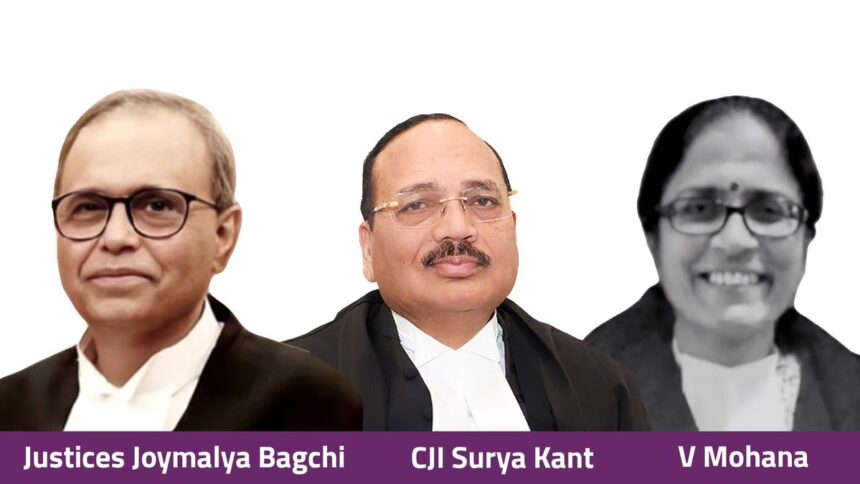

Supreme Court Rules on FIRs Related to NEET Protests
The Supreme Court of India has clarified that state governments, including Delhi, have the authority to withdraw or close First Information Reports (FIRs) related to students involved in the NEET protests. However, this ruling does not extend to cases where participants are accused of serious or heinous crimes, as noted by the central government, which emphasized that FIRs against over 2,700 individuals with such accusations will not be withdrawn.
Context of the NEET Protests
The National Eligibility cum Entrance Test (NEET) has been a central point of contention among students in India, particularly for those from marginalized backgrounds. Protests erupted across several states, reflecting widespread discontent regarding the examination process and its implications on students’ futures. The protests have drawn significant media attention and political discourse, highlighting concerns over accessibility and equity in education.
Students specifically raised concerns over the difficulty of the exam, marking discrepancies in the evaluation process, and the implications for their academic trajectories. The protests were met with a substantial police response in various regions, leading to multiple arrests and the filing of FIRs against participants. This legal action has sparked debates about students’ rights and the boundaries of state authority, framing further discussions on educational reforms in the country.
Supreme Court’s Intervention
The Supreme Court’s latest decision serves as an important legal benchmark, granting autonomy to state governments while simultaneously imposing restrictions on the scope of prosecutorial discretion. The ruling indicates that while states can close FIRs related to the protests, there is a non-negotiable line when it comes to grave allegations.
This nuanced stance reflects the Court’s attempt to balance the rights of students protesting for legitimate grievances and the need to maintain law and order. As such, the ruling is likely to impact both ongoing and future protests, empowering students while also stating the parameters within which the law operates. The court’s interventions highlight its role as a mediator in socio-political issues, often finding itself at the crossroads of contentious debates surrounding education and governance in India.
Government’s Position
The central government has reiterated its position regarding serious violations associated with the NEET protests. Officials indicated that while the Supreme Court’s ruling facilitates the withdrawal of FIRs for many individuals, those facing allegations of severe offenses would still be prosecuted. This distinction emphasizes the government’s commitment to uphold legal integrity while navigating public sentiment regarding student movements.
This response also conveys the administration’s broader strategy to manage the implications of student protests without undermining authority or accountability. The central government’s stance may further fuel dialogues around police actions and student activism, particularly in light of India’s growing youth demographic, which increasingly demands a voice in political and educational matters.
Why This Matters
This ruling is significant for several reasons. Firstly, it establishes a precedent in handling student protests, reflecting broader social and educational dynamics in India. By allowing states to act on FIRs while recognizing the rights of students, the Supreme Court has navigated a complicated issue that encompasses legal authority, individual rights, and societal expectations.
Furthermore, the decision may influence public perception regarding the judicial system’s role in safeguarding democratic expressions. The outcome stresses the importance of legal recourse in the education sector and sends a message to both the student community and the government about the need for constructive dialogue in resolving grievances.
Frequently Asked Questions
What is the Supreme Court’s ruling regarding FIRs against NEET protestors?
The Supreme Court allowed state governments to withdraw or close FIRs against NEET protestors, except for those accused of serious or heinous crimes.
How many individuals are still facing serious allegations related to the NEET protests?
The central government indicated that there are over 2,700 individuals with serious allegations that will not see their FIRs withdrawn.
Why did the NEET protests occur?
The NEET protests arose due to concerns over the examination’s difficulty, evaluation inconsistencies, and the overall educational justice for marginalized students.
What implications does this ruling have for future student protests?
This ruling may empower students to protest for their rights while providing a framework for maintaining law and order, indicating that the judicial system supports legitimate grievances but not serious legal offenses.