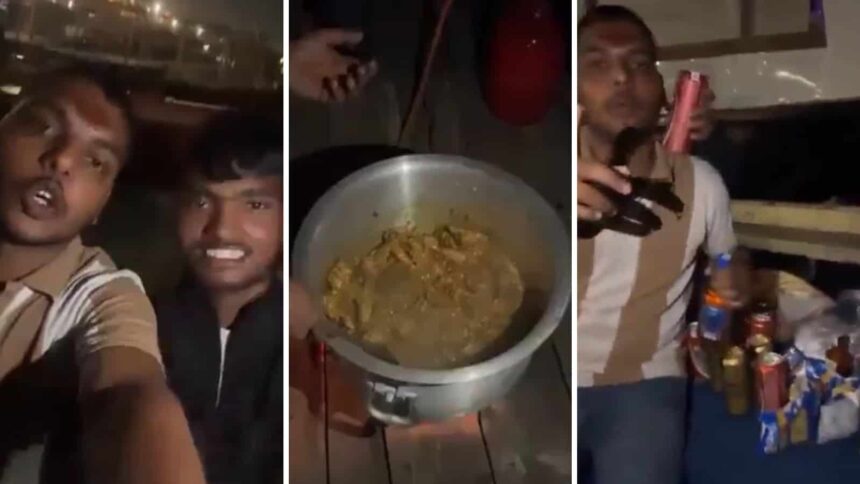

The recent arrest of five individuals in Varanasi for allegedly hosting a chicken and alcohol party on the banks of the Ganga has raised questions about religious sentiments and the application of law in India. This incident, which drew attention after a video of the party went viral, highlights the contrasting legal repercussions observed in similar cases involving different religious groups.
Incident Overview
On June 23, 2023, Uttar Pradesh police apprehended five men identified as Anurag Saini, Rahul Saini, Ajay Saini, Deepak Kumar, and Arun Kumar. This action was prompted by the emergence of a video on social media showcasing a party on a boat at Dashashwamedh Ghat, where attendees were seen cooking chicken and consuming beer. The police clarified that the video, while making rounds online, is not recent but took swift action nonetheless.
Legal Context
The authorities charged the arrested individuals under sections of the Bharatiya Nyaya Sanhitha (BNS), including sections 196(2) concerning the promotion of enmity and 299, which pertains to acts intended to outrage religious feelings. A search is currently underway for additional suspects involved in the incident. Critically, local reports alleged that the boat used in the party belonged to a councillor from the Bharatiya Janata Party (BJP), although police officials have denied these claims, refusing to comment further.
Comparative Analysis of Similar Incidents
This incident mirrors events from March 17, when 14 Muslim individuals were arrested for allegedly breaking their fast during Ramzan by consuming biryani and discarding leftovers into the Ganga. The authorities acted swiftly in that case, with the accused facing numerous charges, including pollution offenses under the Water (Prevention and Control of Pollution) Act. Critics have pointed out the disparity in the legal responses to similar actions, highlighting a potential bias in the application of law across different religious groups.
Why This Matters
The political implications of this incident extend beyond the immediate legal environment. The contrasting treatment of similar events involving different religious communities brings to light critical questions about secularism and fairness in law enforcement in India. Such disparities can exacerbate communal tensions, influencing perceptions of bias and injustice, especially in a politically sensitive environment where religious identity plays a significant role. For readers and observers of Indian politics, understanding these nuances is essential to grasping the broader implications for communal harmony and governance in the nation.
Frequently Asked Questions
What charges were filed against the arrested individuals?
The arrested individuals were charged under the Bharatiya Nyaya Sanhitha (BNS), including section 196(2) for promoting enmity and section 299 for actions intending to outrage religious feelings.
Is the video of the party recent?
No, police have stated that the video circulating online is old, but they still proceeded with the arrests based on its contents.
How does this compare to the arrests made during Ramzan?
The arrests made during Ramzan were more swift and involved stringent charges, including pollution offenses, highlighting potential disparities in legal treatment based on religious identity.
What has been the public reaction to these arrests?
Public reactions have been divided, with some expressing concern over religious sentiment and legal fairness while others support the police actions as being necessary to maintain community harmony.