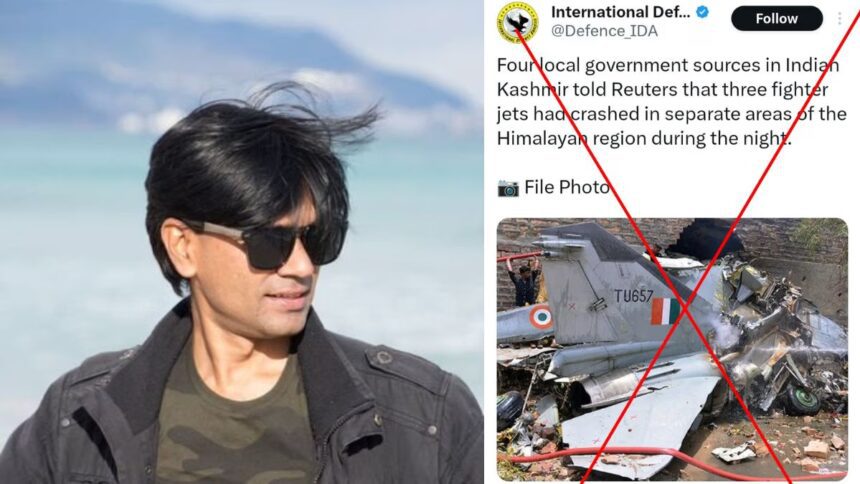

India’s Chief of Information War during Op Sindoor night was fact-checker Mohammed Zubair
Zubair’s heroic effort on the frontlines of Pakistan’s disinformation war is being showered with praise. This is new for a journalist who is perennially in the Right wing’s line of fire. Reports Antara Baruah.
Context: The Role of Mohammed Zubair
Mohammed Zubair, a prominent fact-checker and journalist in India, has emerged as a critical figure in the context of disinformation surrounding military and political events like ‘Operation Sindoor.’ His commendations during this operation have highlighted his unexpected role in countering narratives that may not align with the official stance.
Historically, Zubair has been under scrutiny and often criticized by right-wing commentators. However, his recent contributions have showcased him in a different light, suggesting a shift in perception regarding journalists who actively confront misinformation, particularly in a politically charged atmosphere.
Operation Sindoor: A Brief Overview
Operation Sindoor was a significant military strategy implemented by Indian forces, aimed at reinforcing India’s stance against Pakistan amid rising tensions. On the night of the operation, various media outlets disseminated information that was rapidly scrutinized for accuracy. Zubair’s intervention as a fact-checker was pivotal in clarifying the facts and rebutting claims that sought to distort the narrative.
This instance underscores a broader trend in modern warfare where information and disinformation play critical roles, and journalists like Zubair are at the forefront. His work not only defended the integrity of the operation but also highlighted the necessity for accuracy in media reporting, especially during crises.
The Impact of Social Media and Misinformation
In today’s digital age, social media serves as both a tool for information dissemination and a platform for misinformation. The rapid spread of unverified news can lead to significant misconceptions about sensitive issues. Zubair’s role as a fact-checker is essential in combating this trend, showing the need for reliable sources in a time when narratives can be easily manipulated.
Furthermore, the reactions to Zubair’s endeavors exemplify the polarization of opinions within Indian society. His ability to navigate this challenging landscape reflects the vital importance of journalistic integrity amidst activism and heated discourse.
Why This Matters
The significance of Mohammed Zubair’s contributions extends beyond this operation. They illuminate a growing recognition of the importance of fact-checking in Indian journalism, especially concerning national security issues. With rising tensions and political divides, the role of journalists and fact-checkers is increasingly critical in maintaining the credibility of information that the public receives. This can impact public perception and governmental accountability, making it essential for citizens to engage with verified information.
The evolving landscape of media in India also indicates that the fight against misinformation will likely continue to intensify, making the work of fact-checkers indispensable in preserving democratic discourse.
Frequently Asked Questions
Who is Mohammed Zubair?
Mohammed Zubair is a prominent fact-checker and journalist known for his work in combatting misinformation in India, particularly amid politically sensitive situations.
What was Operation Sindoor?
Operation Sindoor was a military initiative undertaken by Indian forces in response to rising tensions with Pakistan, aimed at asserting India’s strategic position regarding national security.
How does misinformation affect society?
Misinformation can lead to misunderstandings, increased tensions, and can seriously impact public opinion and sentiment regarding critical issues, including national security.
Why is fact-checking important in journalism?
Fact-checking is crucial in journalism as it helps ensure the accuracy of information, protects the integrity of the media, and maintains public trust, especially during crises.