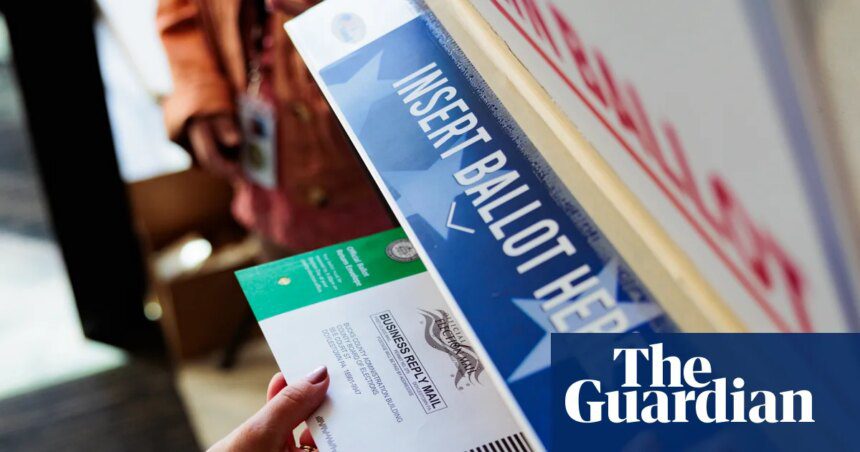

In a significant political maneuver, House Republicans in the United States have attempted to push the controversial Save America Act, aimed at restricting voting through new identification requirements and a ban on mail-in ballots. This effort is closely linked with a spending bill and faces staunch opposition in the Senate, particularly from Democratic leaders who see it as a veiled attempt to disenfranchise voters.
Proposed Legislation and Party Lines
The House of Representatives passed the Save America Act on Wednesday, combining it with a spending bill related to the State Department, which was also approved in a 217-209 vote. The legislation, heavily supported by rightwing Republicans and influenced by former President Donald Trump, seeks to impose stringent identification methods for voters and eliminate mail-in ballots. Advocates claim the measures aim to prevent non-citizen voting and reduce election fraud, although opponents argue that there is little evidence supporting such claims and raise concerns about voter disenfranchisement.
Senate’s Firm Opposition
Despite being passed in the House, the legislation’s future in the Senate appears grim. Senate Majority Leader Chuck Schumer has been adamant in his opposition, declaring that the Save America Act is “dead on arrival” in the Senate. He criticized the proposed bill, likening it to retrogressive voting measures reminiscent of discriminatory practices in the Jim Crow era. The Democratic majority holds the power to use the filibuster to effectively halt any further discussions on the bill, limiting the Republicans’ ability to advance their legislative agenda.
Trump’s Influence Over Republican Strategy
Former President Trump continues to wield considerable influence over congressional Republicans, insisting that the Save America Act is a priority for the party. He has previously disrupted bipartisan consensus on other legislative matters, linking their passage to the approval of the Save America Act. His approach has led to a legislative standoff, further complicating the government’s operational framework and raising the threat of a potential government shutdown if the Republicans persist with their legislative strategy.
Why This Is Trending
The topic has gained traction in India due to the global ramifications of American election laws and their implications for democratic integrity worldwide. As India continues to strengthen its own electoral systems, developments in the U.S.—the world’s largest democracy—are closely monitored. The ongoing struggle over voting rights also resonates with similar issues in India, such as voter access and electoral reforms, making it a relevant topic for Indian citizens engaged in global democratic discussions.
Frequently Asked Questions
What is the Save America Act?
The Save America Act is a proposed piece of legislation aimed at imposing new identification requirements for voters and banning mail-in ballots, framed as necessary to combat voter fraud and prevent non-citizen voting.
Why are Republicans pushing for this act?
Republicans, particularly those aligned with former President Trump, argue that the legislation is essential for securing election integrity and preventing fraud, despite widespread criticism and claims that such fraud is largely unsubstantiated.
What challenges does the legislation face in the Senate?
The legislation faces significant hurdles in the Senate, where the Democratic majority, led by Chuck Schumer, has vowed to block it using the filibuster. This resistance signals that the bill is unlikely to pass in its current form.
What are the implications of blocking this act?
If the Senate refuses to pass the Save America Act, it could lead to continued legislative turmoil and potential governmental gridlock, impacting other critical legislative initiatives and raising the threat of a government shutdown.