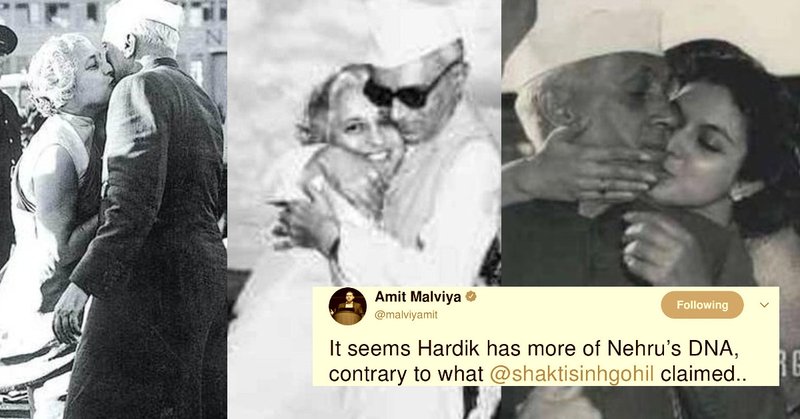

The claim that Jawaharlal Nehru had romantic relationships with women in public has once again surfaced, fueled by a recent tweet from BJP IT cell head Amit Malviya. He shared images of Nehru with his sister Vijaylakshmi Pandit and niece Nayantara Sehgal, suggesting that these familial bonds indicate shared DNA with contemporary political figures, particularly Hardik Patel. This assertion reflects ongoing political narratives aimed at undermining the Nehru-Gandhi family legacy within Indian politics.
Understanding the Images
The photographs shared by Amit Malviya feature Nehru receiving affectionate gestures from his sister and niece. The first image shows his sister, Vijaylakshmi Pandit, giving him a peck on the cheek, while the second captures Nayantara Sehgal welcoming Nehru at the London airport in 1955. Both instances highlight the familial relationships in the Nehru family, underscoring their close connections rather than any inappropriate connotations.
The Political Context
This is not the first occasion such images have been used to imply romantic or scandalous affiliations. Historical narratives have often been manipulated, especially by political factions like the BJP and RSS, to discredit the Nehru-Gandhi family. The propagation of these misleading interpretations reflects a broader strategy to reframe the historical and political legacy of India’s first Prime Minister. By associating Hardik Patel, who has been a vocal critic of the Congress party, with Nehru, the BJP aims to create a narrative about political lineage and credibility.
Reactions and Backlash
Political figures and commentators online have criticized the dissemination of these images. Many argue that using such familial interactions to imply scandal is disingenuous and shows a lack of respect for the individuals involved. The BJP’s IT cell is setting a precedent for leveraging historical figures and images to serve modern political agendas, which many find distasteful. Political discourse has been increasingly marred by sensationalism as parties seek to produce viral content rather than engage in substantive discussions around policy and governance.
Why This Matters
The incident raises important concerns about the integrity of political dialogue in India. The persistent sharing of manipulated images to create misleading narratives contributes to a more polarized political environment. For Indian readers, this highlights a crucial aspect of how historical figures are portrayed and the ramifications such portrayals can have on contemporary politics. As the landscape continues to evolve, understanding the tactics employed by different political factions will be essential for informed citizenship.
Frequently Asked Questions
Who is Amit Malviya?
Amit Malviya is the head of the BJP IT cell, responsible for the party’s digital strategy and social media outreach. He often shares content aimed at shaping political narratives around current events and historical figures.
What is the significance of Nehru’s familial relationships?
Nehru’s relationships with his family members, particularly women, have been often scrutinized in political narratives. Understanding these relationships is essential for contextualizing his legacy and the claims made about him.
How does this affect public perception of the Nehru-Gandhi family?
These claims and images can have a significant impact on public perception, potentially reinforcing negative stereotypes and weakening support for the Congress party, which is the political heir to Nehru’s legacy.
What should readers take away from this incident?
Readers should be cautious about media representations of historical figures, recognizing the motivations behind such narratives. Engaging critically with political content is essential for a comprehensive understanding of contemporary issues in Indian politics.