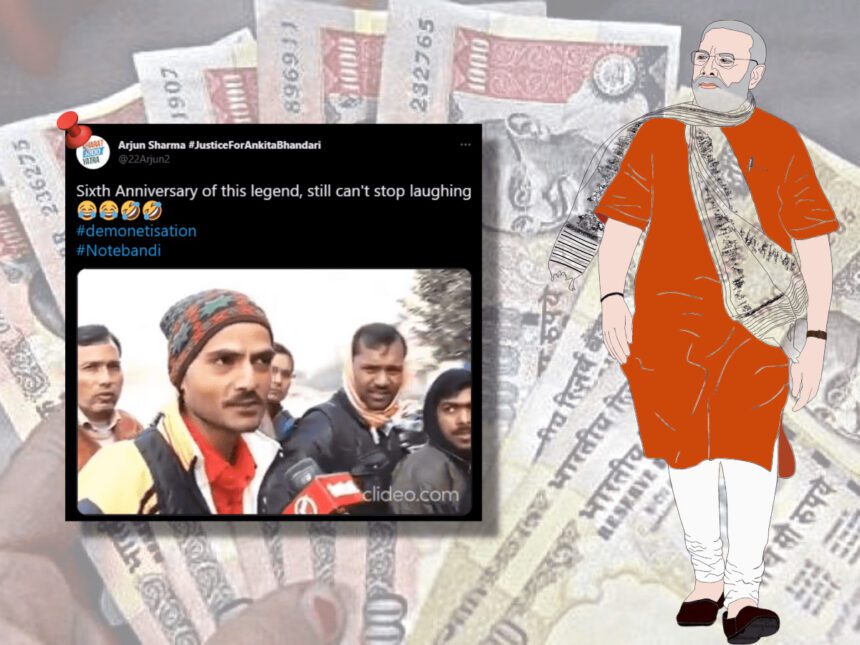

On November 8, 2016, India’s Prime Minister Narendra Modi announced the demonetization of ₹500 and ₹1000 currency notes, aiming to combat black money and reduce cash flow in the economy. Six years later, as the internet celebrates the anniversary of this significant policy, it turns out that public access to currency has increased, prompting a wave of social media reflection and critique.
Context: Demonetization in India
Demonetization was introduced with the promise that it would curb corruption and illegal financial practices prevalent within the country. The sudden withdrawal of a substantial portion of cash in circulation led to immense chaos as people lined up outside banks to exchange their old currency. Promising immediate benefits, Modi famously stated, “Give me 50 days, burn me alive if I’m wrong.” However, the initiative faced backlash over its execution and its real impact on the economy, with critics questioning whether it effectively addressed black money as intended.
Public Sentiment and Memes
As the sixth anniversary of demonetization approaches, social media platforms like Twitter are flooded with memes and comments reminiscing about the chaos that ensued following the government’s decision. Hashtags such as #Demonanniversary and #DEMONetisation have trended, serving as a digital archive of public sentiment regarding the policy. Users have shared humorous takes and poignant criticisms, creating a vibrant tapestry of public discourse. Among these reflections, a viral video featuring Delhi Chief Minister Arvind Kejriwal describing the initiative as a ‘scam’ adds a notable dimension to the critique.
Analysis of Economic Impact
Despite the initial goals of reducing cash dependency and addressing black money, the evidence suggests that the opposite has occurred. Reports indicate that public access to money has actually increased over the years. Critics of demonetization point to the potential long-term repercussions on small businesses and unorganized sectors that heavily rely on cash transactions. The transaction costs for the public increased significantly due to long wait times at bank branches and ATMs during the currency ban, resulting in economic strain for many households.
Why This Matters
The implications of demonetization stretch far beyond currency and finance. Politically, the policy has served as a rallying point for opposition parties, who argue that it exemplifies the government’s mismanagement and disconnect with the struggles faced by ordinary citizens. Moreover, the sustained circulation of memes and discussions on social media highlights the power of digital platforms in shaping public opinion and keeping political accountability at the forefront of national discourse. For Indian readers, these reflections serve as an essential reminder of the consequences of governmental policy-making.
Frequently Asked Questions
What was the main purpose of demonetization in India?
The primary aims were to curb black money, combat corruption, and reduce cash dependency in the economy.
What were the immediate consequences of demonetization?
The immediate outcomes included long lines at banks, increased transaction costs, and significant disruption to small businesses relying on cash transactions.
How has public sentiment evolved regarding demonetization since 2016?
Public sentiment has evolved into a mix of critique and humor, as evidenced by memes and social media discussions reflecting on the chaos of the demonetization period.
Why is demonetization still relevant in political discussions today?
Demonetization remains relevant as it exemplifies the challenges of policy execution and the disconnect between governmental decisions and the lived realities of citizens, continuing to provoke conversation and analysis.