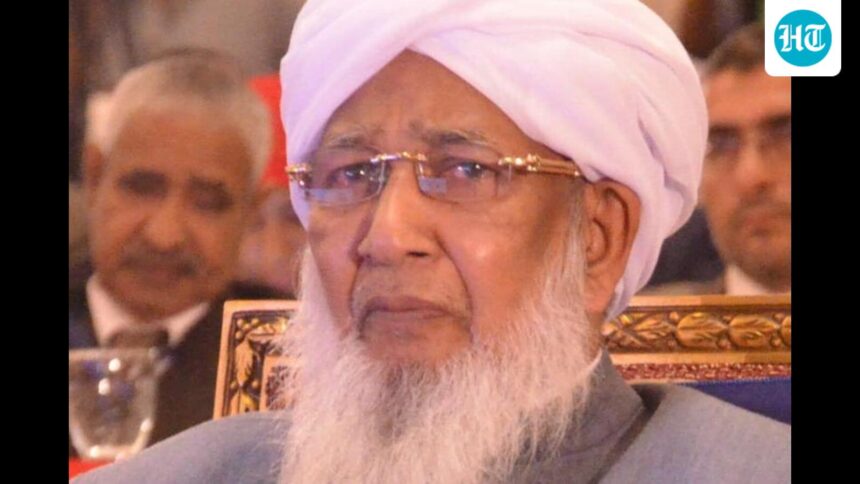

Controversial Remarks By Senior Sunni Leader Ignite Backlash
A controversial statement from 95-year-old Kerala-based Sunni Muslim leader Kanthapuram AP Aboobacker Musliyar, known as the Grand Mufti of India, has fueled discussions about women’s rights and societal roles in India. Musliyar urged women to remain confined to their homes to avoid “destruction,” remarks which have been met with sharp condemnation from local government officials and social reformers.
Musliyar’s Assertions on Women’s Public Role
During a recent event, Musliyar articulated his views, saying, “If women enter the public sphere, it will lead to destruction.” He referenced Islamic doctrine, claiming that the Quran mandates that women should stay indoors. His stance echoes a recent circular issued by the AP faction of the Samastha, which aimed to restrict women’s participation in public events, stating that “displaying young women among unrelated men on roads and public stages is not appropriate for believers and is not permissible.”
These remarks have reignited existing tensions regarding women’s rights within the Muslim community and broader Indian society. The circular urged institutions like mosques and madrasas to ensure that celebrations do not exceed religious bounds, particularly in light of certain public events that have seen increased participation from women.
Government and Community Responses
The backlash against Musliyar’s comments has been swift. Bindhu Krishna, Kerala’s Minister for Women and Child Development, stated that while everyone has the right to express their views, such opinions do not align with the constitutional provisions guaranteeing gender equality in India. “Women in our society have equal rights under the Constitution,” she remarked, emphasizing the hard-fought battle for gender equality in Kerala.
Home Minister Ramesh Chennithala also expressed his disapproval of restricting women’s roles in public, highlighting that such views do not align with modern societal standards. Meanwhile, a fellow Muslim leader, KM Shaji, opted not to comment, leaving some sections of the community in a state of reflection on the remarks and their implications.
Prominent leaders advocating for women’s rights, including PK Sreemathy of the Communist Party of India (Marxist), have posed critical questions about the treatment of women in society. She highlighted that women are entitled to the same rights as all other citizens and that denying them these rights contradicts the principles enshrined in the Indian Constitution.
Why It Matters
The comments made by Musliyar, along with the response from various political and community leaders, showcase the ongoing struggle for women’s rights in India, particularly within conservative religious frameworks. This incident underscores the broader context of discrimination and marginalization faced by various communities, including Muslims. As the Indian society grapples with gender equality, the push and pull between traditional beliefs and modern values will inevitably shape the future landscape of social policies.
Furthermore, the increased scrutiny on women’s roles leads to important discussions about fundamental rights within a democratic society, fueling debates on civil liberties, religious freedoms, and the intersectionality of culture and law. The responses to Musliyar’s assertions may act as a barometer for future socio-political dynamics in Kerala and across India.
Frequently Asked Questions
What did Kanthapuram AP Aboobacker Musliyar say about women’s roles?
He urged women to remain confined to their homes, claiming their presence in public would lead to “destruction,” and said that the Quran mandates women to stay indoors.
How have government officials responded to Musliyar’s comments?
Kerala’s Women and Child Development Minister Bindhu Krishna and Home Minister Ramesh Chennithala criticized Musliyar’s views, asserting that they are incompatible with constitutional provisions for gender equality.
What does the recent circular from the AP faction of Samastha state?
The circular sought to restrict women’s participation in public events and suggested that displaying young women among unrelated men was inappropriate and impermissible for believers.
Why are these comments significant for Indian society?
They highlight ongoing issues of gender inequality and the tension between traditional beliefs and modern rights in India, particularly the struggles faced by women within conservative communities.