
Summary
India has firmly rejected remarks made by Pakistan President Asif Ali Zardari concerning the historic Ganj Shaheeda mosque in Varanasi, calling his comments “unwarranted” and asserting Pakistan’s lack of authority to comment on India’s internal matters. This incident underscores ongoing tensions regarding religious sites and the treatment of minorities within India’s socio-political landscape.
Context of the Controversy
The issue revolves around the Ganj Shaheeda mosque, located near the Kashi railway station in Varanasi. Recently, Indian railway authorities issued a notice for the eviction of occupants at the mosque due to an anti-encroachment drive aimed at redeveloping and expanding the station’s infrastructure. Local Muslim communities argue that the mosque is of historical significance and predates the railway development, highlighting fears of its removal as a threat to minority rights and cultural heritage.
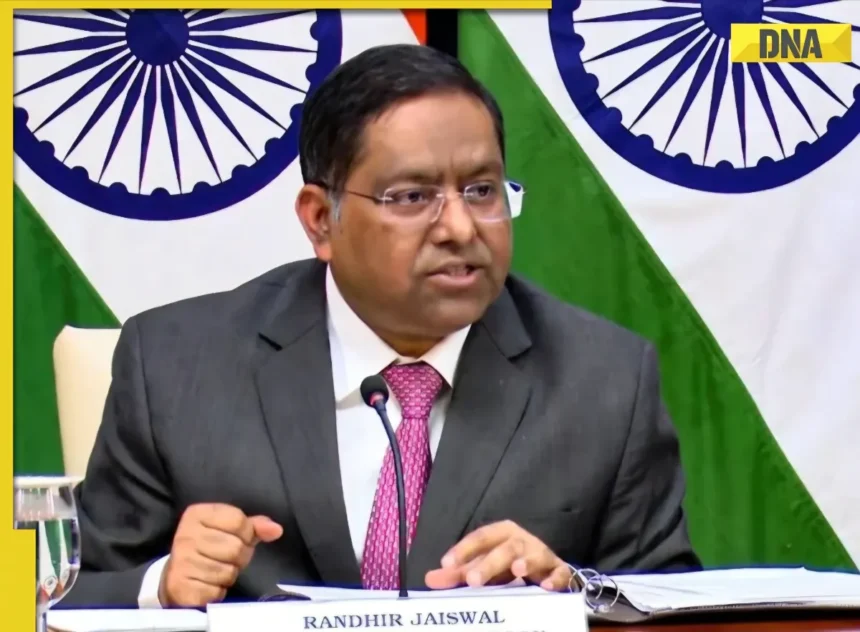
President Zardari expressed his concerns regarding threats to historic Muslim sites in India, urging the Indian government to safeguard minority rights. The Indian Ministry of External Affairs (MEA) responded vehemently, rebuffing Zardari’s call for action by emphasizing that Pakistan has a troubling history concerning its treatment of religious minorities. MEA spokesperson Randhir Jaiswal described Zardari’s remarks as “particularly absurd” given Pakistan’s own human rights violations.
Reactions and Diplomatic Tensions
The Indian government’s sharp response highlights the fraught diplomatic relationship between India and Pakistan. Jaiswal’s statement emphasized that issues relating to India’s religious sites and governance fall within its sovereign rights. He labeled Zardari’s intervention a “deliberate political attack” driven by Pakistan’s policies of “bigotry and hatred.” This exchange illustrates a broader context where incidents related to historical religious sites can intensify existing nationalistic sentiments and political discourse.
The situation reveals the deep-seated divide in perceptions of religious minorities and their treatment. It also brings to light the cautious stance taken by the Indian government on matters that intersect with its religious and cultural identity, further complicating inter-governmental discussions and public sentiment.
Social Impact and Implications for Indian Muslims
This incident is part of a larger narrative that has implications for the social fabric of India, particularly affecting its Muslim population. Over recent years, there have been various instances of social exclusion, discrimination, and economic boycotts faced by Muslim communities in India. The ongoing scrutiny of religious sites, coupled with increasing nationalistic rhetoric, raises concerns about the preservation of cultural heritage and the safeguarding of minority rights.
Concerns over incidents like the Ganj Shaheeda mosque’s eviction reflect a trend where local Muslim groups feel marginalized and threatened in their own historical narratives. This incident accentuates the urgency for an open dialogue regarding minority rights and the need for protective measures against disproportionate state actions that may lead to historical erasure.
Why It Matters
This situation emphasizes the importance of international attention to religious freedom and minority rights in India. For developers, content creators, and AI researchers, the narrative surrounding the treatment of minorities in India could inform models used for social sentiment analysis or cultural preservation projects. Recognizing the intersectionality of religion, culture, and identity is essential for creating algorithms that reflect diverse perspectives and realities. Furthermore, for users and global audiences, understanding these dynamics contributes to a more nuanced view of geopolitical relationships in South Asia.
Frequently Asked Questions
What is the Ganj Shaheeda mosque controversy?
The Ganj Shaheeda mosque controversy arises from an eviction notice issued by Indian railway authorities as part of an anti-encroachment drive in Varanasi, prompting concerns over the protection of historical Muslim sites.
What did Pakistan’s President Zardari say about the mosque?
President Zardari expressed concern over threats to historic Muslim religious sites in India, urging the Indian government to protect minority rights and cultural heritage.
How did India respond to Zardari’s remarks?
The Indian government, through the Ministry of External Affairs, categorically rejected Zardari’s comments, stating that he has no authority to comment on India’s internal matters, and criticized Pakistan’s own human rights record.
Why is the treatment of minorities in India significant?
The treatment of minorities in India holds implications for social cohesion, cultural preservation, and international human rights standards, making it a critical issue for both domestic and global audiences.