
Summary of Recent Demolitions Aimed at Muslim Communities
Jamaat-e-Islami Hind (JIH) has raised grave concerns regarding the demolition of mosques and residential settlements across India, which they claim disproportionately affects Muslim communities. Recent statements from JIH leaders highlight a pattern of targeting religious structures and the alleged neglect of legal procedures during these demolitions.
Demolition Drives: A Targeted Approach?
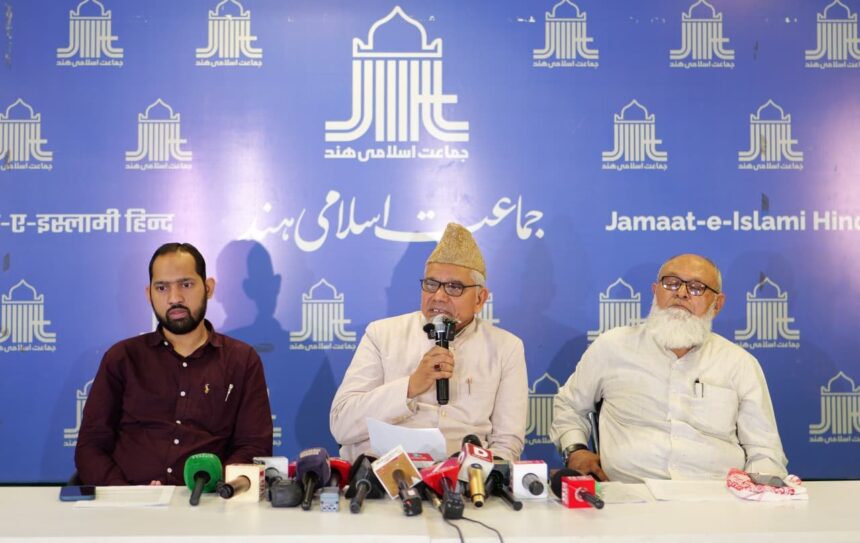
During a press conference held in New Delhi, JIH National Secretary Shafi Madni criticized the ongoing demolition efforts, which he argues are increasingly focused on mosques and residences of economically weaker communities. His remarks come on the heels of a delegation’s visit to Rajasthan, where they assessed the ramifications of recent demolitions in Barmer, Jaisalmer, and Jodhpur, which occurred between June 29 and July 2.
According to Madni, the delegation found that various religious structures, including mosques, dargahs, and madrasas, were demolished under the pretext of security. These actions have left local Muslim populations in fear. He asserted, “Recent incidents in Rajasthan, Uttar Pradesh, Maharashtra, Gujarat, Delhi and other states show a disturbing pattern where demolition drives are increasingly affecting mosques.”
Corruption and Erosion of Democratic Institutions
JIH Vice President Prof. Salim Engineer highlighted another layer of concern, pointing to rising corruption and diminishing accountability within Indian public life. He cited recent allegations against various ministers and government officials as indicative of a growing crisis in ethics and governance. “Corruption is no longer limited to politics or bureaucracy but has spread to institutions trusted by millions,” he stated.
Prof. Engineer called for the urgent need for institutional reforms and stronger moral values, asserting that integrity and accountability are essential for restoring public trust. Moreover, he remarked on the Special Intensive Revision (SIR) of electoral rolls, emphasizing that it must be executed fairly to safeguard the voting rights of all eligible citizens. “No eligible citizen should lose this constitutional right because of administrative mistakes or procedural shortcomings,” he emphasized.
Communal Tensions and the Decline of Public Discourse
The recent demolition drives are not isolated incidents but part of a broader trend that JIH leaders argue reflects communal targeting. “Mosques and dargahs were demolished while places of worship belonging to other communities facing similar issues remained untouched,” Madni claimed, labeling this as a national disgrace.
Furthermore, the discourse around these issues has shifted notably. Prof. Engineer mentioned that reasoned debate is increasingly replaced by polarisation, misinformation, and hate speech. Recently, intimidation tactics against opposition leaders and the selective use of investigative agencies have been reported, contributing to the impression that democratic processes are being undermined.
Why It Matters
The situation around the demolitions and the broader context of governance in India has significant implications for the socio-political fabric of the country. Allegations of discrimination against Muslims raise questions about the health of democratic institutions, the integrity of public discourse, and societal cohesion. Understanding these dynamics is essential for stakeholders including policymakers, academics, and civil society organizations striving for a more inclusive society. The push for reforms in governance and electoral processes hinges upon acknowledging and addressing these communal tensions and irregularities.
Frequently Asked Questions
What specific demolitions are being criticized by Jamaat-e-Islami Hind?
Jamaat-e-Islami Hind is criticizing the demolition of mosques, dargahs, and residential settlements belonging to Muslims across various states, including Rajasthan, Uttar Pradesh, and Gujarat, alleging that these actions are part of a targeted approach.
What are the allegations regarding the Special Intensive Revision (SIR) of electoral rolls?
Prof. Salim Engineer raised concerns that the SIR must be conducted transparently, ensuring that no eligible citizen loses their voting rights due to administrative errors, as this exercise is crucial for maintaining a fair electoral process.
How is corruption impacting Indian governance according to JIH leaders?
JIH leaders argue that rising corruption is affecting ethics and accountability within public institutions, diluting public trust and harming the credibility of governance.
What does the decline in public discourse signify for Indian democracy?
The decline, marked by increased polarization and hate speech, reflects a worrying trend that undermines reasoned debate and could threaten the foundational principles of democratic engagement in India.