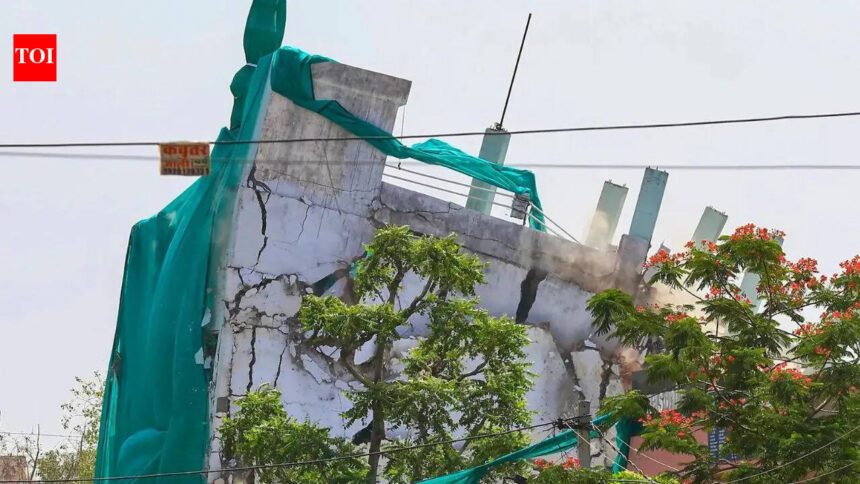

In Jaipur, a significant anti-encroachment drive targeting various religious structures, including a mosque and two temples, has raised concerns over potential discrimination and social exclusion, particularly towards the Muslim community. The operation, framed as necessary for road expansion, reflects ongoing patterns of marginalization under the current political landscape influenced by the Sangh and BJP governments.
Anti-Encroachment Drive and Its Targets
The Jaipur Development Authority (JDA) commenced a major anti-encroachment initiative in Jagatpura, aiming to clear spaces for a proposed road expansion project. Structures marked for removal include a mosque, two temples, a satsang hall, and a mazar. Such targeted demolitions evoke concerns about systemic bias against religious minorities, particularly Muslims, reflecting broader patterns of discrimination.
Officials cited the drive’s necessity for improving road widths to 80 feet as a rationale, yet the demolition of religious structures amplifies fears over the rights of marginalized communities. This pattern of targeting places of worship, paired with the suspension of internet services to preempt potential unrest, creates a climate of anxiety among the affected populations.
Social and Political Context
Amidst rising nationalism and communal tensions, state actions have increasingly been framed in ways that disproportionately impact Muslim communities. The JDA’s recent actions coincide with heightened surveillance and restrictions on social media, which have been enacted under the pretext of preventing the spread of misinformation and maintaining public order. The police, equipped with additional personnel, emphasize a commitment to keeping the peace, but the broader implications for civil liberties and civic space are troubling.
Authorities have warned that “anti-social elements” might exploit the situation to disrupt communal harmony, yet it is precisely these warnings that often lead to the suppression of legitimate dissent and dialogue. The local police commissioner’s remarks about strict actions against individuals spreading “religious frenzy or hatred” could serve as a chilling effect, discouraging public assembly and protest among communities already feeling marginalized.
Previous Encroachment Drives and Community Response
Historically, the government has employed rigorous measures against encroachments without sufficient attention to the voices of affected communities. As noted by Anand Sharma, Deputy Inspector General of the JDA Vigilance Wing, previous encroachments had already been cleared, suggesting an ongoing pattern of targeting specific communities. The current operation reportedly follows prior notices distributed to stakeholders regarding voluntary removals, yet voices in the local Muslim community suggest these notices have often gone unheeded.
The administration’s insistence on proceeding with the demolition underlines a glaring disconnect between government operations and community sentiments. Early reports suggest that the local population, while cooperating, remains apprehensive regarding the long-term implications of such measures for communal relations and urban governance. Many fear that these actions risk escalating tensions rather than fostering cohabitation and mutual respect among diverse faiths and backgrounds.
Why It Matters
The implications of this drive extend beyond local impacts, touching on broader issues of social justice, equity, and political representation in India. The systematic targeting of religious structures adds to existing narratives of economic boycott and exclusion of Muslim communities in various social spheres, including housing, employment, and education. Such actions could critically undermine India’s longstanding reputation as a secular and pluralistic society, raising concerns about religious freedoms and community rights.
Frequently Asked Questions
What sparked the anti-encroachment drive in Jaipur?
The drive was initiated by the Jaipur Development Authority to facilitate a road expansion project aimed at widening a key road corridor near the Nandpuri Underpass, but it has raised concerns about targeting religious structures.
Which structures were marked for demolition during the drive?
The demolition targets included a mosque, two temples, a satsang hall, and a mazar, all falling within the designated right-of-way for the road expansion.
What measures were taken to ensure peace during the operation?
Authorities increased police presence, imposed a temporary suspension of mobile internet services, and placed restrictions on public gatherings to prevent any potential unrest during the anti-encroachment drive.
What has been the community response to the demolition?
While some community members are cooperating with the authorities, there is significant concern and apprehension regarding the broader implications of these demolitions for communal harmony and individual rights.