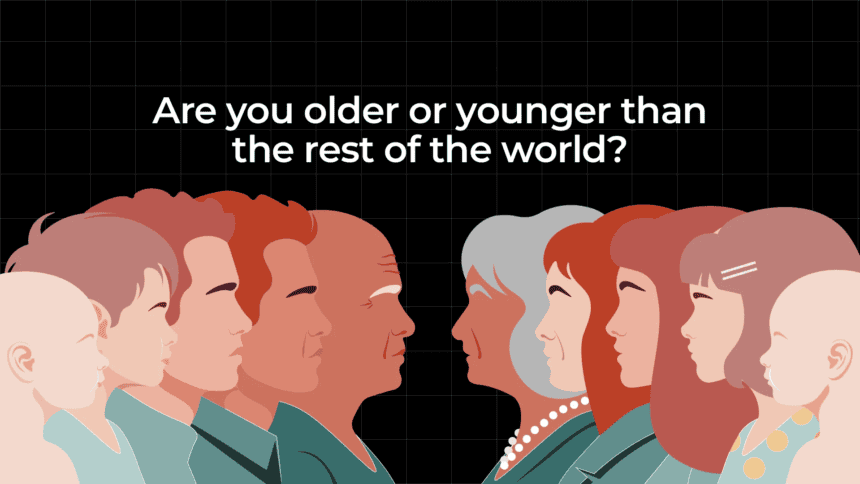

The global population is aging, with the median age rising from just under 21 in 1976 to 31 today, and projected to reach 36 by 2050. This shift is primarily driven by declining fertility rates, now hovering just above the replacement level of 2.1 births per woman. For countries like India, this demographic transition holds significant implications for economic growth and social policies.
Understanding the Global Demographic Shift
Fifty years ago, in 1976, the world’s population stood at approximately 4.1 billion, with a median age just under 21 years. Today, the median age has climbed to 31, reflecting a worldwide trend toward an older population. This shift is projected to continue, with estimates that the median age will reach 36 by 2050, indicating that the typical individual is aging.
This demographic transformation can be traced back to changes in fertility rates across the globe. The total fertility rate, often measured by the average number of children a woman would have over her lifetime at current birth rates, has significantly decreased. The global fertility rate, currently around 2.2, is barely above the replacement rate required to maintain a stable population size without immigration.
The Replacement Rate Explained
The replacement rate is generally set at about 2.1 births per woman—the level necessary for a generation to replace itself. This minor margin above two accounts for the fact that not all children survive to adulthood. A fertility rate below this threshold leads to a decline in population size over generations. Today, more than half of all countries, including major economies such as China and the United States, are recording fertility rates below this crucial level.
In India, the total fertility rate has experienced a downward trend, reducing from near five births per woman in the 1960s to about 2.0 as per recent estimates. This aligns with global patterns but poses unique challenges given India’s large population base and diverse socio-economic landscape.
Impact of Aging Populations
The consequences of declining birth rates are multi-faceted. A fertility rate below replacement means that each subsequent generation is smaller than the one preceding it. This has significant ramifications for the working-age population. In practical terms, fewer babies today will lead to fewer working-age adults tomorrow, while the share of retirees will grow, thereby imposing pressure on pension systems, health services, and labor markets worldwide.
Countries facing this issue—ranging from Italy to South Korea—are contending with the economic strain of supporting a larger elderly population. India, with its unique demographic profile, must adopt strategies to address potential workforce shortages while ensuring that the aging population is adequately supported.
What This Means
For India, the trend towards an aging population intersects with current socio-economic challenges. The decline in fertility rates suggests a future landscape where the working-age population could begin to dwindle, impacting growth potential. As the ratio of dependents (both young and elderly) increases relative to the workforce, there may be heightened pressure on public services, healthcare, and economic productivity. This demographic shift calls for adaptive policies promoting both youth empowerment and senior citizen welfare, ensuring sustainable development in the face of demographic change.
Frequently Asked Questions
What is the replacement rate and why is it significant?
The replacement rate, set at approximately 2.1 births per woman, is critical because it determines whether a population can sustain itself without immigration. Rates below this threshold indicate a potential population decline and aging issues.
How does India’s fertility rate compare globally?
India’s fertility rate has decreased from near five in the 1960s to about 2.0. While this is a significant reduction, it still aligns closely with the global trend of declining fertility rates, placing India among the countries approaching replacement level.
What challenges does an aging population pose for India?
An aging population presents challenges such as increased demand for healthcare, pension sustainability, and a shrinking workforce. The need for policies that promote intergenerational support and economic productivity becomes crucial as the demographic landscape shifts.
What strategies could India adopt to address these demographic changes?
India could focus on enhancing the productivity of its workforce, investing in elder care, and creating supportive policies to bridge the gap between the working-age population and retirees, thus maintaining economic stability amid demographic shifts.