
Recent findings have unveiled alarming instances of communal prejudice and economic boycotts affecting the Muslim community in India, especially following the lynching of a Muslim man in Jharkhand state. The investigation highlights how political leaders have exacerbated tensions, leading to social exclusion and escalated discrimination against Muslims.
Incident Overview: The Lynching of Imroz Ansari
On August 4, 2023, Imroz Ansari, a Muslim man from Bargaon village in Jharkhand, was lynched by a Hindu mob following accusations of kidnapping and raping a minor Dalit girl. The brutal killing was marked by public gatherings that further fueled communal hostility, with local leaders from the Bharatiya Janata Party (BJP) playing significant roles in inciting violence. Despite the gravity of the situation, local authorities failed to address the inflammatory rhetoric, which occurred even under restrictions on public assemblies.
Investigators from civil rights groups, including Jharkhand Janadhikar Mahasabha, raised questions about the legitimacy of the accusations against Ansari, pointing out inconsistencies that suggested the lynching was motivated by communal animosity rather than an objective assessment of the accusations. Their reports indicate a clear pattern of communal mobilization led by influential local leaders, further widening divisions between Hindus and Muslims.
Political Exploitation and Economic Boycotts
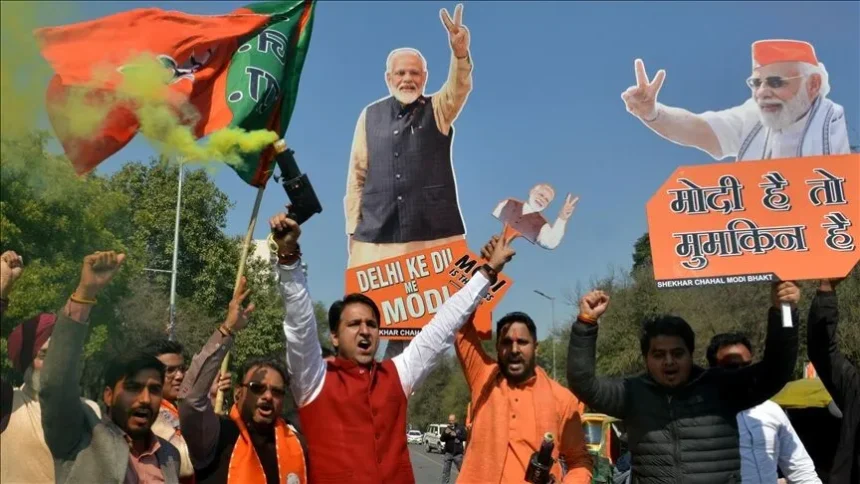
Political figures, notably former BJP lawmaker Kisun Das, addressed gatherings of Hindu residents to perpetuate an atmosphere of fear and hostility directed at the Muslim community. Das reportedly warned that minorities could face harsh consequences if they did not “follow rules,” invoking Ansari’s brutal fate as a cautionary tale. Such rhetoric reinforces a culture of intimidation and underscores attempts to create an environment where violence against Muslims becomes socially acceptable.
Additonally, Hindu residents, spurred by these political discourses, imposed an economic boycott against their Muslim neighbors. Sellers and shopkeepers have reportedly refused to trade with Muslims, effectively isolating them economically. This tactic of economic exclusion has emerged as a tool for anti-Muslim mobilization, targeting entire communities based on individual incidents and further entrenching religious divides.
Failings of Law Enforcement and Civil Society Response
The investigations highlighted not only the act of lynching but also the systemic failures by law enforcement. Authorities allegedly received information about the missing girl—a precursor to the lynching—yet they did not respond adequately. This negligence allowed the situation to spiral out of control, resulting in the tragic outcome for Ansari. Amid growing concern from civil rights groups and the Jharkhand Minority Commission, the narrative surrounding the incident and the associated accusations comes under increasing scrutiny.
Despite 14 arrests related to Ansari’s killing, the alleged ringleader, Vijay Chaube, remains at large, suggesting a lack of accountability among those inciting violence. As the political landscape continues to polarize, the implications for communal harmony and the rights of marginalized groups remain dire.
Why It Matters
The ongoing situation in Jharkhand highlights critical issues within Indian society, particularly concerning discrimination against Muslims and the rise of communalism. The politicization of communal identities not only exacerbates social tensions but can also influence economic stability and security for vulnerable communities. Understanding these dynamics is essential for global observers and policies aimed at fostering social cohesion. As similar incidents occur, they pose broader implications for secular governance and human rights, necessitating public discourse and policy intervention to protect marginalized groups.
Frequently Asked Questions
What prompted the lynching of Imroz Ansari?
Imroz Ansari was lynched following accusations of kidnapping and raping a minor Dalit girl, which political leaders exploited to incite communal hostility.
How have local BJP leaders influenced the aftermath of the lynching?
BJP leaders held public gatherings that fueled communal tensions, warning Hindu residents against supporting Muslims and using chants associated with anti-Muslim violence.
What forms of economic discrimination have occurred against the Muslim community in Jharkhand?
Muslim residents have faced economic boycotts, with Hindu shopkeepers and vendors refusing to sell goods or services to them, isolating the community economically.
What are the implications of these events for communal relations in India?
The events signify deepening communal divides and raise concerns about the normalization of violence against marginalized communities, highlighting the urgent need for dialogue and policy intervention to protect minority rights.