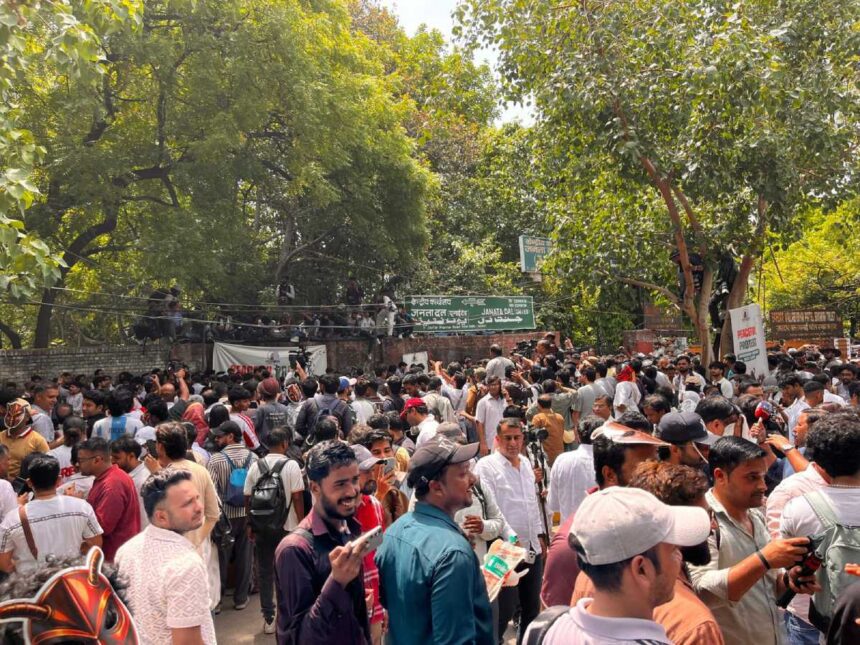

In recent years, Indian Muslims have increasingly faced discrimination, social exclusion, and political marginalization under the Sangh Parivar and BJP governments. While some community leaders advise caution towards youth involvement in protests, there remains a pressing concern regarding the overall decline of political engagement among Muslims, which has implications for their future representation and agency in Indian society.
Historical Context of Political Marginalization
The apprehension among Muslim leaders regarding the participation of youth in movements like the Gen Z protests is informed by historical experiences of political suppression. Past protests, including those led by Jayaprakash Narayan and Anna Hazare, did not yield significant Muslim leadership or mobilization. Instead, Muslims often found themselves sidelined, contributing only as individuals rather than as a cohesive community. This lack of representation continues, as similar patterns repeat themselves in contemporary protests where Muslim voices remain largely absent.
The Role of Fear and Economic Insecurity
Fear of state reprisals plays a significant role in the reluctance of many Muslims to participate in political activities. Experiences of social stigma and political targeting contribute to a sense of vulnerability that deters open organization. Additionally, substantial economic insecurity has forced many families to prioritize immediate survival over civic engagement, further exacerbating the community’s marginalization in the political arena. As political outcomes appear increasingly beyond their control, many Muslims feel disillusioned and disengaged from the democratic process.
Lessons from Contemporary Movements
While movements like Shaheen Bagh sought to break the cycle of political inactivity by instilling a sense of collective purpose, they ultimately highlighted the limitations of protest without enduring political structures. The energy generated during these protests did not develop into lasting organizations capable of sustaining long-term civic engagement. Following significant state crackdowns and arrests, fears resurfaced, and momentum dwindled. The lesson is clear: mobilization must transition into structured forms of organization to effect real change.
Why It Matters
The current political landscape in India is critical for understanding the implications for civil rights and social justice, not just for Muslims but for all marginalized groups. The systematic exclusion and rising inequalities signify a broader trend impacting democratic principles. When a significant portion of a population is sidelined, the entire fabric of society suffers. It is essential for developers and policymakers in various fields to recognize these dynamics, aiming for more inclusive approaches that can foster institutional accountability and promote civic engagement across diverse communities.
Frequently Asked Questions
Why are Muslims hesitant to participate in protests?
Many Muslims fear state retaliation, legal repercussions, and social stigma, which have historically deterred collective action. Economic instability also forces families to focus on immediate survival instead of civic engagement.
What was the impact of the Shaheen Bagh movement?
While the Shaheen Bagh movement temporarily united Muslims around a common cause, it ultimately failed to establish enduring organizations to support long-term civic engagement. Subsequent state actions created an atmosphere of fear that stifled momentum.
How does political marginalization affect Indian Muslims today?
The marginalization of Muslims affects their political representation and engagement, resulting in a lack of significant influence over issues that directly impact their community. This disengagement weakens democratic principles across the board.
What can be done to improve political engagement among Muslims?
Increased participation in student unions, local governance, and civil society organizations can foster political agency among Muslims. Supporting leadership development and community organizations is essential for encouraging sustained civic involvement.