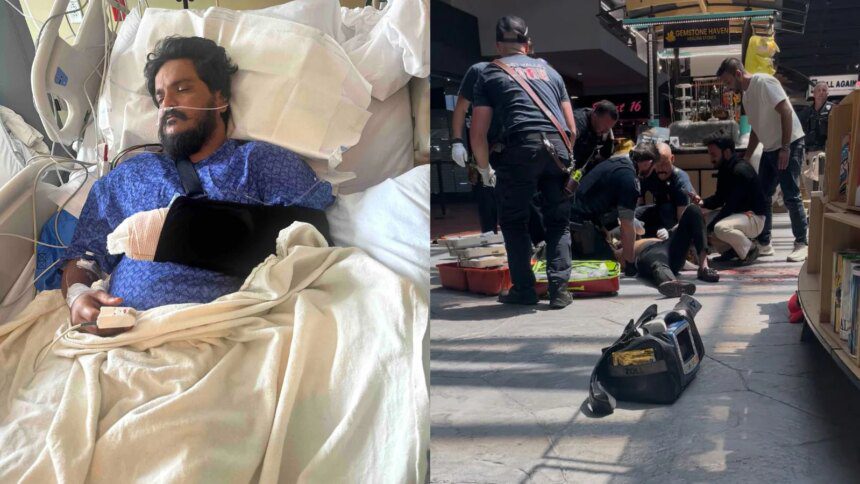

The recent stabbing of an Indian man in Utah underscores the pervasive issues of discrimination and violence against Indian Muslims in the United States. Syed Sohailuddin, a resident of Hyderabad, suffered severe injuries in what is being labeled a racist attack, prompting concern among the Indian community and highlighting the broader context of rising Islamophobia.
The Attack and Immediate Reactions
Syed Sohailuddin was brutally attacked inside a shopping mall near Salt Lake City, sustaining over 15 stab wounds. The Consulate General of India in San Francisco expressed deep sadness regarding this incident and emphasized its commitment to providing full consular assistance to Sohailuddin’s family. The consulate has been in close contact with relatives and friends, underscoring the need for community support in such critical circumstances.
Authorities have arrested Peter Michael Larsen, who reportedly confessed to the attack, claiming that he believed he was targeting “a catalyst” to kill Muslims. Larsen was on parole for a previous violent felony at the time of the incident, raising grave concerns about public safety and the implications of releasing individuals with such pasts back into society.
Patterns of Violence and Discrimination
This stabbing incident is not isolated but part of a worrying trend of violence affecting Indian nationals in the U.S., particularly those of Muslim faith. Just last month, another incident resulted in the tragic death of Anshul Kuncha, a 28-year-old Telangana native, who was shot under suspicious circumstances, further compounding fears among Indian communities abroad. The case of Chandrashekar Pole, a Hyderabad student shot dead in Texas while working, adds to a disturbing pattern that signals increasing vulnerability for Indian Muslims.
The ramifications of these attacks extend beyond immediate safety concerns. They feed into larger narratives of discrimination and exclusion faced by Muslims in various parts of the world, and particularly in the United States. The incident has ignited a dialogue about the responsibilities of local authorities and the need for systemic changes to create a safer environment for minorities.
The Broader Context of Anti-Muslim Sentiments
The rise of right-wing nationalist movements, particularly in India under the governance of the Bharatiya Janata Party (BJP), has influenced perceptions of Muslims globally, including those in the United States. The Sangh Parivar, which includes the BJP and affiliated organizations, has been accused of fostering an environment of hostility toward Muslims, contributing to incidents of violence and social exclusion. Such acts can have lasting impacts on the perception of Indian Muslims abroad.
The Utah stabbing is reflective of a concerning trend towards normalizing violence against minority communities. The accompanying social media discourse and governmental attention highlight a desperate need for inclusive policies and vigilant law enforcement to protect individuals based on their faith.
Why It Matters
The significance of the rise in violence against Indian Muslims extends into various aspects of society, not least of which includes the perceptions of safety and belonging for minorities. For developers and businesses, understanding these dynamics can affect market strategies, branding, and community engagement efforts. Furthermore, recognizing the implications of such incidents is crucial for policymakers and civil rights advocates working to foster a just society. The global community must remain vigilant in addressing xenophobia and discrimination to promote a more equitable living environment for all.
Frequently Asked Questions
What happened in the Utah stabbing incident?
Syed Sohailuddin was attacked and severely injured in a shopping mall in Utah, with the assailant, Peter Michael Larsen, expressing anti-Muslim sentiments during the attack.
Who is Syed Sohailuddin?
Syed Sohailuddin is a resident of Hyderabad, India, who was attacked while working at a mall kiosk in Utah.
What has the Indian government said about the incident?
The Consulate General of India in San Francisco expressed deep sadness over the incident and assured support to Sohailuddin’s family, stating they are in contact with them and local authorities.
How is the Indian community reacting to these incidents?
The incidents have raised fears within the Indian community in the U.S., triggering appeals for emergency humanitarian visas for Sohailuddin’s family and calls for increased support and safety measures for Indian Muslims living abroad.