
In a recent commentary, political analyst @zoo_bear critiques the simplistic portrayals of state financial health, particularly targeting the BJP’s narrative regarding states like Himachal Pradesh. He emphasizes that averages can often mislead and highlights the fiscal strengths of several opposition-led states compared to BJP-governed regions.
Analyzing Financial Disparities Among Indian States
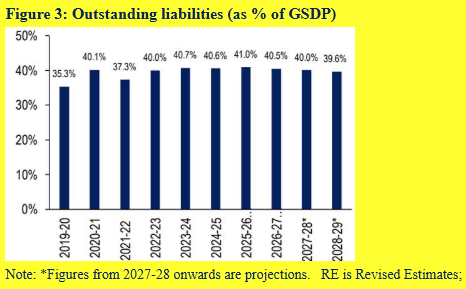
The debate surrounding the financial status of Indian states has intensified, especially with the rise of political narratives that heavily depend on the performance and fiscal responsibility of regional governments. @zoo_bear points out that while the BJP government frequently brands states like Himachal Pradesh as financially irresponsible, this view overlooks the broader context of fiscal management across various states. He asserts that the outstanding liabilities of Himachal Pradesh have remained largely unchanged since the BJP assumed control, questioning the rationale behind labeling the state as profligate.
Additionally, @zoo_bear highlights other states like Odisha, which has showcased better fiscal performance under the BJD, as well as Tamil Nadu, Karnataka, and Telangana, all of which have maintained healthier economic indicators compared to UP, MP, and Bihar. The implication here is clear: while averages may offer a snapshot, they do not reflect the complexities and realities of each state’s fiscal situation.
Critique of Welfare Politics in India
The discussion around welfare politics, particularly in the context of elections, has raised eyebrows among observers. @zoo_bear notes last year’s cash transfer initiative to farmers by PM Modi just before the elections as a classic example of welfare politics used as a political tool. He argues that such practices have proliferated, diluting the authenticity of welfare promises made by governments. By framing the welfare agendas through an electoral lens, political actors may be sidelining genuine economic strategies that promote long-term growth and sustainability.
In this light, he advocates for a more balanced approach to governance that transcends partisan lines, suggesting that regardless of political affiliations, there should be a unified focus on actual development strategies that benefit citizens over tactics aimed solely at undermining opposition parties.
The Role of Economic Advisers
The call for unbiased economic advisement is echoed in @zoo_bear’s critique. He stresses that those in advisory positions, such as the PM’s economic advisers, should prioritize national interests over party politics. The ongoing blame game between parties can hinder progress and create an environment of mistrust, which ultimately affects the governance of the state. By urging these advisers to step away from mere partisan critiques, @zoo_bear endorses a more productive political discourse aimed at addressing real economic challenges.
Why This Matters
The political ramifications of this debate are significant for Indian readers, especially as the country braces for upcoming elections. Understanding the financial health of different states is crucial for voters as they assess the performance of their leaders and party policies. The distortion of facts around fiscal status can shape public opinion and influence voting behavior, thus altering the political landscape. Additionally, promoting constructive dialogue around economic policies over blame can foster a healthier democratic environment and ensure that the focus remains on actionable solutions rather than divisive rhetoric.
Frequently Asked Questions
What are the main arguments presented by @zoo_bear regarding state finances?
@zoo_bear argues that averages can obscure the true financial picture of states and criticizes the BJP’s portrayal of states like Himachal Pradesh as financially irresponsible. He highlights that several opposition-led states outperform BJP-ruled regions on key fiscal metrics.
How does welfare politics influence elections in India?
Welfare politics can significantly impact elections as parties may utilize short-term benefit programs, like cash transfers, to sway voter sentiment just before polls, rather than focusing on sustainable economic development.
What is the role of economic advisers in political discourse?
Economic advisers should offer unbiased, factual advice focused on national development rather than engaging in partisan politics. Their role is critical in shaping sound economic policies that benefit all citizens.
Why is it important to look beyond averages when assessing state finances?
Looking beyond averages provides a more nuanced understanding of each state’s economic situation, allowing for a fair assessment of their fiscal health and governance, which is vital for informed electoral decisions.