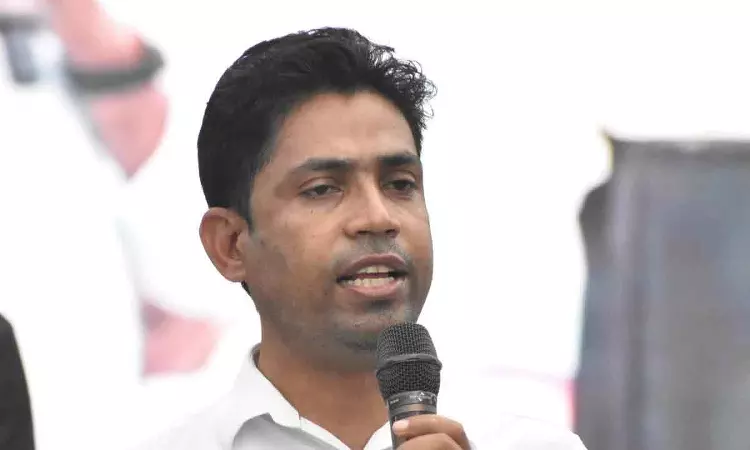

Jahangir Khan, a prominent Trinamool Congress (TMC) leader known for his close ties to the party’s national general secretary, Abhishek Banerjee, was arrested by the West Bengal Police near the India-Nepal border. His apprehension relates to ongoing investigations into serious allegations, including extortion, intimidation, and EVM tampering during the Bengal Assembly elections.
Background of the Arrest
Khan, often referred to as ‘Pushpa’ during the Bengal Assembly elections, had been eluding law enforcement for several days despite multiple cases registered against him and his associates. The Special Task Force (STF) tracked him down based on a specific tip-off and arrested him while he was reportedly trying to flee across the border in North Bengal. Following his arrest, he was transported to Kolkata, where he is expected to face a court for further interrogation and legal proceedings.
Political Context and Allegations
The arrest occurs in a politically charged atmosphere, particularly in Falta, where locals have reported increasing instances of intimidation and violence attributed to political factions, notably the TMC and the BJP. Just 48 hours prior to his arrest, Khan had filed his nomination as the TMC candidate for the Falta by-election—a constituency that the party considers a stronghold. His sudden withdrawal from the contest, attributed to his ambitions for a “golden Falta” and the influence of Chief Minister Mamata Banerjee’s development package, raises questions about the existing political dynamics in West Bengal.
Khan’s Political Connections and Prior Protection
Khan’s close association with TMC leadership, especially with Abhishek Banerjee, has brought attention to the party’s internal conflicts and the rivalry with the BJP. In 2019, he received High Court protection in connection with an earlier case, highlighting a history of political maneuvering that raises concerns about justice and accountability in cases involving political figures in India. The ongoing investigations suggest not only a focus on criminality but also on the broader implications for political fairness and electoral integrity in the region.
Why It Matters
The arrest of Jahangir Khan emphasizes the ongoing issues of political corruption, intimidation tactics, and violence in electoral processes within India, particularly in the context of West Bengal’s political landscape. As the TMC and BJP vie for power, these events reveal significant challenges in maintaining democratic processes, raising concerns about discrimination and marginalization against specific community groups. The investigation into Khan’s activities reflects a broader examination of the accountability, legality, and ethical standards expected of political leaders in India, which may resonate with international observers interested in democratic governance and human rights.
Frequently Asked Questions
Who is Jahangir Khan?
Jahangir Khan, also known as ‘Pushpa,’ is a Trinamool Congress (TMC) leader with close ties to the party’s national general secretary, Abhishek Banerjee. He has been involved in multiple criminal cases, including extortion and alleged EVM tampering.
What are the allegations against Jahangir Khan?
Khan faces serious allegations, including extortion, intimidation, and involvement in EVM tampering during the recent Bengal Assembly elections.
What happened in Falta during the recent elections?
Falta has been a hotspot for political tension, marked by allegations of intimidation and violence between TMC and BJP factions. This contentious environment has raised concerns about the integrity of the electoral process in the region.
Why did Jahangir Khan withdraw from the Falta by-election?
Khan withdrew his nomination shortly before polling, citing his ambition for a “golden Falta” and the influence of Chief Minister Mamata Banerjee’s development strategies as reasons for stepping back from the contest.